Medical-surgical nursing is the broadest and most foundational specialty in the nursing profession. It is where the majority of nurses begin their careers, and it is where the full range of human illness presents in all its complexity. On any given shift, a medical-surgical nurse might care for a patient recovering from abdominal surgery, another in the early stages of heart failure exacerbation, a third managing the complications of poorly controlled diabetes, and a fourth navigating an acute neurological event. The knowledge base required is enormous. The clinical judgment demands are relentless. And the safety stakes are ever present. To perform confidently and competently across that breadth of practice, a nurse needs more than familiarity with disease processes. They need the ability to rapidly integrate assessment findings, prioritize competing needs, anticipate complications, and act decisively within the scope of nursing practice. That level of clinical readiness is built through disciplined, repeated practice with content that reflects the true complexity of the specialty. That is precisely what this test bank is built to provide.
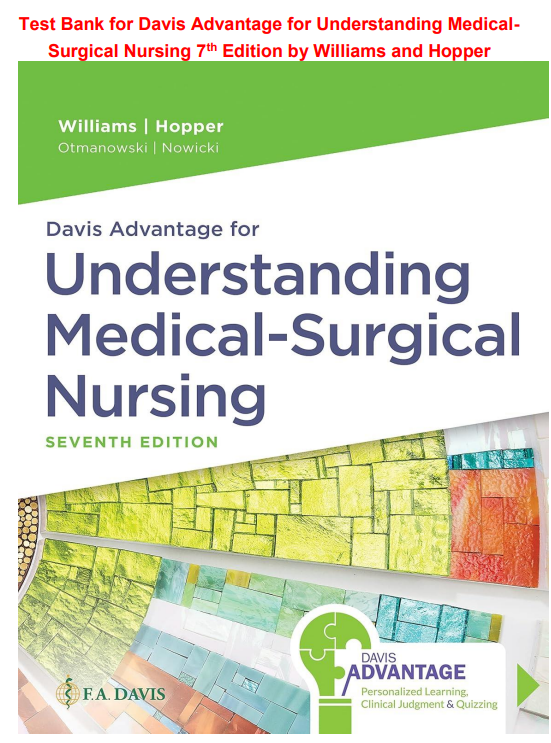
Davis Advantage for Understanding Medical-Surgical Nursing by Williams and Hopper has established itself as one of the most accessible, clinically grounded, and pedagogically effective medical-surgical nursing texts available. The 7th edition continues that tradition with updated evidence-based content, expanded clinical reasoning frameworks, and a strong emphasis on the NCLEX Next Generation clinical judgment model. It is a textbook that bridges the gap between foundational nursing knowledge and the demands of real medical-surgical practice, and this test bank was written to match that clinical depth and educational rigor at every level.
Every question in this resource follows the 7th edition chapter structure. The coverage is comprehensive and carefully organized across all major body systems and disease categories. Questions address cardiovascular disorders including heart failure, coronary artery disease, dysrhythmias, and peripheral vascular disease. Respiratory content covers pneumonia, chronic obstructive pulmonary disease, asthma, pulmonary embolism, and acute respiratory failure. Neurological content includes stroke, traumatic brain injury, seizure disorders, multiple sclerosis, and Parkinson disease. Gastrointestinal content addresses peptic ulcer disease, inflammatory bowel disease, liver disorders, pancreatitis, and gastrointestinal cancers. Renal and urological content covers acute and chronic kidney disease, urinary tract infections, and bladder disorders. Musculoskeletal content includes fractures, osteoarthritis, rheumatoid arthritis, and perioperative orthopedic nursing care. Endocrine content addresses diabetes mellitus in depth, along with thyroid, adrenal, and pituitary disorders. Oncology, hematologic disorders, immune system disorders, integumentary conditions, and sensory disorders are also represented. Perioperative nursing, fluid and electrolyte management, pain management, and care of the older adult are woven throughout the resource, reflecting their centrality to medical-surgical practice.
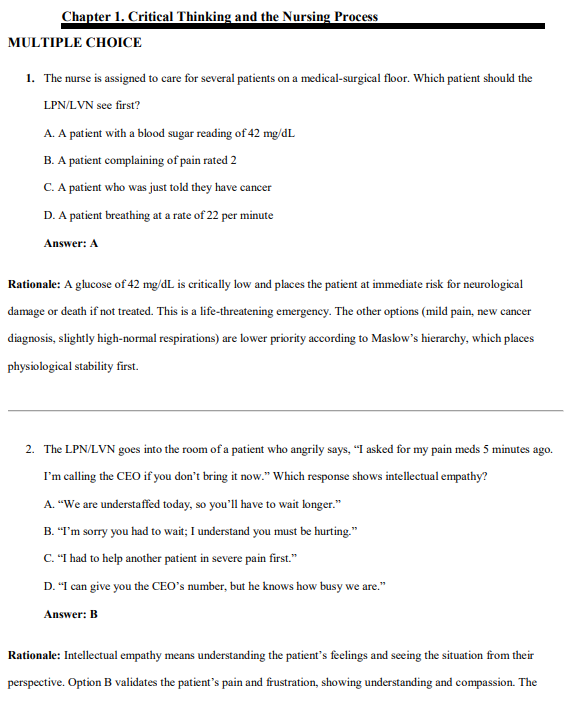
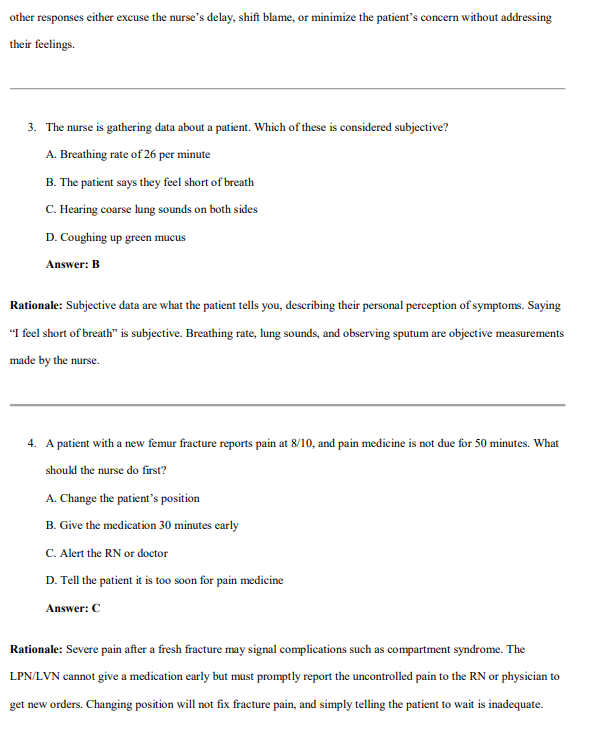
What distinguishes this test bank from basic review resources is the quality and clinical grounding of its answer explanations. Every question presents a realistic patient scenario, clearly identifies the correct answer, and follows it with a thorough, well-reasoned rationale. These rationales do not simply confirm what is right. They explain the pathophysiological or clinical reasoning behind the correct choice, walk through why each of the remaining options is incorrect, and connect the content to nursing priorities, safety principles, and the clinical judgment framework that NCLEX and contemporary nursing education demand. That depth of explanation transforms every question from a simple knowledge check into a genuine learning experience. You are not just practicing answer selection. You are building the analytical foundation that makes the right answer clear under any examination or clinical conditions.
The file is a fully searchable PDF. When you need to focus your review on heart failure management before a cardiovascular unit exam, or consolidate your understanding of diabetic ketoacidosis before a clinical rotation in an endocrine unit, use Ctrl+F to navigate directly to that content in seconds. No time lost scrolling through chapters you have already covered. No disruption to your study momentum. Direct, precise access to exactly the content you need at the moment you need it.
Your download link is generated the moment your purchase is confirmed. No waiting period, no account creation, no approval process. Open the file on your laptop, tablet, or phone and begin working through it immediately. The file is yours permanently. No subscription, no renewal fee, and no expiry date.
What You Get
- Full chapter coverage matched to the 7th edition layout across all medical-surgical content areas
- Clinically grounded scenario-based multiple-choice questions reflecting real medical-surgical nursing complexity
- Every question answered with the correct response clearly identified
- Detailed rationales explaining the clinical reasoning and addressing all answer options
- Searchable PDF format for fast, targeted review by body system, disease, or nursing concept
- One-time purchase with permanent, unlimited file access
Who This Is For
Nursing students enrolled in medical-surgical nursing courses will benefit most directly from this resource. It mirrors the structure of the Williams and Hopper textbook closely and is designed to support students as they work through one of the most content-intensive courses in any pre-licensure nursing program. It is equally valuable for students preparing for NCLEX, where medical-surgical content dominates the examination across every client needs category and every level of cognitive complexity. New graduate nurses transitioning into medical-surgical units who want a structured way to reinforce their clinical knowledge before entering independent practice will also find this test bank a focused and practical study resource. RNs returning to medical-surgical nursing after time in a specialty area, and those preparing for the Medical-Surgical Nursing Certification examination, will benefit from the breadth and clinical depth of the content as well.
Sample Questions
Question 1
A nurse is caring for a patient admitted with an acute exacerbation of heart failure. The patient is reporting worsening shortness of breath, has crackles audible throughout both lung fields, a respiratory rate of 28 breaths per minute, and an oxygen saturation of 88% on room air. The patient is sitting upright and appears anxious and diaphoretic. The provider has ordered furosemide 80 mg IV push, supplemental oxygen, and a daily weight. Which nursing action is the highest priority at this moment?
A) Administer the furosemide 80 mg IV push as ordered and document the time of administration
B) Apply supplemental oxygen immediately to improve oxygenation, then administer the furosemide and monitor the patient’s response
C) Obtain a daily weight before administering any medications to establish an accurate baseline
D) Reassure the patient, lower the head of the bed to the supine position to promote comfort, and then proceed with the ordered medications
Correct Answer: B
Detailed Explanation:
This question requires the application of clinical prioritization in a patient experiencing acute decompensated heart failure with significant respiratory compromise. The patient’s oxygen saturation of 88% on room air is critically low. Normal oxygen saturation is 95% or above, and values below 90% indicate hypoxemia that requires immediate intervention. At 88%, this patient is not receiving adequate oxygen delivery to vital organs including the brain, heart, and kidneys. Hypoxemia, if not corrected promptly, can rapidly progress to respiratory failure, cardiac dysrhythmia, and end-organ damage.
Using the airway-breathing-circulation framework that guides nursing prioritization, the respiratory emergency takes precedence over all other interventions. Supplemental oxygen must be applied immediately to correct the hypoxemia before or alongside any medication administration. Once oxygenation is being addressed, the furosemide can and should be administered promptly. Furosemide is a loop diuretic that promotes renal excretion of sodium and water, reducing the circulating fluid volume and relieving the pulmonary congestion that is driving the patient’s respiratory distress. The combination of oxygen and diuresis addresses both the immediate symptom of hypoxemia and the underlying pathophysiology of fluid overload.
Option A is incorrect because while furosemide administration is urgently needed, applying oxygen to a patient with an oxygen saturation of 88% must happen first or simultaneously. Delaying oxygen correction even by the minutes required to prepare and administer an IV medication is clinically unacceptable when the patient is this hypoxemic. Option C is incorrect because obtaining a daily weight, while an important part of heart failure management for monitoring fluid balance trends, is not an action that addresses a patient in acute respiratory distress with critically low oxygen saturation. Weight measurement can and should be deferred until the patient is stabilized. Option D is incorrect for two reasons. First, reassurance alone does not address a physiological emergency. Second, placing a patient in acute heart failure in the supine position is dangerous and contraindicated. The supine position increases venous return to the right heart and redistributes fluid into the pulmonary circulation, worsening pulmonary edema. Patients in heart failure exacerbation should be maintained in a high Fowler’s position, sitting upright at 45 to 90 degrees, to minimize pulmonary congestion.
Question 2
A nurse is caring for a 71-year-old patient who is two days post-operative following a right total hip arthroplasty. During morning assessment, the patient reports new onset of right calf pain and tenderness. The nurse observes that the right lower leg appears mildly swollen and feels warm compared to the left. The patient’s temperature is 37.9°C and heart rate is 96 beats per minute. Which condition should the nurse suspect, and what is the most appropriate immediate nursing action?
A) Postoperative muscle soreness from positioning during surgery; encourage the patient to perform ankle pumping exercises and ambulate as tolerated
B) Surgical site infection tracking down the leg; remove the surgical dressing and inspect the incision site for signs of wound dehiscence
C) Deep vein thrombosis; do not massage the leg, keep the patient on bed rest, notify the provider immediately, and anticipate orders for Doppler ultrasound and anticoagulation therapy
D) Arterial occlusion of the right leg; assess bilateral pedal pulses and prepare the patient for emergency vascular surgery consultation
Correct Answer: C
Detailed Explanation:
The clinical findings in this question are highly characteristic of deep vein thrombosis. DVT is one of the most serious and common complications following orthopedic surgery, particularly total hip and total knee arthroplasty. The surgical trauma, venous stasis from immobility, and the hypercoagulable state associated with surgery and anesthesia create conditions that significantly elevate thrombus formation risk in the deep veins of the lower extremities. The classic triad of DVT includes calf pain or tenderness, unilateral leg swelling, and warmth of the affected limb, all of which are present in this patient. The low-grade fever and mild tachycardia further support an inflammatory or thrombotic process.
The immediate nursing priorities are critical and require careful attention. The leg must not be massaged under any circumstances. Massaging a limb with a suspected DVT can dislodge the thrombus, causing it to travel through the venous circulation to the right heart and pulmonary vasculature, resulting in a pulmonary embolism, which can be rapidly fatal. The patient should be placed on bed rest to minimize the risk of thrombus dislodgement through physical activity. The provider must be notified immediately so that diagnostic imaging, specifically compression Doppler ultrasound of the affected extremity, can be ordered to confirm the diagnosis. Anticoagulation therapy, typically with low molecular weight heparin or direct oral anticoagulants, will be initiated once DVT is confirmed to prevent thrombus propagation and embolization.
Option A is incorrect because the unilateral nature of the swelling and warmth, combined with calf tenderness and a postoperative context, constitutes a DVT until proven otherwise. Attributing these findings to muscle soreness and encouraging ambulation risks dislodging a thrombus. Option B is incorrect because surgical site infection presents with localized redness, warmth, and purulent drainage at the incision site. The findings described are in the calf, distal to the hip surgical site, making wound infection an unlikely explanation for this specific presentation. Option D is incorrect because arterial occlusion presents with the five Ps: pain, pallor, pulselessness, paresthesia, and paralysis. This patient has warmth and swelling, which are venous rather than arterial findings. Arterial occlusion produces a cold, pale, pulseless limb, the opposite of what is described here.
Question 3
A nurse is caring for a patient admitted with diabetic ketoacidosis. The patient’s admission laboratory results show a blood glucose of 498 mg/dL, serum potassium of 5.6 mEq/L, arterial blood gas pH of 7.21, bicarbonate of 10 mEq/L, and serum ketones present. The provider orders an insulin drip and IV fluid resuscitation with normal saline. As the insulin infusion is initiated, which laboratory value requires the most vigilant ongoing monitoring, and why?
A) Blood glucose, because the primary goal of DKA management is normalizing blood sugar as quickly as possible
B) Serum potassium, because insulin drives potassium into the cells and the serum potassium level will drop rapidly, creating a risk of life-threatening hypokalemia
C) Serum bicarbonate, because correcting the metabolic acidosis is the highest priority in DKA management
D) Serum ketones, because ketone clearance must be confirmed before the insulin drip can be safely discontinued
Correct Answer: B
Detailed Explanation:
This question targets a critical and frequently tested safety principle in the management of diabetic ketoacidosis. Understanding the relationship between insulin therapy and potassium is essential for safe DKA management.
In DKA, the severe insulin deficiency that drives the condition also disrupts normal potassium homeostasis. Insulin normally promotes the cellular uptake of potassium by stimulating the sodium-potassium ATPase pump. In the absence of insulin, potassium shifts out of cells and into the extracellular space, which is why patients with DKA often present with a normal or even elevated serum potassium level despite total body potassium depletion. The elevated or normal potassium on admission is therefore deceptive. It reflects a transcellular shift rather than true potassium abundance.
When insulin therapy is initiated to treat DKA, the insulin drives potassium back into the cells, causing the serum potassium level to drop, sometimes rapidly and dramatically. If the serum potassium falls below 3.5 mEq/L, potassium replacement must be initiated and the insulin infusion may need to be held temporarily to prevent further cellular uptake. If the potassium drops to critically low levels, life-threatening cardiac dysrhythmias including ventricular fibrillation can occur. For this reason, serum potassium must be monitored frequently, often every one to two hours during the initial phase of DKA treatment, and potassium replacement must be administered proactively based on the results.
Option A is incorrect because while blood glucose monitoring is important and necessary, the rate of glucose correction in DKA is deliberately controlled and gradual. Dropping the glucose too quickly risks cerebral edema, particularly in pediatric patients. The glucose is typically allowed to fall at a rate of 50 to 75 mg/dL per hour, and dextrose is added to the IV fluids when the glucose reaches approximately 200 to 250 mg/dL to prevent hypoglycemia while the ketoacidosis continues to resolve. Option C is incorrect because bicarbonate correction in DKA is a consequence of resolving the ketosis through insulin therapy, not a primary intervention target in most cases. Sodium bicarbonate administration is rarely indicated and is reserved for severe acidosis with pH below 6.9. Option D is incorrect because while ketone clearance is the true marker of DKA resolution and must be confirmed before transitioning off the insulin drip, it is not the monitoring priority during the active insulin infusion phase. The potassium level during insulin therapy represents the most immediate life-threatening risk.
Question 4
A nurse is caring for a patient who has been diagnosed with a new ischemic stroke affecting the left hemisphere. During the assessment, the nurse notes that the patient is unable to produce speech and appears frustrated when attempting to communicate, though they seem to understand what is being said to them. The patient has right-sided facial drooping and right arm weakness. Which type of aphasia does this presentation most likely represent, and which nursing communication strategy is most appropriate?
A) Receptive aphasia; speak slowly and loudly, and use short simple sentences to help the patient understand what is being said
B) Global aphasia; avoid all verbal communication and rely exclusively on written communication boards
C) Expressive aphasia; ask yes or no questions, use picture boards or communication aids, allow extra time for responses, and never finish the patient’s sentences
D) Anomic aphasia; encourage the patient to write their responses since word retrieval for writing is preserved in this type of aphasia
Correct Answer: C
Detailed Explanation:
The pattern of deficits described in this question is consistent with Broca aphasia, also called expressive or non-fluent aphasia. Broca’s area is located in the left frontal lobe and is responsible for speech production. A stroke affecting the left hemisphere in the territory of Broca’s area impairs the patient’s ability to produce spoken language while leaving comprehension relatively intact. This explains why the patient is frustrated when attempting to communicate. They understand what is being said, they know what they want to say, but they cannot produce the words or sentences to express it. Right-sided motor deficits, including facial drooping and arm weakness, are expected with left hemisphere strokes because the left hemisphere controls motor function on the right side of the body.
Nursing communication strategies for expressive aphasia must be adapted carefully to reduce frustration and facilitate the most effective exchange of information possible. Asking yes or no questions reduces the burden on the patient by requiring only a nod, head shake, or one-word response. Picture boards, alphabet boards, and other augmentative communication tools provide alternative channels for expression. Allowing extra time without rushing the patient is essential because the cognitive effort required to produce even simple speech is enormous for someone with expressive aphasia. Finishing the patient’s sentences or words is counterproductive and disrespectful. It removes the patient’s opportunity to communicate and can lead to incorrect assumptions about what the patient is trying to say.
Option A is incorrect because receptive aphasia, also called Wernicke aphasia, involves impaired comprehension. A patient with receptive aphasia would not appear to understand what is being said, which is the opposite of what this patient demonstrates. Speaking loudly is also inappropriate and does not address an aphasia, which is a language processing disorder, not a hearing impairment. Option B is incorrect because global aphasia involves severe impairment of both expression and comprehension, and written communication would also be impaired. This patient demonstrates intact comprehension, which rules out global aphasia. Option D is incorrect because anomic aphasia is characterized by difficulty retrieving specific words, particularly nouns, during otherwise fluent speech. Writing is not necessarily preserved, and this presentation does not match the description of a patient who cannot produce speech at all.
Question 5
A nurse is preparing to administer a unit of packed red blood cells to a patient with symptomatic anemia. Fifteen minutes after the transfusion begins, the patient reports feeling chilled and develops a temperature of 38.7°C, up from a baseline of 37.0°C. The patient also reports low back pain and appears flushed. The nurse notes that the urine in the collection bag has changed to a dark, reddish-brown color. What is the most likely explanation for these findings, and what is the priority nursing action?
A) A febrile non-hemolytic transfusion reaction; slow the infusion rate, administer acetaminophen as ordered, and continue monitoring the patient
B) An acute hemolytic transfusion reaction; stop the transfusion immediately, maintain IV access with normal saline, notify the provider and blood bank, monitor urine output, and send the blood bag and patient blood samples to the laboratory
C) Transfusion-associated circulatory overload; elevate the head of the bed, administer furosemide as ordered, and reduce the infusion rate
D) An allergic transfusion reaction; stop the transfusion, administer diphenhydramine as ordered, and restart the transfusion once the symptoms resolve
Correct Answer: B
Detailed Explanation:
The constellation of findings described in this question represents the classic presentation of an acute hemolytic transfusion reaction, which is the most dangerous and potentially fatal type of transfusion reaction. Acute hemolytic reactions occur when the recipient’s immune system recognizes donor red blood cells as foreign and mounts an immediate immune-mediated attack against them. The most common cause is ABO incompatibility resulting from an identification or labeling error during blood bank processing or at the bedside. The antigen-antibody reaction causes rapid intravascular hemolysis, the destruction of donor red blood cells within the bloodstream.
The symptoms are driven by the release of hemoglobin and cellular contents from destroyed red blood cells, along with the complement activation and cytokine release that accompany the immune response. Fever and chills result from cytokine release. Low back pain and flank pain are caused by renal involvement as hemoglobin is filtered through the kidneys and causes tubular obstruction and damage. The dark reddish-brown urine is hemoglobinuria, the presence of free hemoglobin in the urine resulting from hemolysis, and is one of the most ominous signs of this reaction. Without immediate intervention, acute hemolytic reactions can progress to acute renal failure, disseminated intravascular coagulation, shock, and death.
The transfusion must be stopped immediately. The IV line must be kept open with normal saline using new tubing to maintain access and support fluid resuscitation without infusing any more donor blood. The provider and blood bank must be notified at once. The blood bag, attached tubing, and a fresh blood sample from the patient must be sent to the blood bank for analysis to confirm the incompatibility. Urine output must be monitored closely because oliguria signals renal compromise. Aggressive IV fluid resuscitation is initiated to protect renal function.
Option A is incorrect because a febrile non-hemolytic reaction, while the most common type of transfusion reaction, does not cause hemoglobinuria or back pain. It presents with fever and chills alone, without signs of hemolysis. More importantly, slowing the transfusion and continuing it is never the appropriate response when hemolysis is suspected. Option C is incorrect because transfusion-associated circulatory overload presents with respiratory symptoms including dyspnea, hypertension, and pulmonary edema due to fluid volume excess, not hemoglobinuria or back pain. Option D is incorrect because allergic transfusion reactions typically present with urticaria, itching, and in severe cases bronchospasm and anaphylaxis. They do not cause hemoglobinuria or the systemic hemolytic signs described here. Restarting the transfusion after an acute hemolytic reaction is absolutely contraindicated.
(Full answer key with detailed rationales included for all questions in the complete document.)
FAQ
Is this an official publisher product?
No. This is an independently written study resource structured around the topics and chapter layout of the 7th edition. It is not affiliated with or endorsed by the authors, Davis Advantage, or their publisher.
Will these questions match my course exams or NCLEX questions?
This test bank is designed to build deep clinical reasoning across the full scope of medical-surgical nursing so you are prepared for any examination format. It does not preview specific instructor exams or licensed board examination content.
What makes this test bank different from others?
The detailed rationales go well beyond identifying the correct answer. They explain the underlying pathophysiology, connect clinical findings to nursing priorities and safety principles, and clarify why each incorrect option fails. That approach builds the kind of deep, transferable understanding that holds up under examination pressure and translates directly into safe, confident clinical practice.
What file format will I receive?
A fully searchable PDF, navigable by chapter, body system, disease category, or keyword using any standard PDF reader on any device.
How quickly can I access the file after purchase?
Instantly. Your download link is generated immediately after checkout with no waiting period or additional steps required.
Can I open this on my phone or tablet?
Yes. The PDF opens cleanly on any iOS or Android device using a free PDF reader app with no formatting issues.
Do I need the textbook to use this?
Having the textbook alongside is helpful since the chapter order mirrors the 7th edition closely. The questions and rationales are also written in enough detail to be used independently for focused review and examination preparation.
Is there a subscription or renewal fee?
No. This is a one-time purchase. The file is yours to keep and use as many times as you need with no recurring charges or expiry date.


Kamara Reid –
Comprehensive med-surg questions for confident exam preparation
Mary Lincoln –
Great questions that helped me prepare for exams
Alicia Silva –
Very useful for reviewing difficult nursing concepts
Bruno Molino –
Helped me feel much more confident before exams
Carol Kay –
Clear questions with helpful explanations and answers.
Helen Christie –
A worthwhile resource for nursing exam preparation.
Winnie M. –
Great variety keeps practice sessions interesting and useful
Beverly –
Helpful rationales make reviewing answers much more productive
Mary Kesh –
Easy to use and navigate