
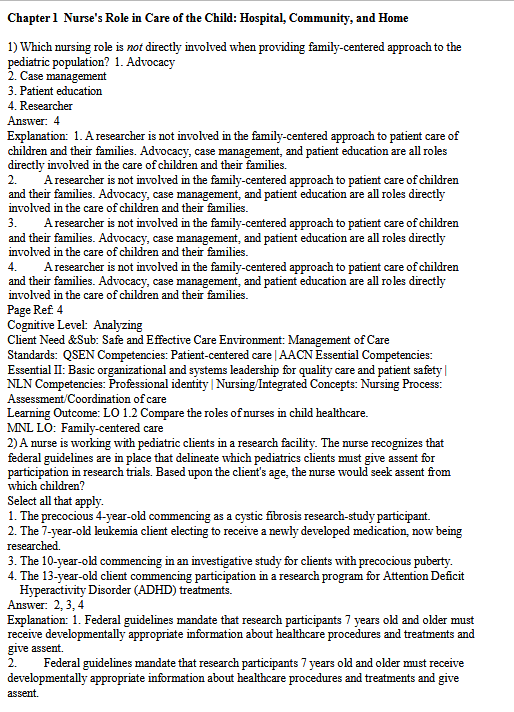
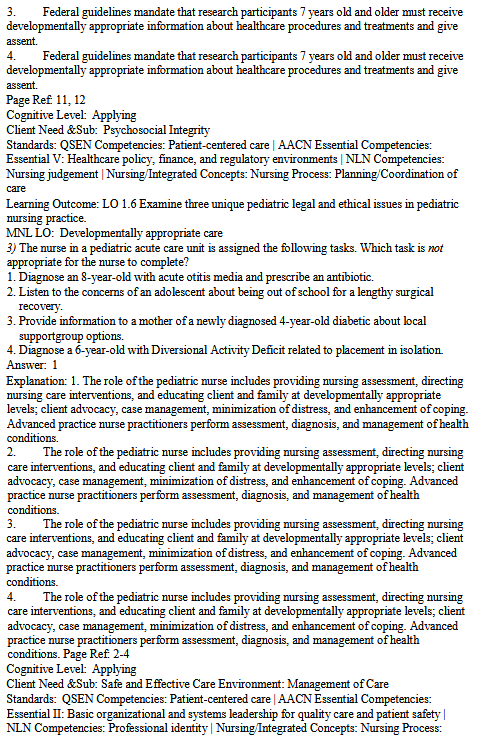
Pediatric nursing is a specialty built on a deceptively simple principle: children are not small adults. Every dimension of clinical practice changes when the patient is a child. The anatomy is different. The physiology is different. The pharmacology is weight-based and developmentally variable. The communication requires a completely different set of skills, whether the nurse is building rapport with a frightened toddler, negotiating cooperation with a resistant school-age child, or navigating the complex dynamics of an adolescent who wants autonomy but whose parents are still legally responsible for their care. The assessment findings that signal urgent deterioration in a pediatric patient are different from those in an adult, and they can evolve more rapidly and with less warning. The ethical questions are different, involving consent, assent, parental rights, and the child’s emerging voice in decisions about their own care. And the emotional weight is different, because every seriously ill child carries with them a family whose fear and grief fill the room in ways that require the nurse to be both clinically precise and profoundly human at the same time. Building the knowledge and skill to navigate all of this with competence and compassion requires sustained, deliberate engagement with content that reflects the true complexity of pediatric nursing practice. That is precisely what this test bank is designed to provide.
Principles of Pediatric Nursing: Caring for Children by Cowen, Wisely, Dawson, Ball, and Bindler is one of the most comprehensive, clinically grounded, and pedagogically effective pediatric nursing texts available. The 8th edition builds on a legacy of educational excellence with thoroughly updated evidence-based content, expanded coverage of pediatric health promotion and anticipatory guidance across all developmental stages, updated pharmacological content with particular attention to weight-based dosing and pediatric-specific medication safety, and a stronger emphasis on the clinical reasoning and family-centered care principles that define contemporary pediatric nursing practice. It is a textbook that honors the full complexity of caring for children from birth through adolescence, and this test bank was written to match that standard of depth and clinical relevance at every level.
Every question in this resource follows the 8th edition chapter structure. The coverage is thorough and carefully organized across the full breadth of the textbook. Questions address child health promotion across all developmental stages from newborn through adolescence, including growth and development milestones, immunization schedules, anticipatory guidance, and health screening. Pediatric assessment content covers the unique features of physical examination in children, vital sign norms by age, pain assessment in pediatric patients including nonverbal and preverbal children, and developmental surveillance tools. Nursing care in the hospital setting addresses the child’s response to hospitalization, family-centered care principles, atraumatic care, therapeutic play, and preparation of children and families for procedures. Pediatric pharmacology emphasizes weight-based dosing calculations, age-related pharmacokinetic differences, medication safety, and the administration of medications across different routes in children of varying ages and developmental stages. Disease-specific content covers respiratory disorders including asthma, bronchiolitis, croup, and cystic fibrosis; cardiovascular conditions including congenital heart defects and heart failure; gastrointestinal disorders including pyloric stenosis, intussusception, appendicitis, and inflammatory bowel disease; renal and genitourinary conditions including urinary tract infections, nephrotic syndrome, and Wilms tumor; neurological conditions including seizure disorders, meningitis, traumatic brain injury, and neural tube defects; musculoskeletal disorders including developmental dysplasia of the hip, scoliosis, fractures, and osteomyelitis; hematological conditions including sickle cell disease, hemophilia, and iron deficiency anemia; oncological conditions including leukemia, brain tumors, and lymphoma; endocrine disorders including type 1 and type 2 diabetes, hypothyroidism, and growth disorders; immune and infectious diseases; dermatological conditions; and psychiatric and behavioral health conditions in children and adolescents. Child maltreatment, pediatric palliative care, care of the child with a chronic condition or disability, and community and school nursing are also comprehensively represented. No major content area of the 8th edition has been omitted.
What makes this test bank distinctly valuable is the quality and clinical precision of its answer explanations. Every question presents a realistic pediatric nursing scenario, clearly identifies the correct answer, and follows it with a thorough, well-reasoned rationale. These rationales do not simply confirm what is right. They explain the physiological, developmental, pharmacological, or ethical reasoning behind the correct choice, address why each of the remaining options is incorrect or less appropriate, and connect the content to pediatric nursing principles, family-centered care, developmental frameworks, and the clinical judgment model that contemporary nursing examinations demand. That depth of explanation means every question functions as both an assessment and a genuine learning experience. You are not simply checking your knowledge. You are building the analytical depth and developmental sensitivity that makes the right clinical response clear in any examination or real-world pediatric nursing situation.
The file is a fully searchable PDF. When you need to focus your review on congenital heart defect management before a cardiovascular examination, consolidate your understanding of pediatric medication dosage calculations before a clinical pharmacology assessment, or drill questions on the recognition and nursing management of respiratory distress in infants before a pediatric clinical rotation, use Ctrl+F to navigate directly to that content in seconds. No time lost scrolling through chapters you have already covered. No disruption to your study momentum. Direct, precise access to exactly the content you need at exactly the moment you need it.
Your download link is generated the moment your purchase is confirmed. No waiting period, no account creation, no approval process. Open the file on your laptop, tablet, or phone and begin working through it immediately. The file is yours permanently. No subscription, no renewal fee, and no expiry date.
What You Get
- Full chapter coverage matched to the 8th edition layout across all pediatric nursing content areas
- Clinically grounded scenario-based multiple-choice questions reflecting real pediatric nursing complexity
- Every question answered with the correct response clearly identified
- Detailed rationales explaining the developmental, physiological, pharmacological, and ethical reasoning and addressing all answer options
- Searchable PDF format for fast, targeted review by age group, body system, condition, or clinical concept
- One-time purchase with permanent, unlimited file access
Who This Is For
Nursing students enrolled in pediatric nursing courses will benefit most directly from this resource. It mirrors the chapter structure of the Cowen, Wisely, Dawson, Ball, and Bindler textbook closely and is designed to support students as they develop the specialized clinical knowledge and developmental sensitivity that caring for children demands. It is also an excellent preparation tool for students approaching NCLEX, where pediatric content spans multiple client needs categories and where respiratory emergencies, congenital conditions, weight-based medication calculations, and child development milestones are consistently high-yield testing areas. RNs pursuing the Certified Pediatric Nurse examination administered by the Pediatric Nursing Certification Board will find the depth and clinical breadth of this resource well matched to their certification preparation needs. Nurses transitioning into general pediatric units, pediatric intensive care, neonatal settings, pediatric emergency departments, pediatric oncology, or school nursing roles will also benefit from the comprehensive and clinically grounded content of this test bank as they build the specialty knowledge their new practice environment requires.
Sample Questions
Question 1
A nurse is caring for a 7-week-old male infant who has been brought to the emergency department by his parents with a two-week history of progressively worsening vomiting. The parents describe the vomiting as forceful, occurring immediately after each feeding, and shooting across the room. The infant appears hungry after each episode and attempts to feed again. On assessment, the nurse notes that the infant has lost 400 grams since his two-week well-child visit, has a sunken anterior fontanelle, dry mucous membranes, and decreased skin turgor. Peristaltic waves are visible moving from left to right across the epigastrium. Which condition does this presentation most likely represent, what metabolic imbalance should the nurse anticipate, and what is the priority nursing intervention?
A) Gastroesophageal reflux disease; anticipate hyperkalemia from acid reflux; position the infant upright after feedings and thicken formula
B) Pyloric stenosis; anticipate metabolic alkalosis with hypokalemia and hypochloremia from repeated loss of hydrochloric acid; establish IV access, administer prescribed fluid resuscitation, and prepare the infant and family for surgical consultation and pyloromyotomy
C) Intussusception; anticipate metabolic acidosis from bowel ischemia; prepare for air or contrast enema reduction as a diagnostic and therapeutic intervention
D) Viral gastroenteritis; anticipate isotonic dehydration; encourage oral rehydration with Pedialyte and reassess hydration status in four hours
Correct Answer: B
Detailed Explanation:
The clinical presentation in this question is a textbook description of hypertrophic pyloric stenosis, one of the most common surgical conditions of infancy. Pyloric stenosis occurs when the pyloric muscle, which controls the passage of gastric contents from the stomach into the duodenum, undergoes progressive hypertrophy, gradually narrowing and eventually obstructing the pyloric channel. It occurs most commonly in male infants between two and eight weeks of age, with a peak incidence around three to five weeks. The classic presenting symptom is projectile vomiting that is non-bilious because the obstruction is proximal to the ampulla of Vater where bile enters the duodenum. The vomiting characteristically occurs immediately after feedings and is described as projectile, often forceful enough to travel considerable distance. Critically, the infant remains hungry immediately after vomiting and eagerly attempts to feed again, which distinguishes pyloric stenosis from conditions where the infant appears ill or disinterested in feeding. Visible peristaltic waves moving from left to right across the upper abdomen are a highly specific clinical sign of the stomach contracting vigorously against the obstruction.
The metabolic consequence of repeated vomiting of gastric contents is critically important to understand. Gastric secretions are rich in hydrochloric acid, hydrogen ions, chloride, and potassium. The loss of these electrolytes through repeated projectile vomiting produces a characteristic metabolic alkalosis with hypokalemia and hypochloremia. In response to the alkalosis, the kidneys initially attempt to excrete bicarbonate to restore pH balance, but as hypovolemia worsens and potassium depletion increases, the kidney begins to prioritize sodium and fluid retention over acid-base correction, and a paradoxical aciduria may develop despite the systemic alkalosis.
The priority nursing interventions are to establish intravenous access immediately for fluid and electrolyte resuscitation, correct the dehydration and metabolic derangements, keep the infant on nothing by mouth status, and prepare the family for urgent surgical consultation. The definitive treatment for pyloric stenosis is a Ramstedt pyloromyotomy, a surgical procedure in which the hypertrophied pyloric muscle is incised to relieve the obstruction. Surgery is not performed until the electrolyte and acid-base imbalances are corrected because the risk of postoperative complications including apnea is significantly elevated in the presence of metabolic alkalosis.
Option A is incorrect because gastroesophageal reflux in infancy typically produces regurgitation or spitting up rather than projectile vomiting, does not cause the degree of weight loss and dehydration described, and does not produce visible peristaltic waves. The metabolic consequence of GERD is not hyperkalemia. Option C is incorrect because intussusception typically presents in infants aged three months to three years with sudden severe intermittent colicky abdominal pain, drawing up of the knees, currant jelly stool, and a sausage-shaped abdominal mass, not projectile postprandial vomiting in a seven-week-old. Option D is incorrect because viral gastroenteritis typically produces non-projectile vomiting along with diarrhea and systemic signs of viral illness, and does not produce visible peristaltic waves or the metabolic alkalosis characteristic of pyloric stenosis.
Question 2
A nurse is assessing a 3-year-old child admitted with a two-day history of fever, irritability, and decreased oral intake. The child is now increasingly lethargic. The parents report that the child complained of a headache and a stiff neck earlier today. On assessment, the nurse notes a temperature of 39.8°C, heart rate of 138 beats per minute, blood pressure of 88/52 mmHg, a non-blanching petechial rash spreading across the trunk and extremities, photophobia, and nuchal rigidity. The child whimpers when the nurse attempts to flex the neck. Which condition does this presentation most likely represent, and what are the priority nursing actions in the correct sequence?
A) Viral meningitis with febrile seizure precautions; place the child in a quiet darkened room, administer antipyretics, and monitor neurological status every four hours
B) Bacterial meningitis with possible meningococcemia; immediately notify the provider, initiate contact and droplet precautions, establish intravenous access, administer prescribed broad-spectrum antibiotics without delay, prepare for lumbar puncture while ensuring the child is hemodynamically stable, and monitor closely for signs of septic shock and disseminated intravascular coagulation
C) Roseola infantum with febrile irritability; reassure the parents that the rash will resolve as the fever breaks and discharge the child with fever management instructions
D) Rocky Mountain spotted fever; administer oral doxycycline and schedule follow-up with the child’s primary care provider within 48 hours
Correct Answer: B
Detailed Explanation:
The constellation of findings in this question constitutes a pediatric emergency requiring immediate recognition and intervention. The presentation of fever, severe headache, nuchal rigidity, photophobia, progressive lethargy, hypotension, tachycardia, and a rapidly spreading non-blanching petechial or purpuric rash is the classic clinical picture of bacterial meningitis with meningococcemia, caused most commonly in this age group by Neisseria meningitidis. This is one of the most rapidly fatal infectious diseases in pediatric practice. Children can progress from appearing mildly unwell to cardiovascular collapse and death within hours of symptom onset. The non-blanching petechial rash is a critically important clinical sign. Unlike a viral exanthem, which blanches when pressure is applied because the redness results from dilated vessels, a petechial or purpuric rash does not blanch because it represents hemorrhage into the skin from endothelial damage and coagulopathy. Its presence in the context of fever and meningeal signs must be treated as bacterial meningitis with septicemia until definitively proven otherwise.
The priority nursing actions must be executed rapidly and without delay. Bacterial meningitis carries a mortality rate that rises significantly with each hour of antibiotic delay. The current evidence base strongly supports initiating broad-spectrum antibiotics, typically a third-generation cephalosporin such as cefotaxime or ceftriaxone, as rapidly as possible, even before lumbar puncture is performed if there is any delay in obtaining cerebrospinal fluid. The priority sequence involves immediate provider notification, isolation with contact and droplet precautions to prevent transmission of meningococcal disease to other patients and staff, rapid establishment of IV access, blood cultures drawn before antibiotics if this can be accomplished without delay, immediate antibiotic administration, corticosteroid administration if indicated per protocol to reduce the inflammatory response, and hemodynamic monitoring and support given the signs of early septic shock.
The non-blanching rash, hypotension, and tachycardia additionally raise concern for disseminated intravascular coagulation, a life-threatening coagulopathy that can develop rapidly in meningococcal septicemia. The nurse must monitor for worsening purpura, bleeding from IV sites, and changes in coagulation laboratory values.
Option A is incorrect because the non-blanching petechial rash, hypotension, and degree of clinical deterioration are not consistent with viral meningitis, which typically produces a milder and more gradual presentation without a hemorrhagic rash or hemodynamic compromise. Viral meningitis does not require immediate antibiotic therapy. Option C is incorrect because roseola infantum produces a blanching maculopapular rash that appears as the fever resolves, not a non-blanching petechial rash in a child with meningeal signs and hemodynamic instability. Option D is incorrect because while Rocky Mountain spotted fever can produce a petechial rash and is treated with doxycycline, the treatment is not administered orally in a hemodynamically unstable child with meningeal signs, and the clinical presentation described is most consistent with bacterial meningitis with meningococcemia requiring immediate IV antibiotic therapy.
Question 3
A nurse is preparing to administer amoxicillin oral suspension to a 4-year-old child who weighs 18 kg. The prescribed dose is 40 mg/kg/day divided every 8 hours. The medication is available as a 250 mg per 5 mL suspension. How many milliliters should the nurse administer per dose, and which nursing action is most important before administering this medication to a pediatric patient?
A) 4.8 mL per dose; confirm that the child has no known allergy to penicillin-class antibiotics before administration
B) 9.6 mL per dose; verify that the child can swallow tablets before choosing the suspension formulation
C) 3.6 mL per dose; check the child’s weight in pounds rather than kilograms before calculating the dose
D) 7.2 mL per dose; confirm that the suspension has been refrigerated continuously since dispensing
Correct Answer: A
Detailed Explanation:
Pediatric medication dosage calculations require a systematic, stepwise approach that begins with the total daily dose and proceeds to the individual dose per administration, followed by conversion to the volume of the available formulation. This calculation must be verified carefully because errors in pediatric weight-based dosing can result in overdose or underdose with serious consequences.
Step one is to calculate the total daily dose. The prescribed dose is 40 mg per kg per day. The child weighs 18 kg. Multiplying 40 mg by 18 kg gives a total daily dose of 720 mg per day.
Step two is to calculate the dose per administration. The medication is to be given every 8 hours, meaning three times per day. Dividing the total daily dose of 720 mg by 3 gives an individual dose of 240 mg per administration.
Step three is to convert the dose in milligrams to the volume of the available suspension. The suspension concentration is 250 mg per 5 mL. Setting up the proportion: if 250 mg equals 5 mL, then 240 mg equals X mL. Cross-multiplying gives 250X equals 1,200, and dividing both sides by 250 gives X equals 4.8 mL per dose.
The most important safety action before administering amoxicillin to any patient, and particularly to a pediatric patient who may not be able to reliably self-report an allergic reaction history, is to verify allergy status with the parent or caregiver. Amoxicillin is a penicillin-class antibiotic, and penicillin allergy is one of the most commonly reported drug allergies. Administering a penicillin-class antibiotic to a child with a known allergy, particularly a history of anaphylaxis, can result in a life-threatening hypersensitivity reaction. The nurse must confirm that no penicillin or amoxicillin allergy is documented before proceeding.
Option B is incorrect on two counts. First, the dose calculation of 9.6 mL is incorrect. Second, a four-year-old child would typically receive a liquid suspension rather than tablets regardless of swallowing ability, and this is not the most clinically important pre-administration check for this medication and this patient. Option C is incorrect because all weight-based pediatric dosing calculations must be performed using the child’s weight in kilograms, not pounds. Using pounds without conversion would result in a significantly incorrect dose. The dose of 3.6 mL is also mathematically incorrect. Option D is incorrect because while checking storage conditions is a reasonable medication safety step, it is not the highest priority safety action before administering a penicillin antibiotic to a child. Allergy verification is the most critical pre-administration safety check for this specific medication class.
Question 4
A nurse is caring for a 9-year-old child with a diagnosis of acute lymphoblastic leukemia who is receiving induction chemotherapy. The child’s most recent complete blood count shows an absolute neutrophil count of 280 cells/mm³. The child’s temperature this morning is 38.4°C. The child appears pale and fatigued but is alert and interactive. Which condition does this combination of findings represent, and what is the priority nursing action?
A) This is an expected and benign finding in a child receiving chemotherapy; administer acetaminophen for fever and comfort, encourage oral fluid intake, and monitor the temperature every four hours
B) This represents febrile neutropenia, a life-threatening oncologic emergency; notify the provider immediately, obtain blood cultures from all lumens of the central venous access device and a peripheral site if possible, initiate broad-spectrum IV antibiotics without delay, and implement neutropenic precautions
C) This represents a transfusion reaction from a recent platelet transfusion; stop any current infusions, administer diphenhydramine, and notify the blood bank immediately
D) This represents tumor lysis syndrome; obtain serum electrolytes, uric acid, and creatinine levels, and prepare to administer allopurinol and IV fluids
Correct Answer: B
Detailed Explanation:
Febrile neutropenia is one of the most serious and time-critical oncologic emergencies in pediatric oncology nursing. It is defined as a temperature of 38.3°C or higher on a single reading, or 38.0°C sustained over one hour, occurring in a patient with an absolute neutrophil count below 500 cells/mm³, or below 1,000 cells/mm³ and falling. This patient meets both criteria, with a temperature of 38.4°C and an absolute neutrophil count of 280 cells/mm³, which represents profound neutropenia.
Neutrophils are the body’s primary cellular defense against bacterial and fungal pathogens. When the absolute neutrophil count falls below 500 cells/mm³, the child’s ability to mount an effective immune response against infection is severely compromised. A fever in this context does not simply indicate a mild illness. It may be the only sign of a rapidly progressive bacterial sepsis that can become fatal within hours if not treated immediately. Many children with febrile neutropenia are infected with organisms from their own gastrointestinal flora that translocate across a mucosa damaged by chemotherapy, making gram-negative bacteremia a common and particularly dangerous cause.
The management of febrile neutropenia in pediatric oncology follows a well-established and time-sensitive protocol. Blood cultures must be obtained from each lumen of the child’s central venous access device, because the catheter itself is a common source of infection, as well as from a peripheral site if feasible. However, the time from fever recognition to first antibiotic dose is one of the most important outcome determinants in febrile neutropenia. Broad-spectrum IV antibiotics, typically an antipseudomonal beta-lactam, must be administered within 60 minutes of fever recognition. Delaying antibiotics to wait for culture results, to obtain imaging, or for any other reason increases the risk of septic shock and death. Neutropenic precautions including a private room, restriction of fresh flowers and raw fruits and vegetables, meticulous hand hygiene by all visitors and staff, and avoidance of live virus vaccines must also be implemented.
Option A is incorrect because a fever in a profoundly neutropenic child is never a benign finding to be managed with antipyretics and observation alone. Treating febrile neutropenia as a routine fever is a potentially fatal error in pediatric oncology nursing. Option C is incorrect because the child’s presentation does not suggest a transfusion reaction. The clinical picture is consistent with febrile neutropenia secondary to chemotherapy-induced immunosuppression. Option D is incorrect because tumor lysis syndrome typically occurs early in the treatment of high-burden hematologic malignancies and presents with hyperkalemia, hyperphosphatemia, hypocalcemia, hyperuricemia, and renal compromise rather than isolated fever. While metabolic monitoring is important throughout leukemia treatment, the priority in this scenario is the febrile neutropenia.
Question 5
A nurse in a pediatric clinic is conducting a well-child visit for a 15-month-old child. The parents express concern that their child is not yet walking independently and has only two or three words. The child was born at 39 weeks of gestation after an uncomplicated pregnancy and delivery. During the assessment, the nurse notes that the child makes good eye contact, smiles and laughs appropriately, points to objects of interest across the room, waves bye-bye, and looks toward the nurse when their name is called. The child cruises confidently along furniture and takes two to three independent steps before sitting down. Which assessment best reflects the nurse’s interpretation of these developmental findings?
A) The child’s development is severely delayed across multiple domains; refer urgently to a pediatric neurologist and initiate early intervention services immediately
B) The child’s development is within the range of normal variation for a 15-month-old across motor, language, and social-emotional domains; provide anticipatory guidance and schedule the 18-month well-child visit for continued developmental surveillance
C) The child’s language development is delayed and requires immediate speech-language pathology referral, but motor and social development are age-appropriate
D) The child’s motor development is delayed and requires immediate physical therapy referral, but language and social development are age-appropriate
Correct Answer: B
Detailed Explanation:
Developmental surveillance is one of the most important components of pediatric nursing practice and requires a thorough understanding of normal developmental milestones across the four domains of gross motor, fine motor, language, and social-emotional development, as well as the range of normal variation that exists within each domain. This question requires the nurse to accurately interpret a developmental profile and distinguish normal variation from clinically significant delay requiring referral.
Gross motor development at 15 months: The expected milestones for walking independently range from approximately 9 to 15 months, with the average age of independent walking being 12 months and the upper limit of normal being 15 to 18 months depending on the reference framework used. This child is taking two to three independent steps and cruising confidently, which places them at the leading edge of acquiring independent walking. This is within the range of normal variation and does not constitute a delay at 15 months.
Language development at 15 months: The expected milestone for language at 12 months is typically one to three words beyond mama and dada, with the 15-month milestone including approximately three to six words. This child has two to three words, which is within the low-normal range at 15 months. Critically, the child demonstrates all of the social communication precursors that are far more predictive of language development than word count alone: pointing to objects of interest, which is a critical joint attention skill, responding to their name, making eye contact, and using gesture. The absence of these precursors, rather than low word count, is what most strongly predicts language disorder and autism spectrum disorder risk at this age.
Social-emotional development at 15 months: The child demonstrates age-appropriate social engagement including eye contact, smiling, laughing, responding to name, and social gestures such as waving. These findings are reassuring and do not suggest autism spectrum disorder or social communication disorder.
The appropriate nursing response is to validate the parents’ observations, provide reassurance that the developmental profile is within the range of normal variation, offer anticipatory guidance about what to expect between 15 and 18 months, and schedule the 18-month well-child visit, at which point further developmental screening with a validated tool should be conducted.
Option A is incorrect because the developmental profile described does not represent severe delay across multiple domains. The findings are within or at the lower boundary of normal for a 15-month-old, and the social communication indicators are particularly reassuring. Option C is incorrect because two to three words at 15 months, in the context of intact joint attention, pointing, and social engagement, does not constitute a language delay requiring immediate referral at this visit. Option D is incorrect because a child who is cruising confidently and taking independent steps at 15 months does not meet criteria for a motor delay. Independent walking by 15 months is within the range of normal development.
FAQ
Is this an official publisher product?
No. This is an independently written study resource structured around the topics and chapter layout of the 8th edition. It is not affiliated with or endorsed by the authors or their publisher.
Will these questions match my course exams or NCLEX questions?
This test bank is designed to build deep clinical reasoning across the full scope of pediatric nursing so you are well prepared for any examination format. It does not preview specific instructor exams or licensed board examination content.
What makes this test bank different from others?
The detailed rationales go well beyond identifying the correct answer. They explain the underlying developmental, physiological, and pharmacological reasoning behind each correct response, connect clinical findings to pediatric nursing principles and family-centered care, and clarify why each incorrect option fails. That approach builds the kind of deep, transferable understanding that holds up under examination pressure and translates directly into safe, developmentally sensitive, and compassionate pediatric nursing practice.
What file format will I receive?
A fully searchable PDF, navigable by chapter, age group, body system, condition, or keyword using any standard PDF reader on any device.
How quickly can I access the file after purchase?
Instantly. Your download link is generated immediately after checkout with no waiting period or additional steps required.
Can I open this on my phone or tablet?
Yes. The PDF opens cleanly on any iOS or Android device using a free PDF reader app with no formatting issues.
Do I need the textbook to use this?
Having the textbook alongside is helpful since the chapter order mirrors the 8th edition closely. The questions and rationales are also written in enough detail to be used independently for focused review and examination preparation.
Is there a subscription or renewal fee?
No. This is a one-time purchase. The file is yours to keep and use as many times as you need with no recurring charges or expiry date.

Alan Kuqi –
Excellent supplement to nursing textbooks
Liam Mbogo –
Easy to use and well organized
Leo Fernandez –
Great variety of nursing questions
Norah Helen –
Helpful questions for reinforcing my knowledge