Emergency medical services is a specialty defined by its unrelenting pace, its uncontrolled environments, and its absolute intolerance for hesitation. The paramedic who arrives at the scene of a motor vehicle collision, a cardiac arrest, an acute stroke, a pediatric respiratory emergency, or a mass casualty incident does not have the luxury of a controlled clinical environment, a fully equipped resuscitation bay, or an interdisciplinary team standing by to provide support. They have their training, their partner, their equipment, and the minutes that stand between the patient and irreversible harm. The decisions they make in those minutes are shaped entirely by the depth and reliability of the knowledge and clinical judgment they have built before they ever set foot on a scene. That knowledge is not built passively. It is built through sustained, deliberate engagement with content that challenges thinking, demands application, and prepares the learner to perform under pressure when performance is what a patient’s life depends on. That is precisely what this test bank is designed to provide.
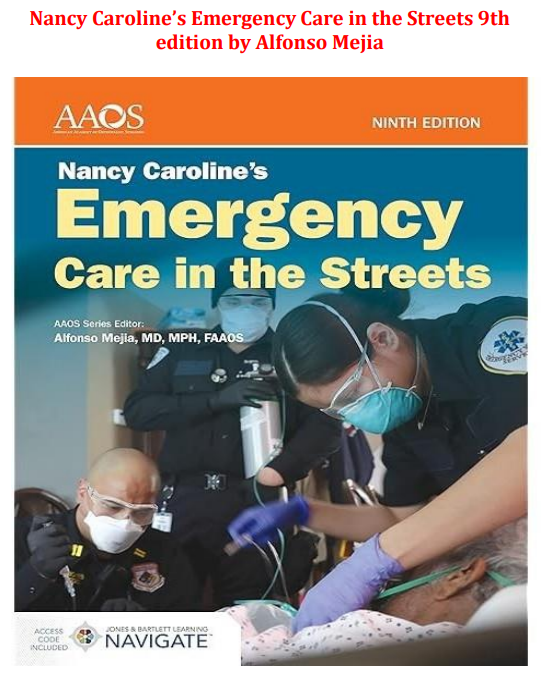
Nancy Caroline’s Emergency Care in the Streets has been the foundational text of paramedic education in North America for decades. The name Nancy Caroline is synonymous with the origins of modern prehospital emergency care, and the textbook that bears her name has carried that legacy through successive editions, each one building on the last with updated clinical protocols, expanded evidence-based content, and a stronger emphasis on the critical thinking and clinical judgment skills that define excellence in paramedicine. The 9th edition, edited by Alfonso Mejia, continues that tradition with thoroughly updated content reflecting current American Heart Association guidelines, the National EMS Education Standards, evolving best practices in airway management, hemodynamic resuscitation, pharmacology, trauma care, and medical emergency management. It is a textbook that does not simply describe what paramedics do. It builds the understanding of why, which is the foundation of genuinely expert prehospital practice. This test bank was written to match that standard of depth and clinical rigor at every level.
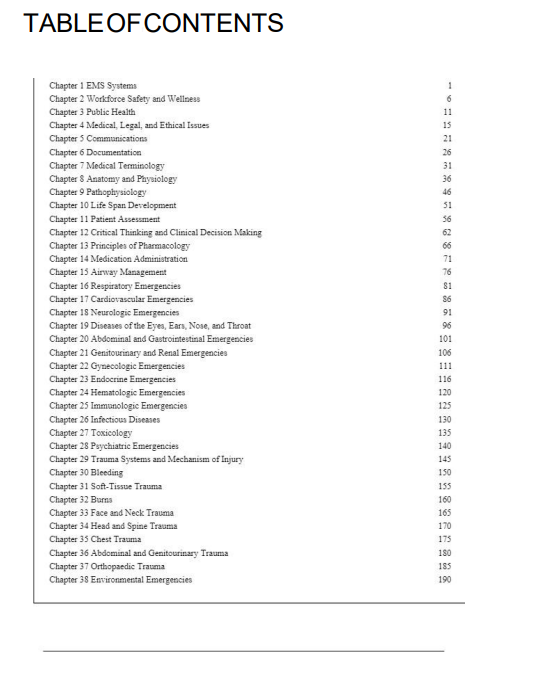
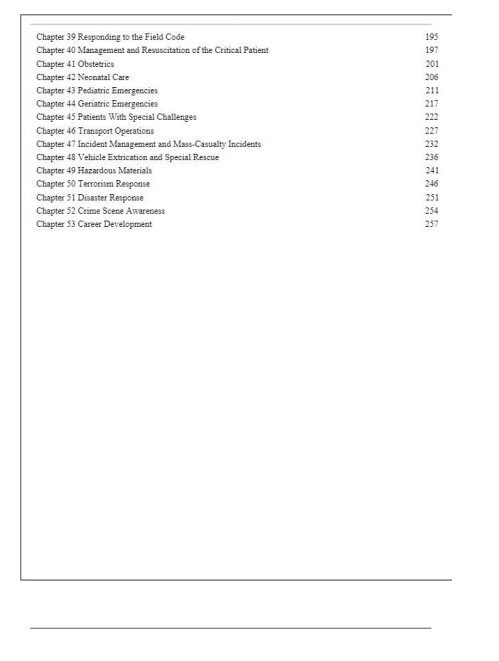
Every question in this resource follows the 9th edition chapter structure. The coverage is exhaustive and carefully organized across the full breadth of the textbook, spanning the preparatory foundations of EMS practice through the most advanced clinical content in the curriculum. Questions address the history and professional foundations of EMS, the well-being of the paramedic, medical-legal and ethical issues in prehospital practice, communications and documentation, and the fundamental principles of pathophysiology that underpin clinical decision-making in the field. Pharmacology content covers drug classifications, mechanisms of action, routes of administration, dose calculations, and the specific medications carried and administered by paramedics in the prehospital environment. Airway management content spans the full spectrum from basic airway positioning and bag-mask ventilation through supraglottic airway devices, endotracheal intubation, surgical airway techniques, and the management of ventilated patients during transport. Patient assessment content addresses the scene size-up, primary and secondary surveys, vital sign acquisition and interpretation, history taking using standardized frameworks, and the integration of assessment findings into a clinical impression and treatment priority. Resuscitation content covers the science and practice of cardiopulmonary resuscitation, cardiac rhythm recognition and interpretation, defibrillation, synchronized cardioversion, transcutaneous pacing, and post-resuscitation care. Medical emergency content addresses the full range of conditions encountered in the prehospital setting including respiratory emergencies, cardiovascular emergencies, neurological emergencies, abdominal and gastrointestinal emergencies, genitourinary and renal emergencies, endocrine emergencies, hematological emergencies, immunological emergencies, toxicological emergencies, psychiatric and behavioral emergencies, and infectious and communicable disease management. Trauma content covers the kinematics and biomechanics of injury, hemorrhage control and shock management, traumatic brain injury, spinal trauma assessment and immobilization, thoracic trauma, abdominal trauma, musculoskeletal trauma, and soft tissue and burn injuries. Special patient population content addresses obstetric and gynecological emergencies, neonatal resuscitation, pediatric emergencies, geriatric emergencies, and the care of patients with special healthcare needs. Operations content covers ambulance operations and safety, incident command and mass casualty incident management, rescue operations, hazardous materials awareness, and tactical EMS considerations. No major content area of the 9th edition has been omitted.
What makes this test bank distinctly valuable is the quality and clinical precision of its answer explanations. Every question presents a realistic prehospital scenario, clearly identifies the correct answer, and follows it with a thorough, well-reasoned rationale. These rationales do not simply confirm what is right. They explain the physiological, pharmacological, or clinical reasoning behind the correct choice, address why each of the remaining options is incorrect or clinically inappropriate, and connect the content to prehospital protocols, evidence-based practice guidelines, and the critical thinking framework that National Registry of Emergency Medical Technicians examinations and real-world paramedicine demand. That depth of explanation means every question functions as both an assessment and a genuine learning experience. You are not simply checking your knowledge. You are building the analytical depth and clinical confidence that makes the right field decision clear under any examination or operational conditions.
The file is a fully searchable PDF. When you need to focus your review on cardiac dysrhythmia recognition before a rhythm interpretation examination, consolidate your understanding of pediatric medication dosage calculations before a pediatric emergency module, or drill questions on the assessment and management of traumatic brain injury before a trauma practicum, use Ctrl+F to navigate directly to that content in seconds. No time lost scrolling through chapters you have already covered. No disruption to your study momentum. Direct, precise access to exactly the content you need at exactly the moment you need it.
Your download link is generated the moment your purchase is confirmed. No waiting period, no account creation, no approval process. Open the file on your laptop, tablet, or phone and begin working through it immediately. The file is yours permanently. No subscription, no renewal fee, and no expiry date.
What You Get
- Full chapter coverage matched to the 9th edition layout across all EMS content areas
- Clinically grounded scenario-based multiple-choice questions reflecting real prehospital emergency care complexity
- Every question answered with the correct response clearly identified
- Detailed rationales explaining the physiological, pharmacological, and clinical reasoning and addressing all answer options
- Searchable PDF format for fast, targeted review by body system, emergency type, patient population, or clinical concept
- One-time purchase with permanent, unlimited file access
Who This Is For
Paramedic students enrolled in accredited paramedic education programs will benefit most directly from this resource. It mirrors the chapter structure of the Mejia textbook closely and is designed to support students as they work through one of the most clinically demanding curricula in allied health education. It is also an excellent preparation tool for candidates approaching the National Registry of Emergency Medical Technicians Paramedic cognitive examination, where clinical decision-making, pharmacology, airway management, and medical and trauma emergency management are the central testing domains. Advanced EMTs seeking to deepen their clinical knowledge base and paramedics preparing for recertification or transitioning into new operational environments including critical care transport, flight paramedicine, or tactical EMS will also find the depth and clinical breadth of this resource well matched to their preparation needs.
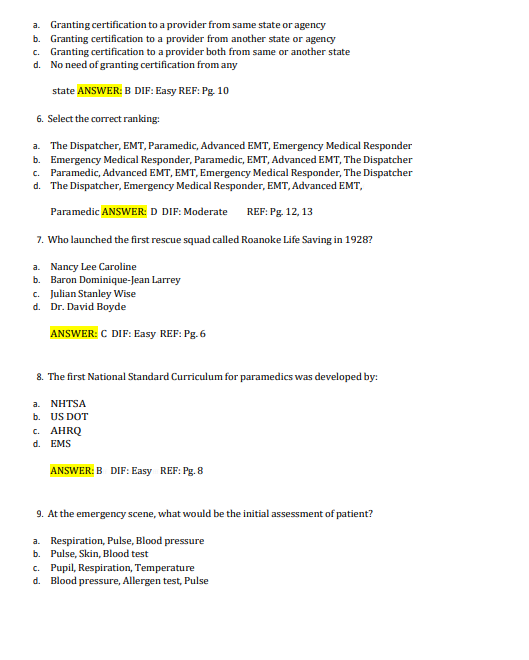
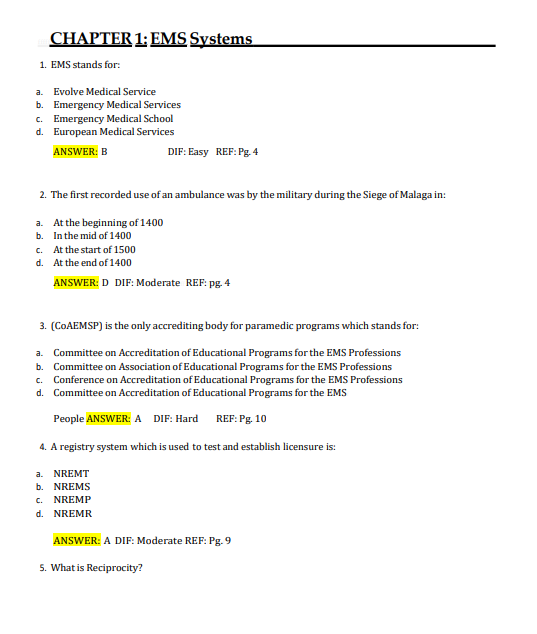
Sample Questions
Question 1
A paramedic unit responds to a 58-year-old male patient who is found slumped in a chair at home by his wife. On arrival, the patient is unresponsive and apneic. His wife states he complained of a sudden severe headache described as the worst of his life approximately 20 minutes before becoming unresponsive, then lost consciousness without any preceding chest pain or shortness of breath. The cardiac monitor shows a sinus bradycardia at 44 beats per minute with widened QRS complexes. The patient’s blood pressure is 218/114 mmHg. The right pupil is fixed and dilated at 8 mm while the left pupil is 3 mm and reactive. Respirations are being managed with bag-mask ventilation at a rate of 10 breaths per minute. Which condition does this presentation most likely represent, and which finding in this patient is the most ominous indicator of herniation and requires the most urgent response?
A) Acute ST-elevation myocardial infarction with cardiogenic shock; the bradycardia and widened QRS represent complete heart block requiring transcutaneous pacing, and the blood pressure should be aggressively lowered with nitroglycerin
B) Hemorrhagic stroke, most likely subarachnoid or intracerebral hemorrhage; the unilateral fixed dilated pupil is the most ominous finding, indicating uncal herniation with compression of the ipsilateral cranial nerve III, requiring hyperventilation to a target ETCO2 of 30 to 35 mmHg only if herniation is suspected, rapid transport, and avoidance of hypotension
C) Hypertensive encephalopathy without structural brain injury; the bradycardia represents a vagal response to extreme hypertension and should be treated with atropine before addressing the blood pressure
D) Diabetic hyperosmolar coma; obtain a blood glucose reading immediately and administer dextrose 50 percent IV to restore consciousness before performing further neurological assessment
Correct Answer: B
Detailed Explanation:
The clinical presentation in this question is a textbook prehospital picture of a catastrophic intracranial hemorrhagic event, most consistent with a subarachnoid hemorrhage or a large intracerebral hemorrhage with rapid clinical deterioration. The sudden severe headache described as the worst of the patient’s life is the classic presenting complaint of subarachnoid hemorrhage, caused by the sudden release of blood into the subarachnoid space and the resultant meningeal irritation and acute elevation of intracranial pressure. This symptom, sometimes called a thunderclap headache, should always prompt suspicion for subarachnoid hemorrhage regardless of the patient’s subsequent clinical course.
The finding that most urgently demands attention and action in this patient is the unilateral fixed and dilated right pupil. The pupillary light reflex is mediated by cranial nerve III, the oculomotor nerve, which travels along the surface of the brainstem and is exquisitely sensitive to pressure from adjacent structures. When rising intracranial pressure causes the medial temporal lobe, specifically the uncus, to herniate downward through the tentorial notch of the dura, it compresses cranial nerve III on the same side. The loss of parasympathetic input to the iris sphincter muscle from CN III results in unopposed sympathetic dilation of the ipsilateral pupil, producing the fixed, blown, non-reactive pupil that is one of the most reliable and ominous clinical signs of transtentorial herniation. This finding indicates that intracranial pressure has risen to a level that is causing brainstem compression and that time to definitive neurosurgical intervention is critically short.
The Cushing reflex, also called the Cushing response or vasopressor response, consists of the triad of hypertension, bradycardia, and irregular respirations, and represents the brainstem’s last-resort attempt to maintain cerebral perfusion pressure in the face of severely elevated intracranial pressure. The bradycardia at 44 beats per minute and the extreme hypertension of 218/114 mmHg in this patient are consistent with the Cushing reflex, which further supports the diagnosis of elevated intracranial pressure with imminent herniation.
Prehospital management priorities include maintaining the airway with bag-mask ventilation at a normal rate of 10 breaths per minute and a target end-tidal CO2 of 35 to 45 mmHg under standard circumstances. Hyperventilation to a lower target ETCO2 of 30 to 35 mmHg is indicated only as a temporizing measure in patients with confirmed clinical signs of herniation, as in this patient, because the cerebral vasoconstriction it produces transiently reduces intracranial pressure. However, aggressive hyperventilation below 30 mmHg causes excessive vasoconstriction and ischemia and must be avoided. Avoidance of hypotension is critical because the hypertensive blood pressure in this patient represents the body’s attempt to maintain cerebral perfusion against the elevated intracranial pressure. Aggressive antihypertensive treatment in the prehospital setting is contraindicated. Rapid transport to a stroke center or trauma center with neurosurgical capability is the highest operational priority.
Option A is incorrect because the clinical picture does not fit ST-elevation myocardial infarction with cardiogenic shock. The sudden severe headache preceding loss of consciousness, the neurological findings, and the unilateral fixed pupil all point to a primary intracranial catastrophe rather than a cardiac event. Treating the bradycardia with transcutaneous pacing or the blood pressure with nitroglycerin would be harmful in this context. Option C is incorrect because hypertensive encephalopathy does not typically produce focal neurological signs such as unilateral pupillary dilation or the sudden thunderclap headache pattern. The findings are consistent with structural brain injury. Option D is incorrect because the clinical presentation does not suggest hyperosmolar hyperglycemic state, and administering dextrose to a patient with suspected intracranial hemorrhage and elevated blood glucose would worsen neurological outcomes by fueling anaerobic metabolism in ischemic brain tissue.
Question 2
A paramedic is called to a residence for a 72-year-old woman with a history of chronic obstructive pulmonary disease, hypertension, and heart failure who is experiencing acute shortness of breath. The patient is sitting upright and leaning forward with her elbows on her knees in a tripod position. She is using accessory muscles visibly and has a respiratory rate of 32 breaths per minute. Her SpO2 is 78% on room air. Auscultation reveals diffuse expiratory wheezing throughout all lung fields bilaterally with significantly diminished air entry at the bases. Her blood pressure is 172/96 mmHg and her heart rate is 118 beats per minute. She has a productive cough with yellow-green sputum and reports that her symptoms began gradually over three days and have worsened significantly since this morning. She takes salmeterol and tiotropium for her COPD. Which condition most likely accounts for this presentation, and what is the paramedic’s priority treatment sequence?
A) Acute decompensated heart failure with flash pulmonary edema; administer nitroglycerin sublingually, apply continuous positive airway pressure, and administer furosemide IV to promote diuresis
B) Acute exacerbation of chronic obstructive pulmonary disease triggered by a respiratory infection; administer supplemental oxygen titrated to an SpO2 target of 88 to 92 percent, administer an inhaled short-acting beta-2 agonist such as albuterol via nebulizer, consider ipratropium bromide in combination, prepare for non-invasive positive pressure ventilation if the patient does not respond, and transport to an appropriate facility
C) Anaphylaxis with bronchospasm; administer epinephrine 0.3 mg intramuscularly in the lateral thigh immediately and establish IV access for diphenhydramine administration
D) Spontaneous pneumothorax with tension development; perform immediate needle decompression of the left chest at the second intercostal space midclavicular line and prepare for rapid transport
Correct Answer: B
Detailed Explanation:
The clinical presentation in this question is consistent with an acute exacerbation of chronic obstructive pulmonary disease, a common and life-threatening prehospital emergency in patients with established COPD. The key clinical features that support this diagnosis include the gradual three-day onset suggesting an infectious precipitant, the productive cough with purulent sputum indicating a bacterial or viral lower respiratory tract infection, the diffuse expiratory wheezing reflecting bronchospasm from airway inflammation and mucus hypersecretion, and the significantly diminished air entry at the bases suggesting air trapping and dynamic hyperinflation from the obstructive physiology. The patient’s established COPD history and her current maintenance medications, a long-acting beta-2 agonist and a long-acting anticholinergic, confirm the underlying diagnosis.
Oxygen therapy in acute COPD exacerbation requires careful titration. Unlike healthy patients in whom a drive to breathe is primarily stimulated by rising PaCO2, some patients with severe chronic COPD develop a degree of chronic hypercapnia and may have a hypoxic ventilatory drive that is partially suppressed by high-flow oxygen. Current evidence, including major emergency and prehospital medicine guidelines, recommends titrating supplemental oxygen in COPD exacerbation to a target SpO2 of 88 to 92 percent rather than administering high-flow oxygen without titration. Providing excessive oxygen has been shown to worsen hypercapnia and increase mortality in this population through several mechanisms including the Haldane effect on CO2 carrying and suppression of hypoxic vasoconstriction.
Bronchodilator therapy with inhaled short-acting beta-2 agonists, most commonly albuterol via continuous nebulization, is the cornerstone of acute COPD exacerbation management. Albuterol causes bronchial smooth muscle relaxation through beta-2 receptor stimulation, reducing airflow resistance and improving ventilation. The combination of albuterol with ipratropium bromide, a short-acting anticholinergic bronchodilator, provides additive bronchodilation through a different mechanism and is recommended in moderate to severe exacerbations. If the patient does not respond to initial bronchodilator therapy and continues to deteriorate, non-invasive positive pressure ventilation using bilevel positive airway pressure provides both pressure support to reduce the work of breathing and positive end-expiratory pressure to stent open the obstructed airways and reduce dynamic hyperinflation.
Option A is incorrect because while acute decompensated heart failure can produce some overlapping features including dyspnea, accessory muscle use, and an elevated heart rate, the cardinal feature of pulmonary edema is diffuse crackles from fluid in the alveoli rather than expiratory wheezing from bronchospasm. The purulent productive cough and gradual onset over three days with a known COPD history make an infective COPD exacerbation the primary diagnosis. Nitroglycerin and furosemide are not appropriate first-line prehospital interventions for COPD exacerbation. Option C is incorrect because anaphylaxis presents with a sudden onset following an allergen exposure, typically also involving urticaria, angioedema, hypotension, and gastrointestinal symptoms. The gradual onset, purulent sputum, and COPD history are not consistent with anaphylaxis. Option D is incorrect because tension pneumothorax produces absent or severely diminished unilateral breath sounds, tracheal deviation away from the affected side, and hypotension. This patient has bilateral wheezing and a hypertensive blood pressure, which are inconsistent with tension pneumothorax.
Question 3
A paramedic is called to a playground for a 6-year-old child who fell from approximately 4 meters onto a concrete surface and landed on his head. Bystanders report a brief loss of consciousness of approximately 30 seconds followed by a period of crying and responsiveness, but the child has now become increasingly lethargic over the past 10 minutes. On assessment, the child opens his eyes to voice, speaks in confused sentences, and withdraws from pain, giving a Glasgow Coma Scale score of 11. His pupils are equal and reactive at 4 mm bilaterally. His heart rate is 68 beats per minute, blood pressure is 118/76 mmHg, and respiratory rate is 14 breaths per minute. A scalp hematoma is palpable over the left temporal region. Which intracranial pathology is most concerning given this mechanism and clinical pattern, and what is the paramedic’s priority management approach?
A) Concussion with normal post-concussive confusion; reassure the family that the child is recovering normally, apply a cold pack to the scalp hematoma, and advise transport by private vehicle to the child’s pediatrician within 24 hours
B) Epidural hematoma from middle meningeal artery injury; recognize the lucid interval followed by deterioration as a classic presentation, maintain spinal motion restriction, support ventilation, establish vascular access, avoid hypotension and hypoxia, and transport rapidly to a pediatric trauma center
C) Subdural hematoma from bridging vein rupture requiring immediate field surgical decompression; perform burr holes in the left temporal region to relieve the intracranial pressure before transport
D) Basilar skull fracture without intracranial hemorrhage; apply a pressure dressing to the scalp hematoma, place the child supine, and transport with lights and sirens to the nearest emergency department for observation
Correct Answer: B
Detailed Explanation:
The clinical pattern described in this question is the hallmark presentation of an epidural hematoma, one of the most time-critical neurosurgical emergencies in trauma care and one of the most important patterns to recognize in prehospital practice. The epidural hematoma, also called an extradural hematoma, occurs when arterial or venous bleeding accumulates between the inner surface of the skull and the dura mater. In the temporal region, the most common location, the injury typically involves the middle meningeal artery, which runs in a groove on the inner surface of the temporal bone and is highly susceptible to laceration when the thin temporal bone fractures.
The clinical hallmark of epidural hematoma is the lucid interval, a period of apparent recovery or relative consciousness following the initial traumatic loss of consciousness, succeeded by progressive neurological deterioration as the expanding hematoma compresses the underlying brain. In this patient, the 30-second initial loss of consciousness represents the impact injury, the period of crying and responsiveness represents the lucid interval during which the patient appeared to recover, and the progressive lethargy over the past 10 minutes represents the deterioration caused by the expanding arterial hematoma reaching a critical volume and beginning to cause transtentorial herniation. The temporal scalp hematoma is a visible marker of the impact site overlying the most vulnerable region for middle meningeal artery injury.
The prehospital priorities in suspected epidural hematoma are focused on preventing the secondary brain injury factors that worsen outcome alongside the primary structural injury. Hypoxia and hypotension are the two most powerful secondary injury determinants in traumatic brain injury, and both must be prevented with vigilance. Ventilation must be supported to maintain normal oxygenation and normocarbia. Intravenous access should be established to allow fluid resuscitation if hypotension develops, targeting a systolic blood pressure of at least 90 mmHg in adults and age-appropriate minimums in children. Spinal motion restriction should be applied given the mechanism. Definitive treatment of epidural hematoma is surgical evacuation, and outcome is directly related to the time from injury to surgical decompression. The operating room is the only appropriate treatment environment. Rapid transport to a pediatric trauma center capable of emergency neurosurgery is the single most important prehospital intervention.
Option A is incorrect because a child with a mechanism of 4-meter fall onto the head, a witnessed loss of consciousness, a scalp hematoma over the temporal region, and progressive deterioration in level of consciousness over 10 minutes has a traumatic brain injury until proven otherwise and requires emergency evaluation at a trauma center. Transport by private vehicle to a pediatrician is completely inappropriate and potentially fatal in this scenario. Option C is incorrect because performing burr holes in the field is not within the scope of paramedic practice and would not be safe or appropriate in any prehospital setting. Field surgical decompression is not a prehospital intervention for intracranial hematoma. Option D is incorrect because the clinical picture, including the mechanism, the temporal scalp hematoma, and the classic lucid interval followed by deterioration, is strongly suggestive of an arterial epidural hematoma rather than an isolated basilar skull fracture without hemorrhage. The clinical urgency exceeds what is captured in option D.
Question 4
A paramedic is treating a 45-year-old male patient found unresponsive at home by his partner. Empty bottles of amitriptyline and alprazolam are found nearby. The patient is breathing shallowly at 6 breaths per minute, has pinpoint pupils bilaterally, and has a Glasgow Coma Scale score of 6. His blood pressure is 82/54 mmHg, heart rate is 110 beats per minute and irregularly irregular on the monitor, and the 12-lead ECG shows a prolonged QRS complex measuring 148 milliseconds with a rightward axis deviation and an R wave in lead aVR. His SpO2 is 88% on a non-rebreather mask. The paramedic’s partner has established IV access. Which combination of findings most strongly indicates tricyclic antidepressant toxicity, and what is the most critical pharmacological intervention the paramedic must prioritize?
A) The pinpoint pupils and shallow respirations indicate opioid toxicity as the primary concern; administer naloxone 0.4 to 2 mg IV or intranasally as the priority intervention and reassess respiratory status before addressing the ECG findings
B) The prolonged QRS greater than 100 milliseconds, rightward axis deviation, and R wave in aVR on the 12-lead ECG are cardinal signs of tricyclic antidepressant cardiotoxicity from sodium channel blockade; administer sodium bicarbonate 1 to 2 mEq/kg IV bolus as the priority intervention to restore sodium channel function, narrow the QRS, and improve hemodynamics, while supporting ventilation and preparing for possible seizure management
C) The irregularly irregular rhythm indicates atrial fibrillation with rapid ventricular response as the primary cardiac emergency; administer diltiazem IV to control the ventricular rate before addressing any toxicological concerns
D) The hypotension is the priority concern and should be addressed with a 2-liter normal saline bolus before any pharmacological antidote is considered, since fluid resuscitation is always the first intervention in hypotensive toxicological emergencies regardless of the specific agent involved
Correct Answer: B
Detailed Explanation:
Tricyclic antidepressant overdose is one of the most pharmacologically complex and potentially lethal toxicological emergencies encountered in prehospital and emergency medicine. Tricyclic antidepressants including amitriptyline, nortriptyline, imipramine, and doxepin exert their toxic effects through three primary mechanisms: sodium channel blockade in cardiac myocytes, alpha-1 adrenergic receptor blockade causing vasodilation and hypotension, and anticholinergic effects including tachycardia, urinary retention, dry skin, and altered mental status.
The sodium channel blockade is the most immediately life-threatening mechanism and produces the characteristic electrocardiographic findings that are the most important diagnostic clues to tricyclic antidepressant toxicity in any patient with altered mental status. The prolonged QRS complex greater than 100 milliseconds reflects slowed ventricular depolarization from blocked sodium channels. A QRS duration greater than 100 milliseconds is associated with an increased risk of seizures and ventricular dysrhythmias, and a QRS greater than 160 milliseconds is associated with a very high risk of ventricular fibrillation. The rightward axis deviation and the terminal R wave in lead aVR are additional highly specific electrocardiographic markers of tricyclic antidepressant sodium channel blockade, reflecting the altered conduction vector produced by the pharmacological sodium channel blockade.
Sodium bicarbonate is the pharmacological cornerstone of tricyclic antidepressant cardiotoxicity management. It works through two complementary mechanisms. First, the sodium load provided by sodium bicarbonate overcomes the sodium channel blockade by increasing the extracellular sodium concentration and restoring the electrochemical gradient that drives sodium channel function, thereby narrowing the QRS and reducing the risk of ventricular dysrhythmia. Second, the alkalinization of the plasma produced by the bicarbonate increases the protein binding of the tricyclic compound and reduces the free drug available to block sodium channels. The dose of 1 to 2 mEq/kg IV bolus is the standard initial dose, and boluses may be repeated while targeting a serum pH of 7.45 to 7.55 and monitoring for QRS narrowing. Sodium bicarbonate should be administered as soon as IV access is available in any patient with suspected tricyclic antidepressant toxicity and a QRS greater than 100 milliseconds.
Option A is incorrect because while the shallow respirations and respiratory depression are serious and must be managed with ventilatory support, the pinpoint pupils in the context of tricyclic antidepressant toxicity are actually paradoxical since tricyclics produce anticholinergic effects that typically cause mydriasis. The pinpoint pupils more likely reflect the concurrent alprazolam ingestion, which as a benzodiazepine can cause central nervous system and respiratory depression but does not produce the cardiac sodium channel blockade. Prioritizing naloxone while ignoring the QRS prolongation from tricyclic toxicity could be fatal. Option C is incorrect because the irregularly irregular rhythm in this patient reflects the disordered ventricular conduction of tricyclic cardiotoxicity rather than atrial fibrillation, and administering a calcium channel blocker like diltiazem to a patient with sodium channel blockade, hypotension, and QRS prolongation from tricyclic toxicity would further depress cardiac function and could precipitate cardiovascular collapse. Option D is incorrect because fluid resuscitation is supportive and appropriate but does not address the pharmacological mechanism driving the cardiac toxicity. Sodium bicarbonate must be administered concurrently with or before fluid resuscitation when QRS prolongation from tricyclic cardiotoxicity is present.
Question 5
A paramedic unit arrives at a community center where a mass casualty incident has occurred following a partial building collapse during a public event. The incident commander on scene reports approximately 35 patients with injuries ranging from minor lacerations to suspected crush injuries and traumatic arrests. The paramedic is assigned to the triage sector and begins applying the START triage system. The paramedic encounters four patients in sequence. Patient one is ambulatory, walking toward the paramedic and holding a bleeding arm wound. Patient two is unresponsive, apneic after the airway is opened with a manual maneuver. Patient three is unresponsive, has spontaneous respirations at 28 breaths per minute after airway repositioning, and has a radial pulse. Patient four is unresponsive, apneic, begins breathing at a rate of 22 breaths per minute after airway repositioning, and has no palpable radial pulse with a capillary refill time of greater than 2 seconds. Using the START triage system, which triage category correctly applies to each patient in sequence?
A) Patient one: Red (Immediate); Patient two: Red (Immediate); Patient three: Yellow (Delayed); Patient four: Red (Immediate)
B) Patient one: Green (Minor); Patient two: Black (Expectant/Deceased); Patient three: Red (Immediate); Patient four: Red (Immediate)
C) Patient one: Yellow (Delayed); Patient two: Black (Expectant/Deceased); Patient three: Red (Immediate); Patient four: Green (Minor)
D) Patient one: Green (Minor); Patient two: Red (Immediate); Patient three: Yellow (Delayed); Patient four: Black (Expectant/Deceased)
Correct Answer: B
Detailed Explanation:
The START triage system, which stands for Simple Triage and Rapid Treatment, is the most widely used mass casualty incident triage system in North America and is the system described in the 9th edition of Nancy Caroline’s Emergency Care in the Streets. It is designed to allow a single rescuer to triage each patient in approximately 30 seconds by assessing three physiological parameters in a fixed sequence: respirations, perfusion, and mental status. Each patient receives one of four color-coded triage categories based on the findings: Green for Minor, Yellow for Delayed, Red for Immediate, and Black for Expectant or Deceased.
The first step in START triage is to direct all patients who can walk to move to a designated area. All ambulatory patients are tagged Green, Minor, regardless of their specific injury, because their ability to walk demonstrates adequate physiological reserve. Patient one is ambulatory and is correctly tagged Green.
For non-ambulatory patients, the assessment begins with respirations. If the patient is not breathing after a simple manual airway maneuver, they are tagged Black, Expectant or Deceased, because in a mass casualty incident, the resources required to resuscitate an apneic patient cannot be justified when other salvageable patients need immediate intervention. Patient two is unresponsive and apneic after airway opening and is correctly tagged Black.
For patients who are breathing after airway positioning, the respiratory rate is assessed. A respiratory rate above 30 breaths per minute or below 10 breaths per minute indicates physiological instability and the patient is tagged Red, Immediate. Patient three has spontaneous respirations at 28 breaths per minute, which is below the 30 breaths per minute threshold but still elevated. In START triage, 28 breaths per minute falls within the range that prompts the next assessment step of perfusion. The radial pulse is present, indicating adequate perfusion. The next step would be mental status assessment, and with an unresponsive patient who has adequate respirations and perfusion, the tag would be Red based on the mental status finding of unresponsiveness. Patient three is correctly tagged Red, Immediate.
Patient four begins breathing after airway repositioning at 22 breaths per minute, which is within the normal range. However, there is no palpable radial pulse and capillary refill is greater than 2 seconds, both of which indicate inadequate perfusion. In START triage, absent radial pulse or capillary refill greater than 2 seconds categorizes the patient as Red, Immediate, because hemorrhagic shock is a rapidly reversible condition with appropriate intervention. Patient four is correctly tagged Red, Immediate.
Option A is incorrect because Patient one should be Green, not Red, as she is ambulatory, and Patient three should be Red based on altered mental status, not Yellow. Option C is incorrect because Patient one should be Green, not Yellow, and Patient four should be Red, not Green, given the absence of radial pulse and delayed capillary refill. Option D is incorrect because Patient two should be Black, not Red, since the patient is apneic after airway opening in a mass casualty incident, and Patient four should be Red, not Black, because the patient is breathing after airway repositioning. Only apneic patients who do not breathe after a simple airway maneuver receive a Black tag in START triage.
(Full answer key with detailed rationales included for all questions in the complete document.)
FAQ
Is this an official publisher product?
No. This is an independently written study resource structured around the topics and chapter layout of the 9th edition. It is not affiliated with or endorsed by the editor, the original author’s estate, or their publisher.
Will these questions match my program exams or National Registry cognitive examination questions?
This test bank is designed to build deep clinical reasoning across the full scope of prehospital emergency care so you are well prepared for any examination format. It does not preview specific program exams or National Registry examination content.
What makes this test bank different from others?
The detailed rationales go well beyond identifying the correct answer. They explain the underlying physiology, pharmacology, and prehospital clinical decision-making behind each correct response, connect content to real-world field scenarios, and clarify why each incorrect option fails. That approach builds the kind of deep, transferable understanding that holds up under examination pressure and translates directly into confident, competent prehospital practice.
What file format will I receive?
A fully searchable PDF, navigable by chapter, emergency category, body system, patient population, or keyword using any standard PDF reader on any device.
How quickly can I access the file after purchase?
Instantly. Your download link is generated immediately after checkout with no waiting period or additional steps required.
Can I open this on my phone or tablet?
Yes. The PDF opens cleanly on any iOS or Android device using a free PDF reader app with no formatting issues.
Do I need the textbook to use this?
Having the textbook alongside is helpful since the chapter order mirrors the 9th edition closely. The questions and rationales are also written in enough detail to be used independently for focused review and examination preparation.
Is there a subscription or renewal fee?
No. This is a one-time purchase. The file is yours to keep and use as many times as you need with no recurring charges or expiry date.
Rosemary R –
Made studying way less stressful
Lucille Maria –
Great questions and easy explanations
Alicia Silva –
Really useful before exam day
Kamara Reid –
Fantastic resource for nursing exam success.
Kevin May –
Perfect