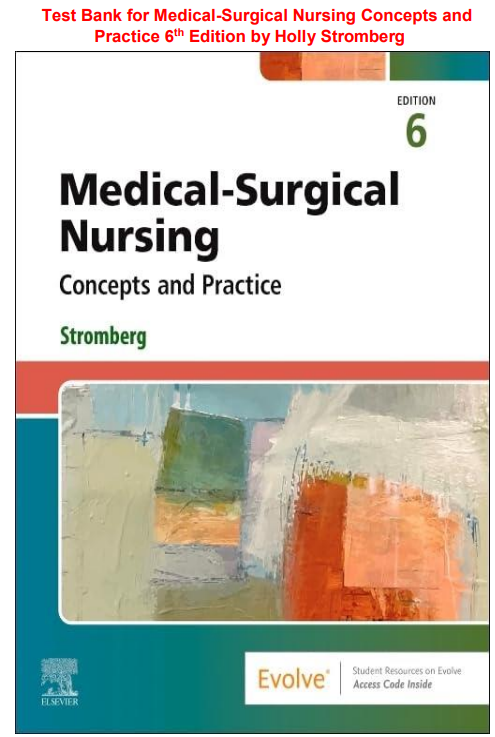
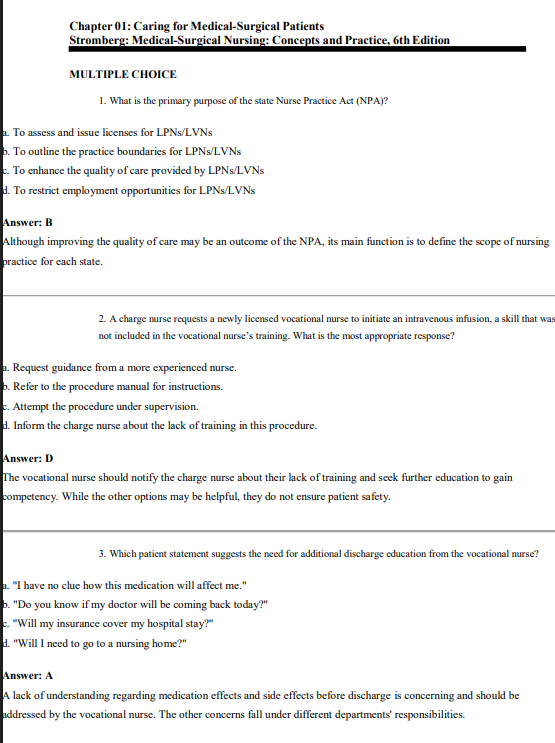
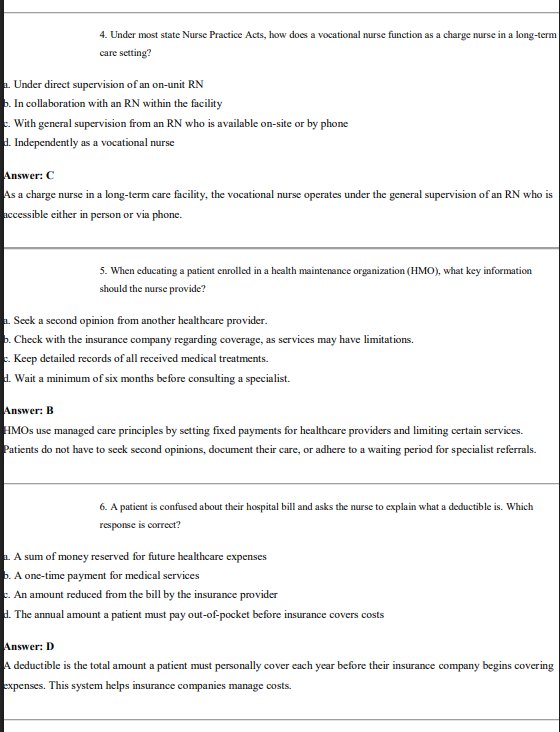
Med-surg courses cover so much ground that it’s easy to feel like you’re studying everything and mastering nothing. Concept-based learning was supposed to fix that problem, helping you see the patterns that connect different diagnoses instead of memorizing each one in isolation. This test bank was built to reinforce exactly that approach.
It follows the 6th edition of Medical-Surgical Nursing: Concepts and Practice by Holly Stromberg, unit by unit, so your review sessions actually match your course structure.
Whether you’re working through a traditional BSN program, an ADN track, or reviewing before a med-surg clinical rotation, this resource helps you connect nursing concepts to real patient care decisions.
What This Test Bank Covers
Stromberg’s textbook organizes content around core nursing concepts rather than isolated disease lists, and this test bank reflects that same structure. You’ll find questions covering:
- Perfusion and cardiovascular disorders
- Gas exchange and respiratory disorders
- Fluid and electrolyte balance
- Elimination and renal or urinary disorders
- Mobility and musculoskeletal disorders
- Metabolism and endocrine disorders
- Cellular regulation and cancer care
- Immunity and infection
- Nutrition and gastrointestinal disorders
- Cognition, intracranial regulation, and neurologic disorders
- Perioperative nursing and clinical judgment concepts
If a concept shows up in the textbook, there’s a strong chance it’s represented in this test bank.
Why This Test Bank Stands Out
1. It Follows the Textbook’s Concept-Based Structure
Instead of a random mix of disease questions, this test bank is organized around the same core concepts as the 6th edition, so review stays aligned with how your course is actually taught.
2. It Builds Pattern Recognition Across Diagnoses
Concept-based learning means recognizing that impaired gas exchange looks similar whether it’s caused by pneumonia or heart failure. This test bank reinforces that transferable thinking instead of testing isolated facts.
3. Every Question Includes a Rationale
A right answer without an explanation doesn’t build real clinical judgment. Each question explains why the correct choice fits and why the other options fall short.
4. Clear, Accessible Language
Concept-based nursing content can sound abstract at first. This test bank keeps the wording direct so the underlying idea stays easy to grasp.
5. Works With Any Study Pace
Review one concept category a week through the semester, or push through multiple units before a big exam. This test bank adapts either way.
Who This Test Bank Is For
- Nursing students taking a concept-based Medical-Surgical Nursing course
- ADN and BSN students preparing for clinical rotations
- Nursing instructors building quizzes or exam question pools
- Students transitioning from a traditional to a concept-based curriculum
- New graduate nurses reviewing before starting med-surg units
Sample Practice Questions
Here are five sample questions written in the same style and difficulty level as the full test bank.
Question 1: Perfusion
A patient with peripheral arterial disease reports leg pain that worsens with walking and improves with rest. Which concept does this finding best represent?
A) Impaired gas exchange
B) Altered perfusion
C) Impaired mobility
D) Altered elimination
Correct Answer: B) Altered perfusion
Rationale: Pain that develops with activity and eases with rest, known as intermittent claudication, reflects inadequate blood flow to the muscles during increased demand, which is a classic sign of altered perfusion. Impaired gas exchange relates to oxygenation at the lung level, not blood flow to the extremities. Impaired mobility describes a physical limitation in movement, not the underlying vascular cause. Altered elimination has no direct connection to this presentation.
Question 2: Gas Exchange
A patient with pneumonia has an oxygen saturation of 88% on room air and appears restless and confused. Which concept is most directly affected in this scenario?
A) Nutrition
B) Gas exchange
C) Mobility
D) Cognition as a primary, unrelated concept
Correct Answer: B) Gas exchange
Rationale: Low oxygen saturation combined with restlessness and confusion points to impaired gas exchange, since inadequate oxygenation directly affects brain function and behavior. While cognition is affected here, it’s a downstream effect of the primary problem, which is inadequate gas exchange at the alveolar level. Nutrition and mobility aren’t directly reflected in this presentation.
Question 3: Fluid and Electrolyte Balance
A patient receiving diuretic therapy develops muscle weakness, and an ECG shows flattened T waves. Which electrolyte imbalance should the nurse suspect?
A) Hyperkalemia
B) Hypokalemia
C) Hypernatremia
D) Hypocalcemia
Correct Answer: B) Hypokalemia
Rationale: Diuretics, particularly loop and thiazide diuretics, commonly cause potassium loss. Muscle weakness and flattened T waves on ECG are classic findings of hypokalemia. Hyperkalemia would typically show peaked T waves instead. Hypernatremia and hypocalcemia have different clinical presentations and aren’t the expected result of standard diuretic-induced electrolyte loss.
Question 4: Cellular Regulation
A patient recently diagnosed with breast cancer asks the nurse to explain what “staging” means. Which explanation is most accurate?
A) Staging refers to how aggressive the cancer cells appear under a microscope
B) Staging describes the extent of tumor spread within the body
C) Staging measures how well the patient is responding to chemotherapy
D) Staging refers to the specific type of cancer cell involved
Correct Answer: B) Staging describes the extent of tumor spread within the body
Rationale: Cancer staging describes how far a tumor has spread, including tumor size, lymph node involvement, and presence of metastasis. This is different from grading, which describes how abnormal cancer cells look under a microscope and relates to option A. Staging isn’t a direct measure of treatment response, and it doesn’t describe the specific cell type, which is part of the diagnosis rather than the staging process.
Question 5: Immunity and Infection
A postoperative patient develops a fever, increased white blood cell count, and redness around the surgical incision. Which concept do these findings best represent?
A) Altered nutrition
B) Infection
C) Impaired mobility
D) Altered perfusion
Correct Answer: B) Infection
Rationale: Fever, elevated white blood cell count, and localized redness are classic signs of infection, reflecting the body’s immune response to a pathogen at the surgical site. Altered nutrition wouldn’t produce these specific inflammatory and immune findings. Impaired mobility and altered perfusion also don’t align with this particular combination of signs, which points clearly toward an infectious process.
These five questions only scratch the surface. The full test bank includes hundreds of similar questions spanning every concept and unit of the 6th edition.
How to Study With This Test Bank
- Study by concept, not just by disease. Since the textbook is concept-based, group your review around ideas like perfusion or gas exchange rather than isolated diagnoses.
- Look for patterns across conditions. Notice how the same concept, like impaired gas exchange, shows up in multiple different diagnoses throughout the test bank.
- Read every rationale carefully. Concept-based exams reward the ability to connect findings to underlying processes, not just memorize facts.
- Revisit missed questions after a few days. Spaced repetition helps reinforce the transferable thinking this course is built around.
- Pair this with your assigned textbook chapters. The test bank reinforces the material; it isn’t meant to replace it.
Why This Beats Generic Med-Surg Quizzes
Many online quizzes are organized by disease alone and miss the concept-based framework this course is built around. This test bank was built specifically around Stromberg’s 6th edition, so the structure, terminology, and reasoning style match exactly what your course is teaching.
Format and Delivery
This test bank is delivered as a digital file. You get instant access after purchase. No shipping. No delays. Study from your laptop, tablet, or phone whenever you have time.
Frequently Asked Questions
Is this test bank the same as the textbook?
No. This is a companion study resource. You’ll still need Medical-Surgical Nursing: Concepts and Practice, 6th Edition, for full chapter content and concept explanations.
Is this different from a traditional disease-based med-surg test bank?
Yes. This test bank follows a concept-based structure, focusing on ideas like perfusion, gas exchange, and elimination rather than organizing purely by individual diagnoses.
Can instructors use this to build course exams?
Yes. Many instructors use test banks like this as a foundation for quizzes, unit exams, or finals in concept-based curricula.
What question formats are included?
You’ll find multiple choice, true or false, matching, and short answer questions throughout the set.
Are rationales included for every question?
Yes. Each question comes with an explanation of why the correct answer is right and why the other choices are incorrect.
Is this useful for NCLEX prep?
It can be. Concept-based reasoning aligns closely with the clinical judgment model used on modern licensure exams, so this practice supports that broader preparation.
Does this cover perioperative content?
Yes. Perioperative nursing concepts, including pre- and postoperative care, are included throughout the question set.
How is this different from the textbook’s built-in review questions?
Built-in chapter review questions are usually limited in number. This test bank offers a much larger, more comprehensive question set with detailed rationales for deeper practice.
Final Thoughts
Concept-based learning asks you to see the bigger picture behind each diagnosis, recognizing patterns that carry across different conditions. This test bank for the 6th edition of Medical-Surgical Nursing: Concepts and Practice gives you a direct way to build that pattern recognition before your exam. Realistic scenarios. Honest explanations. A study tool built around the exact way your course is teaching you to think.
Grab your copy today and study with real confidence.

Rosemary R –
Great questions with realistic scenarios.
Leah Kiptum –
Improved my test-taking skills significantly.
Gerald N –
Perfect companion for nursing exam preparation