
Gynecologic and midwifery-adjacent care asks advanced practice providers to combine solid clinical knowledge with a lot of sensitivity around patient comfort and autonomy. This textbook was written specifically for that blend, covering everything from routine well-woman visits to prenatal and postpartum care. That range makes for a demanding course, and a focused practice tool helps a lot.
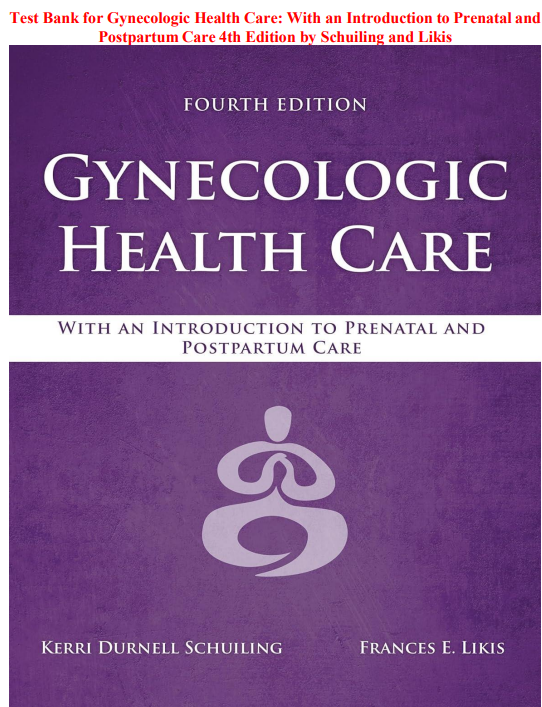
This test bank follows the 4th edition of Gynecologic Health Care: With an Introduction to Prenatal and Postpartum Care by Kerri Durnell Schuiling and Frances E. Likis, chapter by chapter. So your review sessions actually track with what your program is teaching.
Whether you’re a nurse-midwifery student, a women’s health NP student, or a nursing instructor building course content, this resource sharpens the clinical reasoning this specialty demands.
What This Test Bank Covers
This textbook covers the full scope of gynecologic primary care along with an introduction to perinatal care, and this test bank mirrors that same range. You’ll find questions on:
- Well-woman exams and preventive gynecologic screening
- Menstrual cycle physiology and menstrual disorders
- Contraception counseling and management
- Sexually transmitted infections
- Vulvovaginal conditions and pelvic infections
- Breast health and screening
- Menopause and midlife health changes
- Infertility basics and preconception counseling
- Normal prenatal care and common discomforts of pregnancy
- Common antepartum complications
- Normal postpartum care and recovery
- Common postpartum complications
- Sexual health, intimate partner violence, and trauma-informed care
If it’s a chapter in the textbook, there’s a strong chance it’s represented in this test bank.
Why This Test Bank Stands Out
1. It Follows the Textbook’s Structure
Every question aligns with a specific chapter in the 4th edition, so review stays organized instead of scattered across unrelated topics.
2. It’s Written for Clinical Decision-Making
This isn’t a general health class test bank. Questions push toward diagnostic reasoning, counseling decisions, and management planning at the level expected of an advanced practice provider or midwifery student.
3. Every Question Comes With a Rationale
An answer without an explanation doesn’t build real clinical judgment. Each question breaks down why the correct choice fits best and why the other options fall short.
4. Clear, Direct Language
Gynecologic and perinatal content covers a lot of nuance, from hormonal shifts to counseling considerations. This test bank keeps the wording simple so the clinical reasoning stays easy to follow.
5. Useful for Ongoing, Repeated Review
Topics in this specialty benefit from repeated exposure across a semester, not a single study session. This test bank supports that kind of extended practice.
Who This Test Bank Is For
- Nurse-midwifery students
- Women’s Health Nurse Practitioner (WHNP) students
- Family NP students building gynecologic and perinatal competency
- Advanced practice nurses preparing for certification exams
- Nursing faculty building quizzes or exam question pools
Sample Practice Questions
Here are five sample questions written in the same style and difficulty level as the full test bank.
Question 1: Menstrual Disorders
A patient reports painful menstrual cramps that begin just before her period and improve within the first few days of bleeding, with no identifiable underlying pelvic pathology. Which condition does this best describe?
A) Secondary dysmenorrhea
B) Primary dysmenorrhea
C) Endometriosis
D) Adenomyosis
Correct Answer: B) Primary dysmenorrhea
Rationale: Primary dysmenorrhea refers to menstrual pain without an identifiable underlying pelvic condition, typically caused by prostaglandin-driven uterine contractions. It usually begins with or just before menses and improves as bleeding progresses. Secondary dysmenorrhea, by contrast, is linked to an underlying condition like endometriosis or adenomyosis, both of which would need further evaluation to confirm rather than being assumed without findings.
Question 2: Contraception Counseling
A patient who smokes and is over the age of 35 is requesting a contraceptive method. Which option carries the greatest concern due to increased cardiovascular risk?
A) Progestin-only pill
B) Copper intrauterine device
C) Combined oral contraceptive pill
D) Levonorgestrel intrauterine system
Correct Answer: C) Combined oral contraceptive pill
Rationale: Combined hormonal contraceptives containing estrogen carry an increased risk of blood clots and cardiovascular events, a risk that rises further in smokers over the age of 35. This combination is generally considered a contraindication for estrogen-containing methods. Progestin-only options, the copper IUD, and the levonorgestrel IUD don’t carry that same estrogen-related cardiovascular risk, making them more appropriate choices for this patient.
Question 3: Prenatal Care
A patient at 12 weeks gestation asks the nurse-midwife about normal early pregnancy discomforts. Which symptom is most consistent with a typical first-trimester experience?
A) Severe abdominal pain with vaginal bleeding
B) Nausea and breast tenderness
C) Sudden onset of visual disturbances
D) Absence of fetal movement at this gestational age
Correct Answer: B) Nausea and breast tenderness
Rationale: Nausea and breast tenderness are common, expected discomforts in early pregnancy due to rising hormone levels. Severe abdominal pain with bleeding warrants urgent evaluation for possible miscarriage or ectopic pregnancy. Visual disturbances can signal a hypertensive complication, though this is more concerning later in pregnancy. Absence of fetal movement at 12 weeks isn’t abnormal, since movement typically isn’t felt by the patient until later, so it wouldn’t be raised as a discomfort at this stage in the first place.
Question 4: Postpartum Complications
A postpartum patient reports calf pain, swelling, and warmth in one leg five days after delivery. What is the priority nursing concern?
A) Normal postpartum fluid shifts
B) Deep vein thrombosis
C) Mastitis
D) Postpartum preeclampsia
Correct Answer: B) Deep vein thrombosis
Rationale: Pregnancy and the postpartum period increase the risk of venous thromboembolism, and unilateral calf pain, swelling, and warmth are classic signs of a deep vein thrombosis that require prompt evaluation. Normal fluid shifts wouldn’t typically cause localized, one-sided symptoms like this. Mastitis involves breast tissue, not the leg. Postpartum preeclampsia presents with hypertension and related symptoms rather than isolated calf findings.
Question 5: Menopause
A perimenopausal patient reports irregular periods, hot flashes, and mood changes. Which explanation is most accurate regarding this presentation?
A) These symptoms always indicate a serious underlying condition requiring immediate referral
B) These symptoms reflect the natural hormonal fluctuations of the menopausal transition
C) These symptoms mean the patient has already reached menopause
D) These symptoms are unrelated to hormonal changes
Correct Answer: B) These symptoms reflect the natural hormonal fluctuations of the menopausal transition
Rationale: Irregular periods, hot flashes, and mood changes are common during perimenopause, driven by fluctuating estrogen and progesterone levels as ovarian function declines. These symptoms don’t automatically indicate a serious condition requiring urgent referral, though persistent or severe symptoms should still be evaluated. Menopause itself is defined as twelve consecutive months without a period, so irregular periods indicate the transition is still ongoing, not that menopause has already occurred. These symptoms are directly tied to hormonal changes, not unrelated to them.
These five questions only scratch the surface. The full test bank includes hundreds of similar questions spanning every chapter of the 4th edition.
How to Study With This Test Bank
- Match your review to your course sequence. Study topics in the order your program assigns them.
- Pay close attention to counseling-based rationales. This specialty often tests communication and shared decision-making alongside clinical facts.
- Practice distinguishing similar conditions. Primary versus secondary dysmenorrhea, and normal versus concerning pregnancy symptoms, overlap and show up often on exams.
- Revisit missed questions after a few days. Spaced repetition helps nuanced clinical distinctions stick for the long term.
- Pair this with your assigned textbook chapters. The test bank reinforces the material; it isn’t meant to replace it.
Why This Beats Generic Practice Quizzes
Generic online quizzes are often written for a general audience and miss the depth this specialty requires. This test bank was built specifically around Schuiling and Likis’s 4th edition, so the terminology, structure, and clinical reasoning level match what your program actually expects.
Format and Delivery
This test bank is delivered as a digital file. You get instant access after purchase. No shipping. No delays. Study from your laptop, tablet, or phone whenever it’s convenient.
Frequently Asked Questions
Is this test bank the same as the textbook?
No. This is a companion study resource. You’ll still need Gynecologic Health Care: With an Introduction to Prenatal and Postpartum Care, 4th Edition, for full chapter content and detailed clinical guidance.
Is this appropriate for entry-level nursing students?
Not really. This test bank is written at an advanced practice or midwifery level, so it’s best suited for WHNP, nurse-midwifery, or similar graduate-level learners.
Does this cover prenatal and postpartum content, or just gynecology?
Both. True to the textbook’s scope, this test bank covers gynecologic primary care as well as an introduction to prenatal and postpartum care.
Can faculty use this to build course exams?
Yes. Many faculty members use test banks like this as a foundation for quizzes, midterms, or final exams in advanced practice or midwifery programs.
What question formats are included?
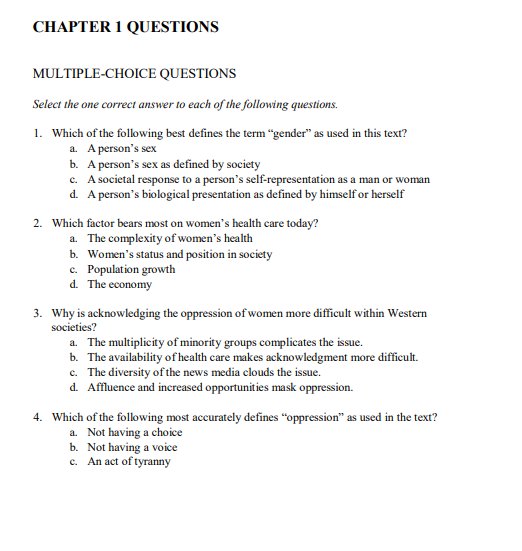
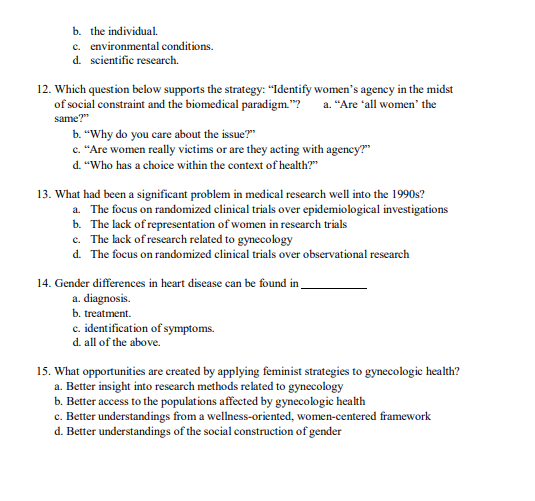
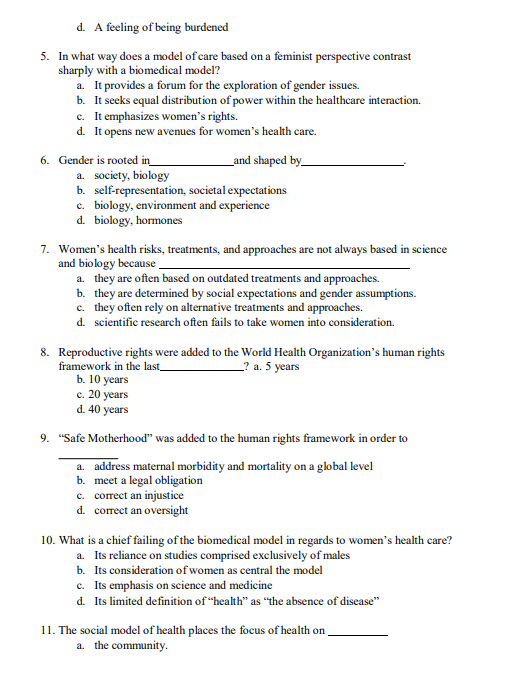
You’ll find multiple choice, true or false, matching, and short answer questions throughout the set.
Are rationales included for every answer?
Yes. Each question includes an explanation of why the correct answer fits best and why the other choices fall short.
Is this useful for certification exam prep?
Yes. The content aligns closely with concepts tested on women’s health nurse practitioner and nurse-midwifery certification exams.
How is this different from the textbook’s built-in review questions?
Built-in review questions are usually limited in number. This test bank offers a much larger, more comprehensive question set with detailed rationales for deeper practice.
Final Thoughts
Gynecologic and perinatal care asks advanced practice providers to move between routine screening, sensitive counseling, and time-critical complications, often within the same day. This test bank for the 4th edition of Gynecologic Health Care gives you a direct way to build that range of skill before your exam. Realistic scenarios. Honest explanations. A study tool built around the exact patient population you’ll be caring for.
Grab your copy today and prepare with real confidence.
Aadhya Priya –
Good resource for maintaining consistent study habits
Winnie M. –
Clear questions provide focused opportunities for self-assessment.
Theresa M. –
Helpful tool for reviewing topics between classes.
Pius Kuti –
Convenient material for adding extra practice to studying
Leah Kiptum –
Good questions for refreshing recently learned information.
Alan Aaron –
Helpful questions for refreshing previously learned information.
Benjamin Campbell –
Supports steady improvement through regular practice sessions.
Helen Christie –
Useful study aid for reviewing essential course concepts.