Pharmacology is one of the most demanding subjects in nursing education. The drug names pile up fast. The mechanisms of action require real biochemical understanding. The nursing implications stretch across every body system. And the margin for error in clinical practice is essentially zero. A nurse who misunderstands a drug interaction, misjudges a contraindication, or overlooks a critical monitoring parameter puts patients at risk. That is the weight this subject carries, and it is the reason preparation has to go deeper than reading and highlighting.
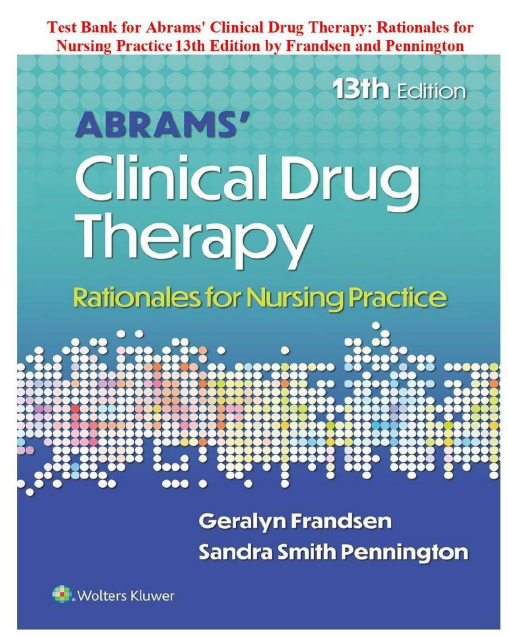
Abrams’ Clinical Drug Therapy has long been one of the most trusted pharmacology texts in nursing education. The 13th edition by Frandsen and Pennington builds on that legacy with updated drug information, expanded clinical reasoning content, and a strong emphasis on the rationales behind nursing practice. It does not just tell you what to do. It tells you why. This test bank was written to match that same philosophy.
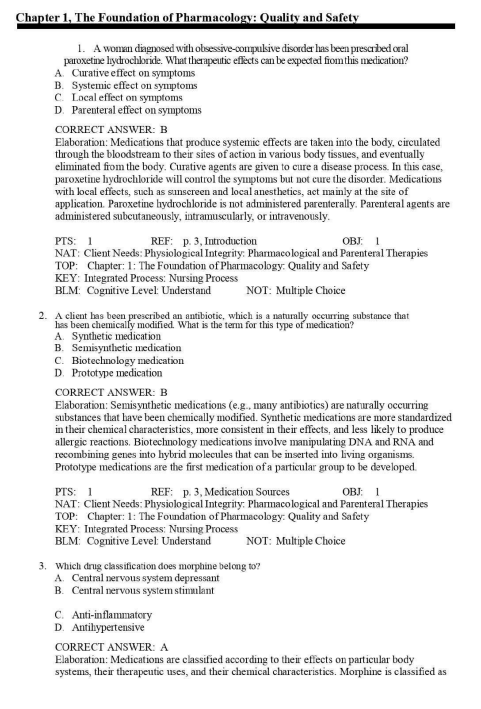
Every question in this resource is tied to the 13th edition chapter structure. The coverage is thorough and carefully organized, moving through the foundational principles of pharmacokinetics and pharmacodynamics, then progressing through drug therapy across every major body system. You will find questions on cardiovascular medications, antimicrobials, central nervous system drugs, endocrine agents, respiratory medications, gastrointestinal drugs, immunosuppressants, antineoplastics, and more. No major drug category is left out.
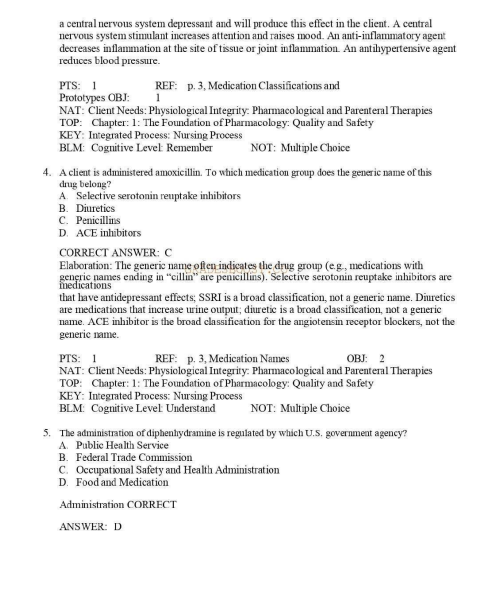
What sets this test bank apart is the depth of its answer explanations. Every question comes with the correct answer identified and followed by a detailed rationale. These are not one-line explanations. They walk you through the clinical thinking behind the correct choice, explain why the other options are wrong, and connect the pharmacology to the nursing action. That level of explanation turns each question into a mini lesson, so you are not just checking whether you got the right answer. You are building the understanding that makes the right answer obvious next time.
The file is a fully searchable PDF. When you need to drill questions on beta blockers before a cardiology exam, or review antibiotic selection principles before a clinical rotation in an infectious disease unit, you can use Ctrl+F to land exactly where you need to be. No scrolling through chapters you already know. No wasted time navigating a poorly organized document. Just fast, focused, efficient studying.
Your download link is ready the moment your purchase is confirmed. There is no waiting period, no approval queue, and no account creation required. Open the file on your laptop, tablet, or phone and get to work immediately. The file is yours permanently. No subscription, no renewal, no expiry.
What You Get
- Full chapter coverage matched to the 13th edition layout
- Scenario-based multiple-choice questions covering all major drug categories
- Every question answered with the correct response clearly identified
- Detailed rationales that explain the reasoning and address all answer options
- Searchable PDF format for efficient, targeted review by drug class or body system
- One-time purchase with permanent, unlimited file access
Who This Is For
Undergraduate nursing students taking pharmacology as part of their core curriculum will find this test bank most immediately useful. It is also an excellent resource for nursing students preparing for NCLEX, where pharmacology questions are consistently among the most heavily weighted content areas. Graduate nursing students in advanced practice programs who need to deepen their clinical pharmacology knowledge will benefit as well. Finally, this resource works well for RNs returning to practice or transitioning into new specialty areas where drug therapy knowledge needs to be refreshed and reinforced.
Sample Questions
Question 1
A nurse is preparing to administer digoxin to a patient with heart failure. Before giving the dose, the nurse checks the patient’s apical pulse and finds it is 52 beats per minute. What is the most appropriate nursing action?
A) Administer the dose as ordered and document the finding
B) Hold the dose, notify the provider, and document the heart rate
C) Administer half the prescribed dose and recheck in one hour
D) Administer the dose and schedule a repeat ECG within the hour
Correct Answer: B
Detailed Explanation:
Digoxin is a cardiac glycoside used to manage heart failure and certain dysrhythmias. One of its primary mechanisms is slowing conduction through the atrioventricular node, which is why bradycardia is one of its most significant adverse effects. The standard nursing guideline is to withhold digoxin and notify the provider if the apical pulse is below 60 beats per minute in an adult before administration. In this case, the patient’s pulse of 52 bpm falls below that threshold, making option B the correct and safe response.
Option A is incorrect because administering the drug at this heart rate could worsen the bradycardia and put the patient at risk for a life-threatening dysrhythmia. Option C is incorrect because nurses do not independently adjust prescribed doses. Altering a dose without a provider order is outside the scope of nursing practice. Option D is incorrect for the same reason as A, as administering the dose does not address the immediate safety concern.
Question 2
A patient taking warfarin for atrial fibrillation is prescribed trimethoprim-sulfamethoxazole for a urinary tract infection. The nurse understands that this combination requires close monitoring because trimethoprim-sulfamethoxazole is likely to produce which effect?
A) Decrease warfarin absorption from the gastrointestinal tract
B) Increase warfarin metabolism, reducing its anticoagulant effect
C) Inhibit warfarin metabolism, increasing the risk of bleeding
D) Bind to warfarin in the bloodstream, making it less effective
Correct Answer: C
Detailed Explanation:
Trimethoprim-sulfamethoxazole inhibits the cytochrome P450 enzyme system, specifically CYP2C9, which is the primary pathway responsible for metabolizing warfarin. When this enzyme is inhibited, warfarin is broken down more slowly than usual, leading to elevated plasma levels and a prolonged prothrombin time. This significantly increases the patient’s risk of bleeding, which can range from minor bruising to life-threatening hemorrhage.
Option A is incorrect because trimethoprim-sulfamethoxazole does not significantly affect warfarin absorption in the gut. Option B is the opposite of what occurs. Enzyme inhibition slows metabolism rather than accelerating it. Option D is pharmacologically inaccurate. Protein binding displacement can occur with some drug interactions but is not the primary mechanism in this case. The nurse should anticipate more frequent INR monitoring and watch for signs of bleeding such as unusual bruising, blood in the urine, or prolonged bleeding from minor cuts.
Question 3
A nurse is caring for a patient with type 2 diabetes who is started on metformin. Which patient condition would require the nurse to hold the medication and consult the provider before administration?
A) A fasting blood glucose of 180 mg/dL
B) A serum creatinine of 2.4 mg/dL indicating significant renal impairment
C) A body mass index of 32 indicating obesity
D) A hemoglobin A1C of 8.5%
Correct Answer: B
Detailed Explanation:
Metformin is a biguanide antidiabetic medication that works primarily by decreasing hepatic glucose production and improving peripheral insulin sensitivity. It is generally considered the first-line pharmacologic treatment for type 2 diabetes. However, it carries a serious risk of lactic acidosis, a rare but potentially fatal complication, in patients with significantly reduced kidney function. Because metformin is excreted unchanged by the kidneys, impaired renal clearance leads to drug accumulation and increases the risk of lactic acid buildup in the blood. Current guidelines recommend avoiding metformin when the estimated glomerular filtration rate falls below a safe threshold, and a creatinine of 2.4 mg/dL in this scenario signals meaningful renal impairment that warrants provider consultation before proceeding.
Option A is incorrect because an elevated blood glucose is actually an indication for treatment with metformin, not a contraindication. Option C is incorrect because obesity in a patient with type 2 diabetes is common and metformin is often preferred in this population because it does not promote weight gain. Option D is incorrect for the same reason as A. An elevated A1C reflects poor glycemic control, which reinforces the need for medication, not a reason to withhold it.
Question 4
A patient who has been taking prednisone 40 mg daily for six weeks for an autoimmune condition asks the nurse if they can stop taking the medication now that they are feeling better. What is the most important information the nurse should provide?
A) The patient may stop the medication immediately since symptoms have resolved
B) The patient should taper the dose gradually as directed by the provider rather than stopping abruptly
C) The patient can reduce the dose by half each day independently until it is finished
D) Stopping the medication early will cause the autoimmune condition to return immediately
Correct Answer: B
Detailed Explanation:
Prednisone is a corticosteroid that suppresses inflammation and immune activity. When taken at high doses for an extended period, it suppresses the hypothalamic-pituitary-adrenal axis, which is the system responsible for the body’s natural cortisol production. Abruptly stopping the medication does not give the adrenal glands time to resume normal cortisol production, which can lead to acute adrenal insufficiency, a potentially life-threatening condition characterized by severe fatigue, hypotension, nausea, vomiting, and electrolyte imbalances. Tapering the dose gradually allows the HPA axis to recover and resume normal function safely.
Option A is dangerous advice that could result in adrenal crisis. Option C is incorrect because independently adjusting the dose schedule without provider guidance is unsafe and outside the scope of what a patient should do without instruction. Option D is partially true but is not the most important safety concern in this situation. The risk of adrenal insufficiency from abrupt cessation is the priority teaching point the nurse must communicate.
Question 5
A nurse is educating a patient newly prescribed atorvastatin for hyperlipidemia. Which symptom should the nurse instruct the patient to report to the provider immediately?
A) Mild headache during the first week of therapy
B) Occasional nausea after taking the medication with food
C) Unexplained muscle pain, weakness, or dark-colored urine
D) A slight decrease in appetite during the first month
Correct Answer: C
Detailed Explanation:
Atorvastatin belongs to the statin class of medications, which work by inhibiting HMG-CoA reductase, an enzyme involved in cholesterol synthesis in the liver. One of the most serious adverse effects associated with statins is myopathy, which can range from mild muscle soreness to a severe and life-threatening condition called rhabdomyolysis. In rhabdomyolysis, muscle fibers break down rapidly and release myoglobin into the bloodstream, which can overwhelm the kidneys and lead to acute renal failure. Dark or cola-colored urine is a classic warning sign of myoglobin in the urine and should be treated as a medical emergency. The patient must understand to stop the medication and contact the provider immediately if these symptoms develop.
Option A is incorrect because mild headache is a common, benign side effect during the adjustment period and does not require urgent reporting. Option B is incorrect because mild nausea, particularly when the medication is taken with food, is not a dangerous side effect and often resolves on its own. Option D is incorrect because a slight appetite change is not a clinically significant concern associated with statin therapy and does not warrant immediate provider notification.
FAQ
Is this an official publisher product?
No. This is an independently written study resource structured around the topics and chapter layout of the 13th edition. It is not affiliated with or endorsed by the authors or their publisher.
Will these questions match my pharmacology course exams?
This test bank is designed to deepen your pharmacology knowledge and sharpen your clinical reasoning so you are prepared for any exam format. It does not preview any specific instructor’s questions.
What makes this test bank different from others?
Most test banks provide a one-line answer key. This resource includes detailed rationales that explain the correct answer and address why each incorrect option is wrong. That approach builds genuine understanding rather than answer recognition.
What file format will I receive?
A fully searchable PDF, navigable by chapter, drug class, or keyword using any standard PDF reader on any device.
How quickly can I access the file after purchase?
Instantly. Your download link is generated immediately after checkout with no waiting period or additional steps required.
Can I open this on my phone or tablet?
Yes. The PDF opens cleanly on any iOS or Android device using a free PDF reader app with no formatting issues.
Do I need the textbook to use this?
Having the textbook alongside is helpful since the chapter order mirrors the 13th edition closely. The questions and rationales are also written in enough detail to be used independently for focused review.
Is there a subscription or renewal fee?
No. This is a one-time purchase. The file is yours to keep and use as many times as you need with no recurring charges or expiry date.

Alicia Silva –
Excellent study guide
Kamara Reid –
High quality practice questions and detailed answers.
Peterson S. –
Helpful exam practice material
Terence V. –
Well-organized questions for exam preparation
Lisa Horton –
Simplified seemingly complex concepts
Terry Anne –
It made studying for exams very efficient