Med-surg is the course that ties everything together. Anatomy, pharmacology, pathophysiology, all of it shows up here at once. And it’s often the class students say hits the hardest, simply because there’s so much ground to cover. A focused practice tool makes a real difference.
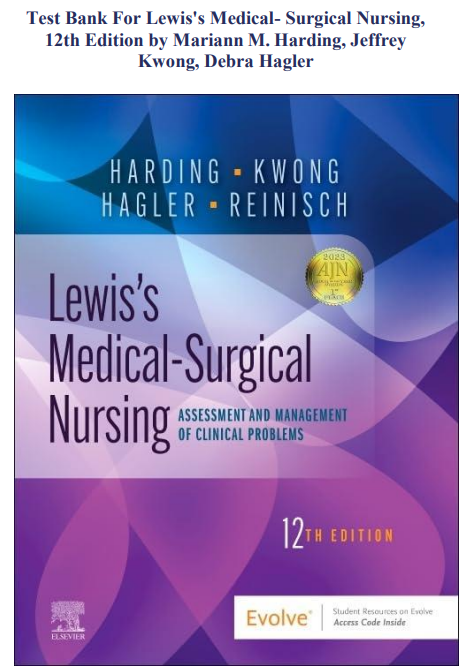
This test bank is built around the 12th edition of Lewis’s Medical-Surgical Nursing: Assessment and Management of Clinical Problems by Mariann M. Harding, Jeffrey Kwong, and Debra Hagler. It follows the textbook unit by unit, so your practice sessions actually match your course schedule.
Whether you’re working through a traditional BSN program, an accelerated track, or reviewing before clinicals, this resource helps you connect assessment findings to real clinical decision-making.
What This Test Bank Covers
Lewis’s textbook is known for its depth and clinical realism, and this test bank reflects that same range. You’ll find questions covering:
- Perioperative nursing and surgical care
- Fluid, electrolyte, and acid-base balance
- Cardiovascular disorders, including heart failure and dysrhythmias
- Respiratory disorders, including COPD and pneumonia
- Hematologic and immune system disorders
- Gastrointestinal and hepatobiliary conditions
- Endocrine disorders, including diabetes management
- Renal and urinary system disorders
- Musculoskeletal injuries and disorders
- Neurologic conditions, including stroke and traumatic brain injury
- Reproductive and integumentary disorders
- Emergency, critical care, and shock states
If it shows up in the textbook, there’s a strong chance it’s represented here.
Why This Test Bank Stands Out
1. It Matches the Textbook Unit by Unit
You won’t waste time sorting through irrelevant questions. Everything is organized to align with the structure of the 12th edition, so review stays focused.
2. It Prioritizes Clinical Judgment
Med-surg exams rarely ask you to just define a term. They ask what you’d assess first, what you’d do next, and who needs attention right now. This test bank was built with that same priority-based thinking in mind.
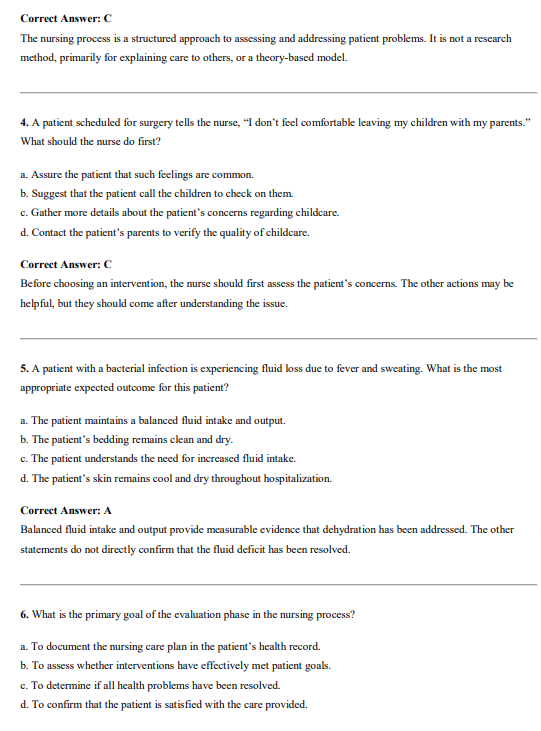
3. Every Question Includes a Rationale
A lucky guess doesn’t teach you anything. Each question explains why the correct answer is right, and why the other choices don’t hold up under clinical reasoning.
4. Straightforward, Clear Language
Med-surg content is dense enough on its own. This test bank keeps sentence structure simple so the clinical concept stays the focus, not the wording.
5. Flexible for Any Study Routine
Review one body system a night through the semester. Or push through several units before a big exam. This test bank adjusts either way.
Who This Test Bank Is For
- Nursing students taking Medical-Surgical Nursing I or II
- Accelerated BSN students moving through content at a faster pace
- RN-to-BSN students refreshing core clinical knowledge
- Nursing instructors building quizzes or exam question pools
- New grad nurses reviewing before starting med-surg units
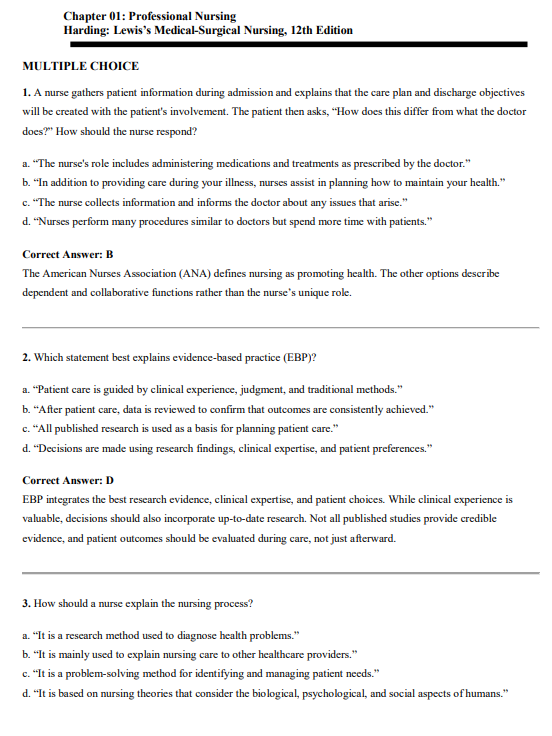
Sample Practice Questions
Here are five sample questions written in the same style and difficulty level as the full test bank.
Question 1: Cardiovascular Disorders
A patient with heart failure develops crackles in the lung bases, weight gain, and shortness of breath. These findings are most consistent with which condition?
A) Right-sided heart failure
B) Left-sided heart failure
C) Cardiac tamponade
D) Pulmonary embolism
Correct Answer: B) Left-sided heart failure
Rationale: Left-sided heart failure causes blood to back up into the pulmonary circulation, leading to crackles, shortness of breath, and fluid buildup in the lungs. Weight gain reflects overall fluid retention common in heart failure. Right-sided heart failure typically causes peripheral edema and jugular vein distension instead of pulmonary symptoms. Cardiac tamponade and pulmonary embolism present with more acute, distinct symptom patterns that don’t match this gradual presentation.
Question 2: Fluid and Electrolyte Balance
A patient with a serum potassium level of 6.8 mEq/L is at highest risk for which complication?
A) Skeletal muscle weakness only
B) Cardiac dysrhythmias
C) Increased urine output
D) Improved neuromuscular function
Correct Answer: B) Cardiac dysrhythmias
Rationale: A potassium level of 6.8 mEq/L is dangerously elevated and puts the patient at high risk for life-threatening cardiac dysrhythmias, since potassium directly affects cardiac muscle conduction. Muscle weakness can occur but isn’t the priority concern. Increased urine output isn’t a typical finding with hyperkalemia, and neuromuscular function becomes impaired, not improved, at this level.
Question 3: Respiratory Disorders
Which finding would the nurse expect in a patient experiencing an acute exacerbation of chronic obstructive pulmonary disease (COPD)?
A) Decreased respiratory rate
B) Pursed-lip breathing and use of accessory muscles
C) Bradycardia
D) Increased oxygen saturation
Correct Answer: B) Pursed-lip breathing and use of accessory muscles
Rationale: During a COPD exacerbation, patients often use pursed-lip breathing to slow exhalation and prevent airway collapse, along with accessory muscles to compensate for increased work of breathing. Respiratory rate typically increases, not decreases. Tachycardia, not bradycardia, is more common as the body compensates for reduced oxygenation, and oxygen saturation usually drops rather than improves during an exacerbation.
Question 4: Neurologic Disorders
A patient presents with sudden facial drooping, slurred speech, and weakness on one side of the body. What is the nurse’s priority action?
A) Wait to see if symptoms resolve on their own
B) Administer an oral aspirin immediately
C) Notify the provider and prepare for emergency stroke evaluation
D) Encourage the patient to walk to assess balance
Correct Answer: C) Notify the provider and prepare for emergency stroke evaluation
Rationale: These symptoms strongly suggest an acute stroke, and time is critical for treatment options like thrombolytic therapy. Immediate notification and emergency evaluation, often including a stat CT scan, take top priority. Waiting for symptoms to resolve wastes valuable time. Aspirin should never be given before ruling out a hemorrhagic stroke through imaging. Asking the patient to walk risks a fall given their weakness and isn’t an appropriate assessment step in this situation.
Question 5: Endocrine Disorders
A patient with type 1 diabetes reports nausea, abdominal pain, and fruity-smelling breath. Blood glucose is 420 mg/dL. Which action should the nurse take first?
A) Administer oral fluids and recheck glucose in one hour
B) Notify the provider and prepare for IV fluids and insulin therapy
C) Withhold all treatment until the patient feels better
D) Encourage the patient to eat a high-carbohydrate snack
Correct Answer: B) Notify the provider and prepare for IV fluids and insulin therapy
Rationale: These findings point to diabetic ketoacidosis, a medical emergency requiring prompt treatment with IV fluids and insulin to correct hyperglycemia and reverse ketone production. Oral fluids alone won’t adequately address this level of hyperglycemia and dehydration. Withholding treatment allows the condition to worsen. A high-carbohydrate snack would raise blood glucose further, which is the opposite of what this patient needs.
These five questions are just a small preview. The full test bank includes a much larger question set spanning every unit of the 12th edition.
How to Study With This Test Bank
- Follow your course outline. Study units in the order your instructor assigns them.
- Focus on prioritization questions. Med-surg exams often ask what to do “first” or “most important,” so practicing that reasoning pattern matters.
- Read every rationale carefully. Understanding why an answer is correct builds clinical judgment, not just test recall.
- Group related systems together. Cardiovascular, respiratory, and renal disorders often overlap, so reviewing them side by side reinforces the connections.
- Retest yourself after a few days. Spaced review strengthens long-term retention better than back-to-back repetition.
Why This Beats Generic Med-Surg Quizzes
Free quizzes online often use inconsistent terminology or skip topics your course actually covers. This test bank was built specifically around the 12th edition by Harding, Kwong, and Hagler, so the wording, structure, and difficulty match what you’ll see on your real exams.
Format and Delivery
This test bank comes as a digital file. You get access right after purchase. No shipping. No waiting around. Study from your laptop, tablet, or phone whenever you have time.
Frequently Asked Questions
Is this test bank the same as the textbook?
No. This is a companion study resource. You’ll still need Lewis’s Medical-Surgical Nursing, 12th Edition, for full chapter content, images, and case studies.
Does this cover both Med-Surg I and Med-Surg II content?
Yes. Since the textbook spans the full range of adult health conditions, this test bank covers content typically taught across both courses.
Is this useful for NCLEX prep?
It can be. Med-surg concepts make up a large portion of licensure exams, so practicing prioritization and clinical judgment here supports that broader goal.
Can instructors use this to build exams?
Yes. Many instructors use test banks like this as a foundation for quizzes, unit exams, or finals.
What question formats are included?
You’ll find multiple choice, true or false, matching, and short answer questions throughout the set.
Are rationales included for every question?
Yes. Each question comes with an explanation of why the correct answer is right and why the other choices are incorrect.
Does this include prioritization-style questions?
Yes. Many questions are written in a “what should the nurse do first” format, matching the clinical reasoning style used in med-surg courses.
How is this different from the textbook’s built-in review questions?
Built-in chapter review questions are usually limited in number. This test bank offers a much larger, more comprehensive question set with detailed rationales for deeper practice.
Final Thoughts
Medical-surgical nursing asks you to think fast and think clearly, often with a lot of moving pieces at once. This test bank for the 12th edition of Lewis’s Medical-Surgical Nursing gives you a direct way to practice that kind of clinical reasoning before your exam. Realistic scenarios. Honest explanations. A study tool built around the exact course you’re taking.
Grab your copy today and study with real confidence.
Liam Mbogo –
Challenging questions that make you think critically
Kevin May –
Great for finding knowledge gaps before exams
Dorcas M. –
The rationales make studying much more effective.
Winnie M. –
Useful practice for nursing school examinations
SHoustone –
Excellent tool for reinforcing clinical knowledge
Rachael M. –
Helpful material for strengthening familiarity with course content.
David Miller –
Questions make it easier to revisit important ideas.
Helen Christie –
Useful practice resource for independent learning sessions.
Aurora Hezel –
Good study aid for refreshing foundational knowledge.