Psychiatric-mental health nursing asks more of a nurse than almost any other specialty. The clinical tools are not scalpels or catheters or ventilators. They are words, presence, therapeutic boundaries, and the quality of attention a nurse brings into a room. The patients carry diagnoses that are invisible to imaging and laboratory testing but profoundly real in their consequences for daily life, relationships, safety, and human dignity. The legal and ethical terrain is complex. The stigma surrounding mental illness is still pervasive, and nurses must be prepared to navigate it with both clinical precision and deep compassion. The interventions must be grounded in evidence while remaining responsive to the unique personhood of each patient. And the safety stakes, including suicide risk, violence, elopement, and the consequences of untreated psychiatric illness, are as serious as those in any intensive care unit. To practice competently and compassionately in this specialty, a nurse must understand people, systems, pharmacology, law, ethics, and therapeutic technique at a level of depth that takes sustained, deliberate study to achieve. This test bank is built to support and accelerate that process.
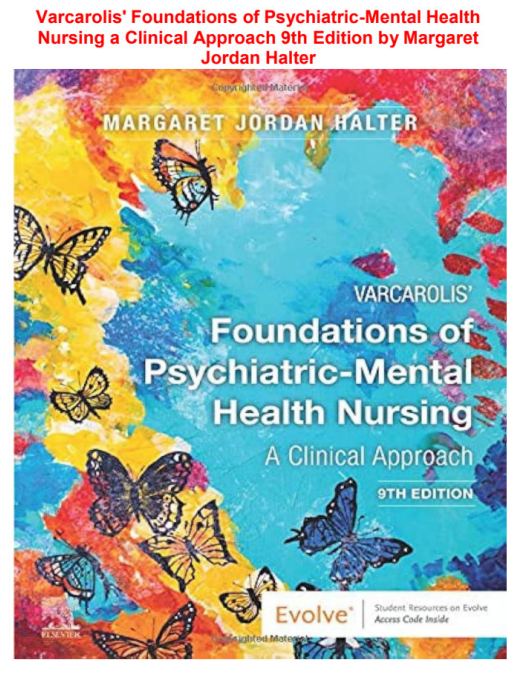
Varcarolis’ Foundations of Psychiatric-Mental Health Nursing by Margaret Jordan Halter has been the gold standard introductory text in psychiatric nursing education for decades. The 9th edition continues that tradition with thoroughly updated content reflecting the DSM-5-TR diagnostic framework, expanded coverage of trauma-informed care, culturally responsive practice, and the neurobiology of mental illness, and a deeper emphasis on the clinical reasoning skills and therapeutic communication techniques that define skilled psychiatric nursing practice. It is a textbook that takes the full complexity of psychiatric-mental health nursing seriously while remaining accessible and clinically grounded, and this test bank was written to match that standard of rigor and relevance at every level.
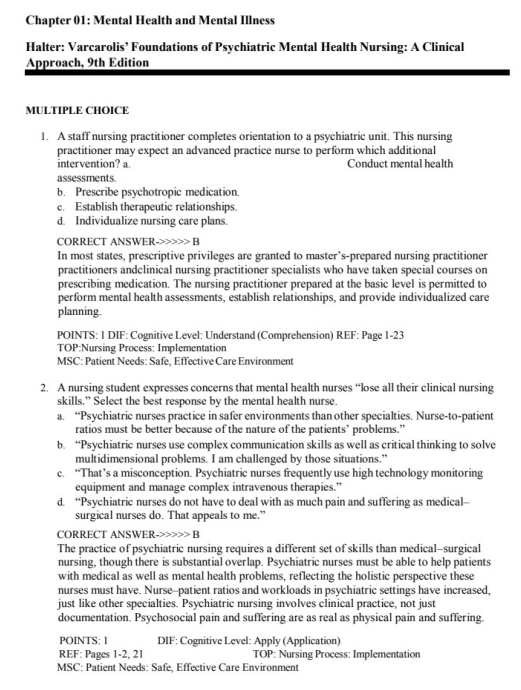
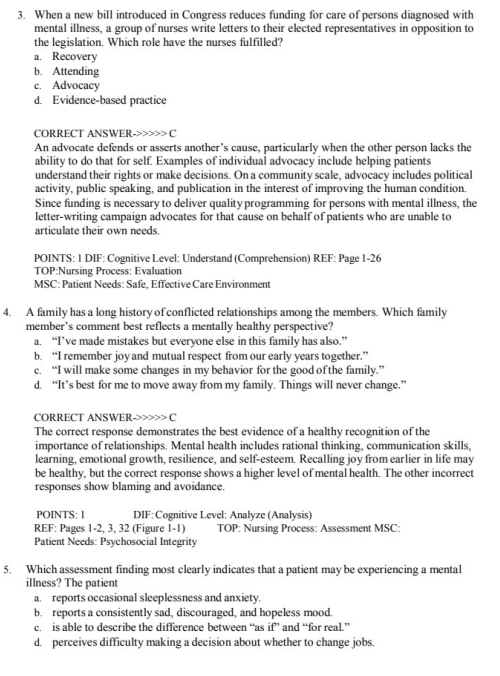
Every question in this resource follows the 9th edition chapter structure. The coverage is comprehensive and carefully organized across the full breadth of the textbook. Questions address the theoretical and historical foundations of psychiatric nursing, the therapeutic nurse-patient relationship, therapeutic communication techniques and their application, legal and ethical issues including involuntary commitment, informed consent, and the duty to warn, psychobiological foundations of mental illness, and psychopharmacology including antipsychotics, mood stabilizers, antidepressants, anxiolytics, and medications used in addiction treatment. Mental health disorders covered in depth include schizophrenia spectrum disorders, depressive disorders, bipolar and related disorders, anxiety disorders, obsessive-compulsive and related disorders, trauma and stressor-related disorders including PTSD, dissociative disorders, somatic symptom disorders, eating disorders, sleep-wake disorders, sexual dysfunction and gender dysphoria, substance use and addictive disorders, neurocognitive disorders including delirium and dementia, personality disorders, and child and adolescent psychiatric conditions. Crisis intervention, suicide risk assessment, violence assessment and de-escalation, inpatient psychiatric nursing, and community and recovery-focused mental health care are all represented. No major content area has been omitted.
What makes this test bank distinctly valuable is the quality and clinical depth of its answer explanations. Every question presents a realistic psychiatric nursing scenario, clearly identifies the correct answer, and follows it with a thorough, well-reasoned rationale. These rationales do not simply restate which option is right. They explain the therapeutic, pharmacological, legal, or ethical reasoning behind the correct choice, address why each of the remaining options is incorrect or less appropriate, and where relevant connect the content to the nursing process, the DSM-5-TR framework, therapeutic communication principles, or the NCLEX clinical judgment model. That depth of explanation means every question functions as both an assessment and a genuine learning experience. You are not just practicing answer selection. You are building the analytical and interpersonal understanding that makes the right response clear in any examination or clinical situation involving a patient with a psychiatric condition.
The file is a fully searchable PDF. When you need to focus your review on schizophrenia pharmacology before a psychopharmacology examination, consolidate your understanding of suicide risk assessment before a psychiatric clinical rotation, or drill questions on therapeutic communication techniques before a skills competency, use Ctrl+F to navigate directly to that content in seconds. No time lost scrolling through chapters you have already covered. No disruption to your study momentum. Direct, precise access to exactly the content you need at exactly the moment you need it.
Your download link is generated the moment your purchase is confirmed. No waiting period, no account creation, no approval process. Open the file on your laptop, tablet, or phone and begin working through it immediately. The file is yours permanently. No subscription, no renewal fee, and no expiry date.
What You Get
- Full chapter coverage matched to the 9th edition layout across all psychiatric-mental health nursing content areas
- Clinically grounded scenario-based multiple-choice questions reflecting real psychiatric nursing complexity
- Every question answered with the correct response clearly identified
- Detailed rationales explaining the therapeutic, pharmacological, and ethical reasoning and addressing all answer options
- Searchable PDF format for fast, targeted review by disorder, concept, or clinical situation
- One-time purchase with permanent, unlimited file access
Who This Is For
Nursing students enrolled in psychiatric-mental health nursing courses will benefit most directly from this resource. It mirrors the chapter structure of the Halter textbook closely and is designed to support students as they work through one of the most conceptually rich and clinically demanding courses in any pre-licensure nursing program. It is also an excellent preparation tool for students approaching NCLEX, where psychosocial integrity and mental health content is a consistently tested domain that many students underestimate in their preparation. RNs pursuing the Psychiatric-Mental Health Nursing Certification examination will find the depth and clinical focus of this resource well matched to their preparation needs. Nurses transitioning into inpatient psychiatric, community mental health, or crisis stabilization settings will also find this test bank a structured and thorough way to consolidate the specialty knowledge they need before entering a new clinical environment.
Sample Questions
Question 1
A nurse is conducting an initial psychiatric assessment on a 34-year-old patient who was brought to the emergency department by police after neighbors reported erratic behavior. During the interview, the patient states, “The government has implanted a transmitter in my molar. They are broadcasting my thoughts to satellites and using them to control the weather. I need you to remove it.” The patient is calm, cooperative, and oriented to person, place, and time. How should the nurse respond therapeutically, and which term best describes the patient’s statement?
A) Tell the patient that the belief is not real and explain that no transmitter is present; the statement represents a hallucination
B) Ask the patient to open their mouth so the nurse can visually confirm whether a device is present before responding; the statement represents an illusion
C) Acknowledge the patient’s distress without validating or challenging the false belief directly, and document the statement as a delusion of control or thought broadcasting
D) Agree with the patient that the belief is concerning and promise to contact hospital security about the government device; the statement represents a paranoid idea that may be reality-based
Correct Answer: C
Detailed Explanation:
The patient’s belief that a government transmitter has been implanted in their tooth and is broadcasting their thoughts to control the weather is a fixed, false belief that is not consistent with shared reality and is not amendable to logical argument or counter-evidence. This is the definition of a delusion. More specifically, this belief involves two distinct delusional subtypes. The belief that thoughts are being broadcast to external entities is called thought broadcasting, a form of thought insertion or thought broadcasting delusion commonly associated with schizophrenia spectrum disorders. The belief that external forces are using this process to control natural events reflects a grandiose and persecutory quality consistent with delusions of control or reference.
The therapeutic nursing response to a patient expressing delusional content requires careful balance. The nurse must never directly validate or agree with the delusional belief, because doing so reinforces a break from reality and is therapeutically counterproductive. However, the nurse must also avoid directly confronting or arguing against the belief, because direct challenges to delusions rarely succeed in changing them and frequently damage the therapeutic relationship by making the patient feel dismissed, ridiculed, or unsafe. The most therapeutic approach is to acknowledge the patient’s emotional experience and distress without confirming or denying the content of the belief itself. A response such as “I can see that this is very distressing for you. I am here to help you feel safe” meets this standard.
Option A is incorrect on two counts. Telling the patient the belief is not real is a direct confrontation that is likely to escalate distress and damage trust. Additionally, the statement is a delusion, not a hallucination. Hallucinations are false sensory perceptions in the absence of external stimuli, such as hearing voices or seeing things that are not there. This patient is expressing a false fixed belief, which is a delusion. Option B is incorrect because visually examining the patient’s tooth in response to this delusional belief would reinforce the reality of the delusion rather than maintaining therapeutic boundaries. It would be experienced by the patient as confirmation that the nurse believes the transmitter may be present. Additionally, the statement is an illusion only if it represents a misperception of a real stimulus, which is not the case here. Option D is incorrect because agreeing that the belief is concerning and promising action sends the message that the nurse considers the belief potentially real, which validates the delusion and is both clinically and ethically inappropriate.
Question 2
A nurse is working on an inpatient psychiatric unit and is assigned to care for a patient with a diagnosis of major depressive disorder with suicidal ideation. During morning rounds, the patient tells the nurse, “I have been thinking about things, and I have decided that everyone would be better off without me. I have a plan. I know where the nurses keep the medications and I have been saving some of my pills.” How should the nurse prioritize the response to this disclosure?
A) Document the statement in the patient’s chart, notify the charge nurse at the end of the shift, and check the patient’s room for hoarded medications during the next scheduled room search
B) Acknowledge the patient’s feelings empathetically and encourage them to attend the morning group therapy session to discuss these feelings with peers in a structured environment
C) Take the disclosure seriously as an imminent suicide risk, stay with the patient, notify the treatment team immediately, initiate one-to-one observation, search the patient’s belongings and room for hoarded medications, and ensure the environment is safe
D) Reassure the patient that these feelings are common in depression and will improve with medication, and offer to increase the frequency of scheduled nursing check-ins to every hour
Correct Answer: C
Detailed Explanation:
This patient has disclosed active suicidal ideation with a specific, accessible, and immediately actionable plan involving hoarded medications. This is not passive suicidal ideation or a vague wish to be dead. This is a patient who has identified a method, has access to the means, and has already begun acting on the plan by accumulating pills. The specificity, accessibility, and lethality of the plan, combined with the hopelessness expressed in the statement that everyone would be better off without them, place this patient at imminent and serious risk of suicide attempt.
The nursing response to imminent suicide risk follows a clear and non-negotiable priority sequence. The nurse must not leave the patient alone under any circumstances. Continuous one-to-one observation must be initiated immediately, meaning a staff member must remain within arm’s reach of the patient at all times. The treatment team including the psychiatrist or provider on call must be notified immediately so that a risk assessment can be conducted and orders for safety measures can be obtained and implemented. The patient’s room and personal belongings must be searched immediately and thoroughly for hoarded medications and any other potential means of self-harm. The inpatient environment must be secured to remove or restrict access to all potential ligature points, sharps, and other items that could be used for self-harm.
Medication hoarding is one of the most common methods of suicide attempt on inpatient psychiatric units and represents a serious and immediate safety failure if not addressed urgently. Nursing check-in schedules, chart documentation, and group therapy do not constitute adequate responses to this level of disclosed risk.
Option A is incorrect because this disclosure constitutes an immediate safety emergency. Waiting until the end of the shift to notify the charge nurse, and relying on a scheduled room search, could cost the patient their life. Option B is incorrect because sending a patient with imminent suicidal ideation and a concrete plan to group therapy without securing the environment and initiating one-to-one observation is a serious safety failure. Group settings are not appropriate crisis intervention environments for patients at this level of risk. Option D is incorrect because reassurance without action does not address the immediate physical danger the patient has created by hoarding medications. Hourly check-ins are entirely inadequate for a patient who has disclosed a specific, active, and in-progress suicide plan.
Question 3
A nurse is preparing to administer clozapine to a patient with treatment-resistant schizophrenia who has been on the medication for six weeks. Before administering the dose, the nurse reviews the patient’s most recent laboratory results and notes an absolute neutrophil count of 480 cells/mm³, down from 1,200 cells/mm³ one week ago. What is the most appropriate nursing action, and what serious adverse effect does this laboratory finding indicate?
A) Administer the clozapine as ordered since the neutrophil count decline is an expected and manageable side effect that does not require dose adjustment
B) Hold the clozapine dose, notify the provider immediately, and recognize this as severe clozapine-induced neutropenia that requires immediate discontinuation of the medication and reporting to the Clozapine REMS program
C) Administer the clozapine but reduce the dose by half and schedule a repeat complete blood count in 48 hours to monitor for further decline
D) Hold the clozapine dose and administer a colony-stimulating factor to restore the neutrophil count before resuming the medication at the same dose
Correct Answer: B
Detailed Explanation:
Clozapine is an atypical antipsychotic reserved for treatment-resistant schizophrenia due to its superior efficacy in patients who have not responded to other antipsychotic agents. However, it carries a black box warning for a potentially life-threatening hematological adverse effect called agranulocytosis, defined as a severe reduction in absolute neutrophil count that leaves the patient profoundly immunocompromised and at extreme risk for life-threatening infections. Neutrophils are the primary cellular defenders against bacterial and fungal infections, and their depletion removes the body’s most critical first line of infectious defense.
The Clozapine Risk Evaluation and Mitigation Strategy program, commonly referred to as the Clozapine REMS program, mandates absolute neutrophil count monitoring as a condition of prescribing, dispensing, and receiving clozapine. Under REMS requirements, an absolute neutrophil count below 500 cells/mm³ constitutes severe neutropenia and requires immediate discontinuation of clozapine, immediate notification of the REMS program, and initiation of infection precautions and supportive care. This patient’s ANC of 480 cells/mm³ falls below this threshold and represents a medical emergency.
No further doses of clozapine may be administered. Administering any additional clozapine in the setting of severe neutropenia could result in complete agranulocytosis, which carries a significant mortality risk from overwhelming infection. The medication must be permanently discontinued in this case. The patient’s psychiatric team will need to transition to an alternative antipsychotic agent.
Option A is incorrect because a neutrophil count of 480 cells/mm³ is not a manageable side effect. It is a REMS-defined emergency threshold that mandates immediate discontinuation. Option C is incorrect because dose reduction does not address the hematological emergency and continuing the medication in any dose when the ANC is this critically low is contraindicated. Option D is incorrect because while granulocyte colony-stimulating factors such as filgrastim may be used supportively to help recover neutrophil counts after clozapine discontinuation, their use does not justify resuming clozapine in a patient who has experienced severe neutropenia.
Question 4
A nurse is using motivational interviewing techniques during a session with a patient who has an alcohol use disorder and is ambivalent about changing their drinking behavior. The patient says, “I know my drinking is causing problems at home, but honestly, drinking is the only thing that helps me unwind after work. I am not sure I am ready to give it up.” Which nursing response best reflects the motivational interviewing principle of rolling with resistance and exploring ambivalence?
A) “Your family is suffering because of your drinking. You need to make a decision about whether alcohol is more important to you than your relationships.”
B) “It sounds like alcohol has been serving an important purpose for you in managing stress, and at the same time you are aware that it is creating real problems at home. What do you think about that tension?”
C) “You are clearly not ready to change yet. Let’s revisit this topic at your next appointment when you may be more motivated.”
D) “Alcohol use disorder is a progressive disease. If you do not stop drinking now, your situation at home will only get worse and your health will deteriorate significantly.”
Correct Answer: B
Detailed Explanation:
Motivational interviewing is a collaborative, person-centered counseling approach developed by Miller and Rollnick specifically for working with individuals who are ambivalent about behavior change. Its core principles include expressing empathy through reflective listening, developing discrepancy between the patient’s current behavior and their stated values and goals, rolling with resistance rather than confronting or arguing against it, and supporting self-efficacy by affirming the patient’s capacity for change. It is particularly well suited to working with patients with substance use disorders, who commonly present in a state of ambivalence rather than readiness for change.
Option B demonstrates the motivational interviewing technique of double-sided reflection, which involves acknowledging both sides of the patient’s ambivalence simultaneously and accurately. The nurse reflects back the function that alcohol serves for the patient, managing stress, without judging it, and simultaneously names the problem the patient has already identified, the impact on home life, without adding pressure or urgency. The phrase “what do you think about that tension” is an open question that invites the patient to explore their own ambivalence, which is the mechanism through which motivational interviewing facilitates change. It respects the patient’s autonomy and does not push for a particular outcome, which paradoxically increases the patient’s openness to considering change.
Option A is incorrect because confrontational and pressuring statements are directly contraindicated in motivational interviewing. Telling the patient they need to choose between alcohol and family creates a power struggle and activates resistance rather than facilitating reflection. Option C is incorrect because labeling the patient as not ready and deferring the conversation is dismissive and represents a missed therapeutic opportunity. Motivational interviewing engages with ambivalence rather than waiting for it to resolve on its own. Option D is incorrect because fear-based and directive statements about disease progression and consequences are inconsistent with the motivational interviewing spirit of collaboration and autonomy support. While the information may be accurate, delivering it in this confrontational, predictive manner typically produces defensiveness and entrenchment rather than openness to change.
Question 5
A nurse is caring for a patient diagnosed with borderline personality disorder who was admitted following a self-inflicted laceration to the forearm. During the shift, the patient tells the nurse, “You are the only one who actually cares about me here. The other nurses are all cruel and incompetent. Only you understand me.” Later in the shift, when the nurse is unable to bring the patient a requested item immediately due to attending to another patient, the patient becomes furious and says, “You are just like everyone else. You never cared about me at all. I want a different nurse.” Which defense mechanism is this patient demonstrating, and what is the most therapeutic nursing response?
A) Projection; tell the patient that their perception of the other nurses is inaccurate and defend the nursing team’s competence
B) Splitting; maintain consistent, calm, boundaried care without taking the idealization or the devaluation personally, and communicate with the treatment team about the pattern to ensure a coordinated response
C) Reaction formation; validate the patient’s anger, apologize for the delay, and agree to prioritize this patient’s requests above other patients for the remainder of the shift to rebuild trust
D) Displacement; acknowledge that the patient must be angry with the other nurses and offer to mediate a conversation between the patient and the nurses they feel were cruel
Correct Answer: B
Detailed Explanation:
The behavior described in this question is a classic and clinically significant example of splitting, which is the defining defense mechanism of borderline personality disorder. Splitting refers to the inability to hold simultaneously the understanding that people can be both good and bad, caring and frustrating, reliable and imperfect. Instead, people and situations are categorized as entirely good or entirely bad, with the categorization shifting rapidly and dramatically in response to perceived slights, disappointments, or unmet expectations. The shift from idealizing the nurse as the only person who truly cares to suddenly devaluing the same nurse as never having cared at all, triggered by a brief and routine delay, is the textbook presentation of splitting in action.
Understanding that this behavior is a manifestation of a deeply ingrained psychological defense mechanism rather than a deliberate personal attack is fundamental to responding therapeutically. The nurse must not take either the idealization or the devaluation personally, because both are distortions of the same magnitude and neither reflects an accurate assessment of the nurse or their care. Responding with hurt, anger, or defensiveness to the devaluation, or with pleasure or special accommodation to the idealization, reinforces the splitting dynamic and is therapeutically counterproductive.
The most therapeutic response is to maintain consistent, warm, and boundaried care regardless of whether the patient is in an idealizing or devaluing phase. Consistency is the therapeutic intervention. It gradually provides the patient with a corrective emotional experience, demonstrating that a relationship can survive frustration and disappointment without collapsing. Communication with the full treatment team about the splitting pattern is essential because patients with borderline personality disorder frequently split staff members against each other, with some staff being idealized and others devalued. A coordinated, unified team response that maintains consistent limits and expectations prevents staff splitting and provides a stable therapeutic environment.
Option A is incorrect because defending the other nurses against the patient’s perception, while understandable, misses the therapeutic opportunity and focuses on the accuracy of the content rather than the underlying psychological dynamic. Option C is incorrect because apologizing and reprioritizing this patient’s needs above others in response to the devaluation would reinforce the use of devaluation as a manipulation strategy and compromise care for other patients. It also validates the patient’s distorted all-or-nothing thinking. Option D is incorrect because the behavior described is splitting, not displacement. Displacement involves redirecting feelings from the true target to a substitute target. Offering to mediate between the patient and other nurses would further entrench the splitting dynamic by treating it as an interpersonal conflict to be resolved rather than a defense mechanism to be understood and addressed therapeutically.
(Full answer key with detailed rationales included for all questions in the complete document.)
FAQ
Is this an official publisher product?
No. This is an independently written study resource structured around the topics and chapter layout of the 9th edition. It is not affiliated with or endorsed by the author or their publisher.
Will these questions match my course exams or NCLEX questions?
This test bank is designed to build deep clinical reasoning across the full scope of psychiatric-mental health nursing so you are well prepared for any examination format. It does not preview specific instructor exams or licensed board examination content.
What makes this test bank different from others?
The detailed rationales go well beyond identifying the correct answer. They explain the therapeutic, pharmacological, legal, and ethical reasoning behind each correct response, address why each incorrect option fails, and connect the content to real psychiatric nursing practice. That approach builds the kind of deep, transferable understanding that holds up under examination pressure and translates directly into safe, compassionate psychiatric nursing care.
What file format will I receive?
A fully searchable PDF, navigable by chapter, disorder, clinical concept, or keyword using any standard PDF reader on any device.
How quickly can I access the file after purchase?
Instantly. Your download link is generated immediately after checkout with no waiting period or additional steps required.
Can I open this on my phone or tablet?
Yes. The PDF opens cleanly on any iOS or Android device using a free PDF reader app with no formatting issues.
Do I need the textbook to use this?
Having the textbook alongside is helpful since the chapter order mirrors the 9th edition closely. The questions and rationales are also written in enough detail to be used independently for focused review and examination preparation.
Is there a subscription or renewal fee?
No. This is a one-time purchase. The file is yours to keep and use as many times as you need with no recurring charges or expiry date.


Lucille Maria –
Easy to use and packed with useful questions
Gerald N –
Great supplement to my nursing study routine
Jarrod Bent –
Helpful explanations made difficult topics easier.
Melania Angel –
Perfect for quick study sessions before exams
Bruno Molino –
Useful explanations helped reinforce important concepts
Janny Cummings –
Made studying more efficient and less overwhelming