Caring for older adults is one of the most clinically complex, ethically nuanced, and deeply human endeavors in all of nursing practice. The population is growing rapidly. In Canada, the United States, and across the developed world, the proportion of adults over the age of 65 is rising at a pace that is reshaping every dimension of the healthcare system. The nurses who care for these patients must be equipped with a depth and breadth of knowledge that goes far beyond what general nursing education provides. Normal aging changes every organ system in ways that alter the presentation of illness, the pharmacokinetics of medications, the risks of standard interventions, and the goals of care. A drug that is safe and effective in a 40-year-old patient may be dangerous in an 85-year-old with reduced renal clearance, polypharmacy, and age-related changes in body composition. A symptom that would be immediately recognizable as a myocardial infarction in a younger adult may present in an older patient as nothing more than sudden confusion or a fall. A care plan that prioritizes cure and restoration of function may need to be reoriented toward quality of life, dignity, and comfort as goals shift across the trajectory of chronic and life-limiting illness.
Gerontologic nursing demands that nurses think differently. It demands attention to functional status, cognitive trajectory, social supports, caregiver burden, advance care planning, and the ethical dimensions of decision-making for patients who may have diminished capacity. It demands cultural competence in the broadest sense, recognizing that older adults bring decades of lived experience, personal values, cultural traditions, and health beliefs that must shape individualized care. It demands the ability to distinguish the expected from the pathological, the reversible from the irreversible, and the urgent from the chronic. And it demands genuine respect for the personhood and autonomy of patients who are too often marginalized, stereotyped, or undertreated within healthcare systems that undervalue the complexity of aging. Building this level of competence requires sustained, deliberate engagement with content that reflects the true depth of gerontologic nursing practice. That is exactly what this test bank is designed to provide.
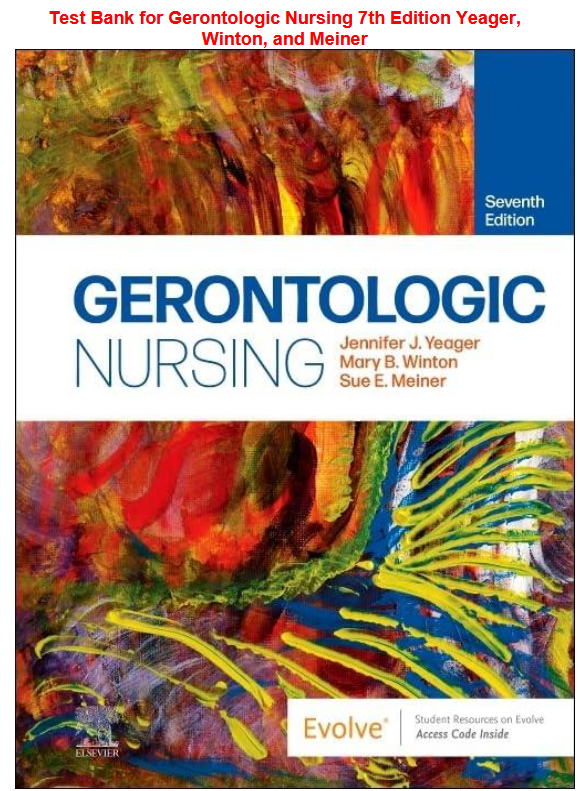
Gerontologic Nursing by Yeager, Winton, and Meiner is one of the most comprehensive and clinically grounded texts in gerontologic nursing education. The 7th edition carries that tradition forward with thoroughly updated content reflecting current evidence-based practice guidelines, expanded coverage of age-related physiological changes and their clinical implications, updated pharmacological content with particular attention to the Beers Criteria for potentially inappropriate medication use in older adults, and a deeper emphasis on person-centered, dignity-preserving care across the continuum from community living through acute hospitalization, rehabilitation, and long-term care. This test bank was written to match that standard of clinical rigor and relevance at every level.
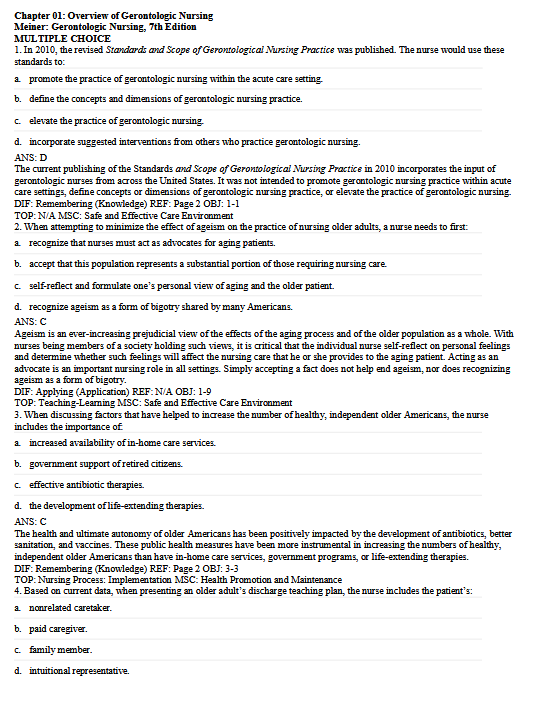
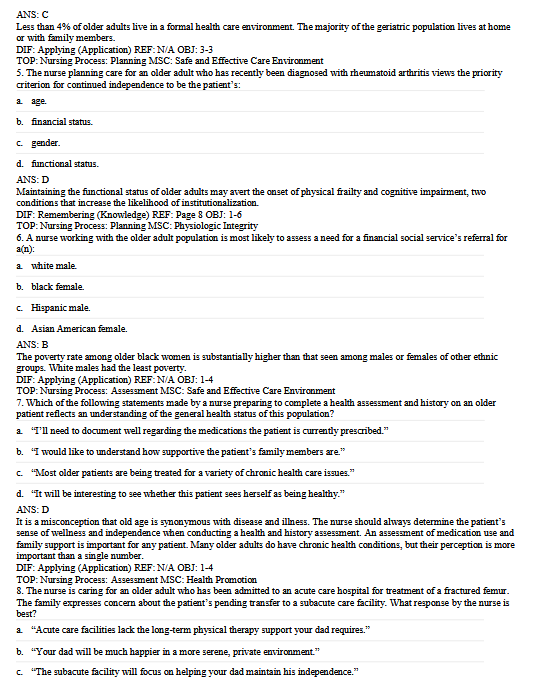
Every question in this resource follows the 7th edition chapter structure. The coverage is thorough and carefully organized across the full breadth of the textbook. Questions address the demographics and social context of aging in contemporary society, theories of aging and their clinical relevance, age-related changes across all major organ systems including cardiovascular, respiratory, neurological, musculoskeletal, integumentary, gastrointestinal, genitourinary, endocrine, sensory, and immune systems. Pharmacology content emphasizes polypharmacy, age-related pharmacokinetic and pharmacodynamic changes, the Beers Criteria, and medication reconciliation in older adults. Nutritional considerations, fluid and electrolyte balance, pain assessment and management in cognitively impaired older adults, falls prevention and safety, pressure injury prevention and management, delirium assessment and management, dementia care across its stages, depression and late-life mental health, elder abuse and neglect, ethical and legal dimensions of gerontologic care including advance directives and capacity assessment, palliative and end-of-life care, and nursing care in community, acute, rehabilitative, and long-term care settings are all comprehensively represented. No major content area of the 7th edition has been omitted.
What makes this test bank distinctly valuable is the quality and clinical precision of its answer explanations. Every question presents a realistic gerontologic nursing scenario, clearly identifies the correct answer, and follows it with a thorough, well-reasoned rationale. These rationales do not simply confirm what is right. They explain the physiological, pharmacological, or ethical reasoning behind the correct choice, address why each of the remaining options is incorrect or less appropriate, and connect the content to gerontologic nursing principles, evidence-based practice guidelines, and the clinical judgment framework that contemporary nursing examinations demand. That depth of explanation means every question functions as both an assessment and a genuine learning experience. You are not simply checking your knowledge. You are building the analytical depth and clinical sensitivity that makes the right response clear in any examination or real-world gerontologic nursing situation.
The file is a fully searchable PDF. When you need to focus your review on delirium assessment before a clinical placement in an acute care for elders unit, consolidate your understanding of the Beers Criteria before a pharmacology examination, or drill questions on falls prevention interventions before a gerontologic nursing competency assessment, use Ctrl+F to navigate directly to that content in seconds. No time lost scrolling through chapters you have already covered. No disruption to your study momentum. Direct, precise access to exactly the content you need at exactly the moment you need it.
Your download link is generated the moment your purchase is confirmed. No waiting period, no account creation, no approval process. Open the file on your laptop, tablet, or phone and begin working through it immediately. The file is yours permanently. No subscription, no renewal fee, and no expiry date.
What You Get
- Full chapter coverage matched to the 7th edition layout across all gerontologic nursing content areas
- Clinically grounded scenario-based multiple-choice questions reflecting real gerontologic nursing complexity
- Every question answered with the correct response clearly identified
- Detailed rationales explaining the physiological, pharmacological, and ethical reasoning and addressing all answer options
- Searchable PDF format for fast, targeted review by body system, syndrome, care setting, or clinical concept
- One-time purchase with permanent, unlimited file access
Who This Is For
Nursing students enrolled in gerontologic nursing courses will benefit most directly from this resource. It mirrors the chapter structure of the Yeager, Winton, and Meiner textbook closely and is designed to support students as they develop the specialized knowledge and clinical sensitivity that older adult care demands. It is also an excellent preparation tool for students approaching NCLEX, where care of older adults is embedded across virtually every content category and where age-related pharmacology, delirium versus dementia differentiation, falls risk, and end-of-life care are consistently high-yield testing areas. RNs pursuing the Gerontological Nursing Certification examination administered by the American Nurses Credentialing Center will find the depth and clinical breadth of this resource well matched to their certification preparation needs. Nurses transitioning into acute care for elders units, skilled nursing facilities, long-term care settings, memory care units, home health, or palliative care roles will also benefit from the comprehensive and clinically grounded content of this test bank as they build the specialty knowledge their new practice environment requires.
Sample Questions
Question 1
A nurse is admitting an 82-year-old woman from a long-term care facility to a medical-surgical unit following a fall at home. The patient has a history of hypertension, type 2 diabetes, osteoporosis, and moderate Alzheimer dementia. Her current medications include amlodipine, metformin, donepezil, and diphenhydramine 50 mg taken nightly for sleep, which was listed on her transfer medication reconciliation form. On assessment, the patient is confused, agitated, and unable to state the date or her current location. Her skin is dry, her mouth is dry, her heart rate is 104 beats per minute, and she has not voided in six hours. Which medication on this patient’s medication list most likely contributed to her current presentation, and what is the most appropriate nursing action?
A) Amlodipine is the most likely contributor because calcium channel blockers cause tachycardia and confusion in older adults; hold the amlodipine and notify the provider
B) Metformin is the most likely contributor because it causes dehydration and cognitive impairment in older adults with diabetes; hold the metformin and increase oral fluid intake
C) Diphenhydramine is the most likely contributor because it is a first-generation antihistamine with potent anticholinergic properties that are particularly harmful in older adults; notify the provider, recommend discontinuation of the diphenhydramine, and assess for anticholinergic toxidrome
D) Donepezil is the most likely contributor because cholinesterase inhibitors cause agitation and tachycardia in older adults with dementia; hold the donepezil and request a psychiatry consultation
Correct Answer: C
Detailed Explanation:
This question addresses one of the most clinically important and consistently tested principles in gerontologic nursing: the risk of potentially inappropriate medications in older adults, as codified in the American Geriatrics Society Beers Criteria. Diphenhydramine, sold under brand names including Benadryl and commonly found in over-the-counter sleep aids such as Unisom and ZzzQuil, is a first-generation antihistamine with potent anticholinergic properties. It is explicitly listed in the Beers Criteria as a medication that should be avoided in older adults due to its high risk of causing anticholinergic adverse effects.
The anticholinergic toxidrome in older adults includes confusion and delirium, agitation, dry skin, dry mouth, urinary retention, tachycardia, constipation, and blurred vision. This patient is presenting with virtually the entire syndrome: confusion, agitation, dry skin, dry mouth, tachycardia at 104 beats per minute, and six hours without voiding, which strongly suggests urinary retention. Older adults are disproportionately susceptible to anticholinergic effects for several reasons. Age-related decreases in cholinergic neurons in the brain reduce the baseline reserve against which anticholinergic blockade acts. Reduced renal clearance prolongs drug half-life and elevates plasma levels. Increased blood-brain barrier permeability in older adults allows greater central nervous system penetration. And the cumulative anticholinergic burden from multiple medications across a complex medication regimen is additive and often unrecognized.
For this patient with moderate Alzheimer dementia, the risk is compounded further because dementia itself involves cholinergic deficits, and diphenhydramine directly antagonizes the cholinergic system that donepezil, her dementia medication, is working to support. The nurse must notify the provider immediately and advocate strongly for discontinuation of the diphenhydramine. The patient should be assessed for urinary retention and may require bladder scanning and possible catheterization. Safer alternatives for sleep in older adults include melatonin, sleep hygiene measures, and addressing underlying causes of insomnia.
Option A is incorrect because amlodipine, a calcium channel blocker, does not typically cause tachycardia. It is more likely to cause bradycardia or peripheral edema in older adults. It is not the most likely contributor to this presentation. Option B is incorrect because metformin does not cause dehydration or acute cognitive impairment in the pattern described here. Its primary adverse effects are gastrointestinal and, in rare circumstances involving renal impairment, lactic acidosis. Option D is incorrect because donepezil, a cholinesterase inhibitor, works by increasing cholinergic activity in the brain. Its adverse effects are predominantly cholinergic in nature, including nausea, diarrhea, and bradycardia, the opposite of the anticholinergic profile this patient is displaying.
Question 2
A nurse working in an acute care setting is assessing an 88-year-old male patient who was admitted two days ago for a urinary tract infection. The patient’s family members, who are at the bedside, tell the nurse that their father was completely oriented and living independently before this hospitalization. This morning the patient is unable to recognize his daughter, is pulling at his IV tubing, believes he is in a hotel, and is alternately agitated and drowsy. His vital signs show a temperature of 37.8°C, heart rate of 98, blood pressure of 138/82 mmHg, and oxygen saturation of 94% on room air. Which condition does this presentation most likely represent, how does it differ from dementia, and what is the priority nursing approach?
A) This presentation represents a moderate exacerbation of previously undiagnosed dementia; orient the patient to his surroundings repeatedly and consult memory care services for long-term placement planning
B) This presentation represents delirium, an acute, fluctuating disturbance in attention and cognition caused by an underlying medical condition; identify and treat the underlying cause, implement non-pharmacological delirium prevention and management strategies, and reorient and reassure the patient consistently while ensuring environmental safety
C) This presentation represents a new psychiatric disorder triggered by the stress of hospitalization; consult psychiatry for antipsychotic initiation and transfer the patient to a psychiatric unit
D) This presentation represents normal adjustment to an unfamiliar hospital environment in a very old patient; reassure the family, dim the lights, and allow the patient to sleep without interruption until he reorients spontaneously
Correct Answer: B
Detailed Explanation:
The clinical presentation described in this question is a textbook case of delirium, one of the most common, serious, and frequently missed conditions in hospitalized older adults. Delirium is defined by the DSM-5-TR as an acute disturbance in attention and awareness, developing over a short period of time, representing a change from baseline, and tending to fluctuate in severity throughout the day. It is always caused by an underlying medical condition, medication effect, substance intoxication or withdrawal, or some combination of these factors. In this patient, the most likely precipitating cause is the urinary tract infection itself, which is one of the most common delirium triggers in older adults. Additional contributing factors may include the unfamiliar environment, sleep deprivation, immobility, poor oral intake, and any medications administered since admission.
The key clinical distinction between delirium and dementia is critically important and consistently tested in gerontologic nursing. Dementia is a chronic, progressive neurodegenerative condition with an insidious onset and a gradual decline in cognitive function over months to years. Delirium is acute in onset, often developing over hours to days, and is characterized by fluctuating levels of consciousness and attention, which distinguishes it from the relatively stable cognitive baseline of uncomplicated dementia. This patient’s family has confirmed that he was completely oriented and living independently before this hospitalization, which establishes a clear baseline and confirms that the current presentation represents an acute change rather than a longstanding deficit.
The nursing management of delirium is multicomponent and centered on identifying and treating the underlying cause while implementing non-pharmacological strategies to support reorientation and prevent complications. Treating the UTI effectively is the primary medical intervention. Nursing strategies include consistent reorientation using the patient’s name, clear explanations of where he is and what is happening, familiar faces and objects at the bedside, maintaining normal day-night cycles with light exposure during the day and darkness at night, promoting mobility and physical activity, ensuring adequate hydration and nutrition, minimizing unnecessary medications, and ensuring hearing aids and glasses are in place to reduce sensory impairment that worsens disorientation.
Option A is incorrect because the acute onset, fluctuating course, and confirmed premorbid independence rule out previously undiagnosed dementia as the primary explanation. Initiating long-term care planning based on an acute delirium presentation is premature and potentially harmful, as many patients with delirium return to their premorbid functional baseline once the underlying cause is treated. Option C is incorrect because this is delirium secondary to an acute medical condition, not a new primary psychiatric disorder. Antipsychotic medications should be reserved for cases of delirium where the patient poses an imminent risk of harm and non-pharmacological strategies have been insufficient, and are not a first-line response. Option D is incorrect because delirium is not a normal response to hospitalization and allowing the patient to sleep without assessment or intervention ignores a serious and treatable medical condition that carries significant mortality risk if unmanaged.
Question 3
A nurse is conducting a comprehensive pain assessment on a 79-year-old patient with advanced dementia who is unable to verbally communicate their pain experience. The patient has a known history of osteoarthritis in both knees. During morning care, the nurse observes that the patient grimaces and vocalizes with distress when their legs are repositioned, resists care by pulling away, and has been refusing to bear weight during transfers over the past two days. The patient’s family states that the patient has been much less interactive and more withdrawn than usual. Which approach to pain assessment is most appropriate for this patient, and what does current evidence recommend regarding pain management in nonverbal older adults with dementia?
A) Assume the patient is not in pain since they cannot verbally report it, document the behavioral observations as agitation related to dementia, and consult psychiatry for behavioral management strategies
B) Use a behavioral pain assessment tool such as the Pain Assessment in Advanced Dementia scale or the Abbey Pain Scale to systematically assess pain-related behaviors, recognize the observed behaviors as probable indicators of pain, and advocate for appropriate analgesic therapy while continuing to monitor behavioral response to treatment
C) Administer a benzodiazepine to reduce the agitation and resistance during care, then reassess once the patient is calm and more cooperative
D) Rely exclusively on family report to determine the presence and severity of pain, since families know the patient best and their observations are more reliable than any formal assessment tool in patients with advanced dementia
Correct Answer: B
Detailed Explanation:
Pain assessment in older adults with dementia who cannot self-report is one of the most clinically significant and ethically important challenges in gerontologic nursing. The inability to verbally communicate pain does not reduce its presence, its severity, or the obligation to assess and treat it. In fact, older adults with dementia are at significantly elevated risk of underrecognized and undertreated pain precisely because self-report, the gold standard for pain assessment, is unavailable. Undertreated pain in this population is associated with accelerated functional decline, worsening behavioral symptoms, reduced quality of life, unnecessary use of antipsychotic and sedative medications to manage pain behaviors that are misinterpreted as psychiatric symptoms, and preventable suffering.
The clinical and ethical standard of practice for pain assessment in nonverbal older adults with dementia is the use of validated behavioral pain assessment tools. Several have been developed and validated for this population, including the Pain Assessment in Advanced Dementia scale, the Abbey Pain Scale, the Checklist of Nonverbal Pain Indicators, and others. These tools systematically evaluate observable behavioral indicators that are associated with pain in cognitively impaired older adults, including facial expressions such as grimacing or furrowing of the brow, vocalizations such as moaning, crying, or calling out, body language such as guarding, rigidity, or rocking, behavioral changes such as increased agitation or withdrawal, and physiological indicators such as diaphoresis or changes in vital signs.
The behaviors documented in this patient, grimacing and vocalizing during repositioning, resisting care, refusing to bear weight, and withdrawal from social interaction, are consistent with and highly suggestive of undertreated pain. The pattern is temporally associated with movement of the arthritic knees, which provides further clinical specificity. The nurse should use a validated behavioral tool to systematically quantify and document the pain indicators, communicate the findings to the provider, and advocate for appropriate analgesic therapy with careful monitoring of behavioral response to evaluate treatment effectiveness.
Option A is incorrect because assuming pain is absent in a patient who cannot verbally report it is a dangerous and ethically unjustifiable clinical decision. The behaviors described are recognized indicators of pain in dementia, and dismissing them as agitation is a common and consequential error in the care of this population. Option C is incorrect because administering a benzodiazepine as a first response to behaviors that are most likely pain indicators treats the symptom with a potentially inappropriate medication while leaving the underlying cause unaddressed. Benzodiazepines are listed in the Beers Criteria as medications to avoid in older adults due to their high risk of adverse effects including falls, delirium, and respiratory depression. Option D is incorrect because while family observation is a valuable and important component of pain assessment in nonverbal patients with dementia, it is not sufficient as the sole assessment method. Validated behavioral tools provide systematic, reproducible, and documentable assessments that complement family report and strengthen the clinical case for pain management.
Question 4
A home health nurse is visiting a 77-year-old woman who lives alone and was recently discharged from hospital following a hip fracture repair. During the visit, the nurse notices that the patient appears thin and malnourished, the refrigerator contains very little food, and the patient is wearing the same soiled clothing she was wearing during the nurse’s visit three days ago. When the nurse asks how she is managing, the patient looks away and says quietly, “My son handles all my finances and my shopping. He is very busy. He means well.” The nurse notices that the patient’s checkbook is visible on the counter with several large withdrawals noted in the register. Which concern does this situation raise, and what is the most appropriate nursing action?
A) The son is likely doing his best given his busy schedule; provide the patient with a list of grocery delivery services and encourage her to ask her son for more frequent visits
B) The situation raises serious concerns about elder abuse and neglect, potentially including financial exploitation; document the specific observations thoroughly, discuss mandatory reporting obligations with the patient sensitively, report the concerns to Adult Protective Services or the appropriate provincial authority as required by law, and ensure the patient knows about available support resources
C) The nurse should contact the son directly to discuss the patient’s nutritional and hygiene needs and trust that he will address the situation once he is made aware of the concerns
D) The patient’s situation reflects a personal choice to manage her finances independently and live modestly; respecting patient autonomy requires that the nurse take no action without the patient’s explicit consent
Correct Answer: B
Detailed Explanation:
The constellation of findings in this scenario raises significant and urgent concerns about elder abuse and neglect across multiple domains. Elder abuse is defined as intentional or negligent actions by a caregiver or trusted person that cause harm or serious risk of harm to a vulnerable older adult. It is a serious and alarmingly common problem. Estimates suggest that between one in ten and one in six older adults in the United States and Canada experience some form of elder abuse, with financial exploitation being the most prevalent form and family members being the most common perpetrators.
The specific findings in this case are concerning across several categories. The patient’s malnourished appearance, near-empty refrigerator, and soiled clothing over multiple days suggest neglect, which is the failure of a caregiver to provide necessary care, food, clothing, or medical assistance to an older adult who depends on them. The patient’s statement that her son handles all her finances and shopping, combined with multiple large withdrawals visible in her checkbook and the absence of food and adequate personal care, raises serious concern for financial exploitation, which involves the unauthorized or improper use of an older adult’s funds, property, or assets.
Nurses are mandatory reporters of suspected elder abuse in most jurisdictions across Canada and the United States. This means that the nurse has a legal obligation to report reasonable suspicion of abuse or neglect to the appropriate authority, typically Adult Protective Services in the United States or the equivalent provincial authority in Canada, regardless of whether the patient consents to the report or denies that abuse is occurring. The nurse must document all observations with specificity and objectivity, use trauma-informed communication to discuss the concerns with the patient sensitively and without judgment, and ensure the patient is aware of available resources and support.
Option A is incorrect because the evidence suggests more than a busy schedule. Multiple large financial withdrawals alongside obvious malnutrition, inadequate food supply, and poor hygiene represent a pattern that must be formally assessed and reported rather than addressed through practical suggestions. Option C is incorrect because contacting the alleged perpetrator directly is contraindicated in suspected elder abuse situations. Doing so may endanger the patient by alerting the perpetrator to the nurse’s concerns, potentially leading to retaliation, coercion of the patient, or removal of the patient from the nurse’s care. Option D is incorrect because patient autonomy does not override mandatory reporting obligations in the context of suspected abuse or neglect. Elder abuse reporting laws exist precisely because older adults who are being abused often feel unable to report or consent to reporting due to fear, shame, dependency, or cognitive impairment. The nurse’s legal and ethical duty is to report reasonable suspicion, not to await patient consent.
Question 5
A nurse is caring for an 84-year-old patient in a long-term care facility who has end-stage chronic obstructive pulmonary disease and moderate heart failure. The patient has a valid advance directive stating that they do not wish to be resuscitated and do not want mechanical ventilation or aggressive life-prolonging interventions. The patient has been enrolled in palliative care. During the night shift, the patient’s breathing becomes increasingly labored, with a respiratory rate of 34, SpO2 of 82% on 4 L/min of oxygen via nasal cannula, and visible use of accessory muscles. The patient is alert and tells the nurse, “I am struggling to breathe. It is frightening. But I do not want to be put on a machine. I want to be comfortable.” The patient’s adult daughter, who arrives at the bedside, demands that the nurse “do something” and insists that her mother be transferred to hospital and intubated immediately. Which nursing response best honors both ethical practice and the patient’s expressed wishes?
A) Comply with the daughter’s request and arrange immediate hospital transfer for intubation, since family distress in end-of-life situations overrides the patient’s advance directive
B) Tell the daughter that nothing can be done for her mother and that the nurse’s role is simply to monitor the patient until death occurs
C) Honor the patient’s clearly expressed and legally documented wishes, administer comfort-focused interventions including opioids for dyspnea and anxiolytics for air hunger as ordered under the palliative care plan, provide compassionate support and clear communication to both the patient and the daughter, and involve the palliative care team and social work to support the family through this process
D) Ask the patient to reconsider her advance directive given the severity of her current distress, since patients can change their minds and the daughter’s presence may help her choose intubation
Correct Answer: C
Detailed Explanation:
This scenario presents one of the most ethically complex and emotionally charged situations in gerontologic and palliative nursing: honoring a cognitively intact patient’s legally documented and currently expressed wishes for comfort-focused care at the end of life in the face of a family member’s urgent and distressed demand for aggressive intervention. Navigating this situation requires clarity about the ethical and legal framework governing advance directives and patient autonomy, as well as compassion, skill, and courage in communication.
An advance directive is a legally binding document that reflects a competent adult’s expressed wishes regarding their medical care in circumstances where they may not be able to communicate those wishes. This patient has an advance directive clearly declining mechanical ventilation and resuscitation. More importantly, the patient is currently alert, communicating clearly, and restating those same wishes at this very moment. A cognitively intact patient who is currently expressing their wishes does not require an advance directive to be honored. Their real-time autonomous decision is itself legally and ethically definitive. The patient’s wishes, both documented and currently expressed, take absolute precedence over the family member’s preferences in this situation.
The nurse’s clinical priority is to address the patient’s reported distress with the comfort-focused interventions available under the palliative care plan. Opioids, typically morphine, are the gold standard pharmacological intervention for dyspnea in palliative and end-of-life care. They reduce the sensation of breathlessness through central and peripheral mechanisms and have a well-established evidence base in this context when titrated appropriately. Anxiolytics such as lorazepam address the fear and air hunger component that the patient has explicitly described. These interventions do not hasten death when used appropriately for symptom management and are ethically and legally supported under the principle of double effect.
The daughter’s distress is real, understandable, and deserving of compassionate acknowledgment and support. However, her wishes do not and cannot override her mother’s legally expressed and currently reaffirmed autonomous decision. The nurse must communicate this clearly, kindly, and with full acknowledgment of the daughter’s grief and fear. Involving the palliative care team, a social worker, and if available a chaplain or spiritual care provider can provide additional support to the family as they witness their loved one’s death.
Option A is incorrect because an advance directive combined with the patient’s current expressed wishes cannot be overridden by family demand. Arranging intubation against a competent patient’s clearly expressed wishes would constitute battery and a profound violation of the patient’s autonomy and dignity. Option B is incorrect because telling the family that nothing can be done is factually inaccurate and abandons the patient at the most critical moment of their care. Palliative nursing offers a rich and evidence-based toolkit of comfort interventions that can significantly reduce suffering at the end of life. Option D is incorrect because asking the patient to reconsider their advance directive in the context of a frightening episode of respiratory distress, at the urging of a distressed family member, creates conditions of potential coercion that undermine the voluntariness and validity of any change of decision. The patient has already reaffirmed their wishes clearly and the nurse must honor them.
FAQ
Is this an official publisher product?
No. This is an independently written study resource structured around the topics and chapter layout of the 7th edition. It is not affiliated with or endorsed by the authors or their publisher.
Will these questions match my course exams or ANCC certification examination questions?
This test bank is designed to build deep clinical reasoning across the full scope of gerontologic nursing so you are well prepared for any examination format. It does not preview specific instructor exams or licensed certification examination content.
What makes this test bank different from others?
The detailed rationales go well beyond identifying the correct answer. They explain the underlying physiology, pharmacology, and ethical reasoning behind each correct response, connect clinical findings to gerontologic nursing principles and evidence-based guidelines, and clarify why each incorrect option fails. That approach builds the kind of deep, transferable understanding that holds up under examination pressure and translates directly into safe, compassionate, and dignified care for older adults.
What file format will I receive?
A fully searchable PDF, navigable by chapter, body system, syndrome, care setting, or keyword using any standard PDF reader on any device.
How quickly can I access the file after purchase?
Instantly. Your download link is generated immediately after checkout with no waiting period or additional steps required.
Can I open this on my phone or tablet?
Yes. The PDF opens cleanly on any iOS or Android device using a free PDF reader app with no formatting issues.
Do I need the textbook to use this?
Having the textbook alongside is helpful since the chapter order mirrors the 7th edition closely. The questions and rationales are also written in enough detail to be used independently for focused review and certification preparation.
Is there a subscription or renewal fee?
No. This is a one-time purchase. The file is yours to keep and use as many times as you need with no recurring charges or expiry date.
Mary Kesh –
Helped me recognize important nursing priorities
Peterson S. –
Excellent review material for difficult subjects.
Yunice M –
Very useful for practicing clinical judgment
Maryanne –
Hundreds of Accurate and challenging practice questions
Morgan Fraiser –
Saved me many hours of study time
Kamara Reid –
Highly recommend for nursing students
Coleen R. –
Great questions that really test gero nursing knowledge.
Leah Kiptum –
Helpful practice for ATI gero exams
Helena Peters –
Plenty of questions to practice before the test.
Sarah Willock –
Helped improve my confidence before exam day.
Leo Fernandez –
Questions were relevant and easy to understand.
Mary Lincoln –
Great supplement for my regular study routine.