Mental health nursing occupies a place in the nursing profession that is unlike any other specialty. The clinical environment is relational rather than procedural. The therapeutic tools are not medications dispensed through IV tubing or wounds dressed with sterile technique. They are the quality of presence a nurse brings into a room, the words chosen in a moment of crisis, the ability to sit with a patient in profound distress without rushing toward false reassurance, and the discipline to maintain therapeutic boundaries while remaining genuinely and deeply human. The patients a mental health nurse encounters carry diagnoses that are invisible on imaging studies and laboratory panels but devastatingly real in their consequences for daily functioning, safety, relationships, employment, housing, and personal dignity. The legal and ethical terrain is layered and complex. The pharmacology is nuanced, with narrow therapeutic windows, serious adverse effects, and the constant challenge of managing medications in patients who may lack insight into their own illness. The safety stakes, including suicide, self-harm, violence, elopement, and the consequences of untreated or undertreated psychiatric illness, are as serious as those in any acute care setting. And the stigma that still surrounds mental illness in contemporary society creates an additional layer of challenge, requiring nurses to advocate fiercely for patients who are too often dismissed, misunderstood, or undertreated within systems that were not always designed to serve them well.
To practice competently and compassionately in this specialty demands a depth of knowledge that spans psychiatric diagnosis, therapeutic communication theory, psychopharmacology, legal and ethical frameworks, crisis intervention, cultural humility, and the evidence-based nursing interventions that support recovery across the full spectrum of mental health conditions. That depth of knowledge does not emerge from reading alone. It requires sustained and deliberate engagement with content that challenges thinking, applies knowledge to realistic clinical scenarios, and builds the analytical confidence to perform well under examination conditions and in real-world practice. This test bank was built to provide exactly that kind of engagement.
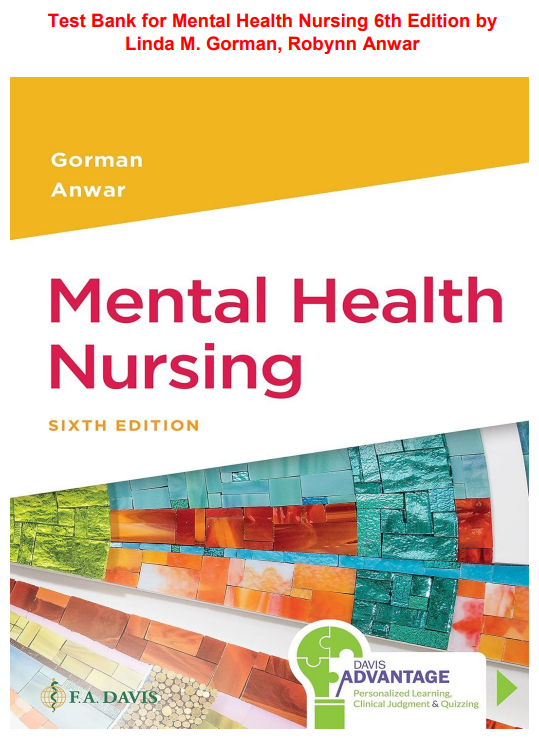
Mental Health Nursing by Linda M. Gorman and Robynn Anwar is a clinically grounded, accessible, and pedagogically well-structured text that has supported mental health nursing education across multiple editions. The 6th edition continues that tradition with updated content reflecting the DSM-5-TR diagnostic framework, current evidence-based practice guidelines, expanded coverage of psychopharmacology, and a strong emphasis on the therapeutic nurse-patient relationship as the foundational instrument of psychiatric nursing care. It is a textbook that takes the clinical realities of mental health nursing seriously while remaining approachable for students encountering psychiatric content for the first time, and this test bank was written to match that balance of clinical rigor and educational accessibility at every level.
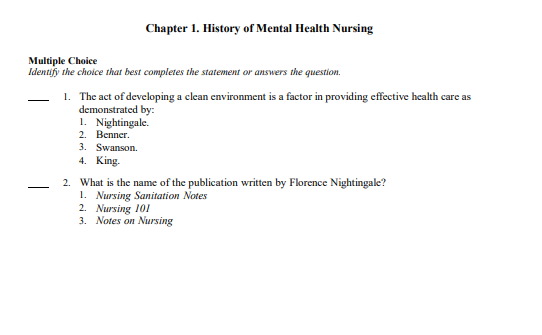
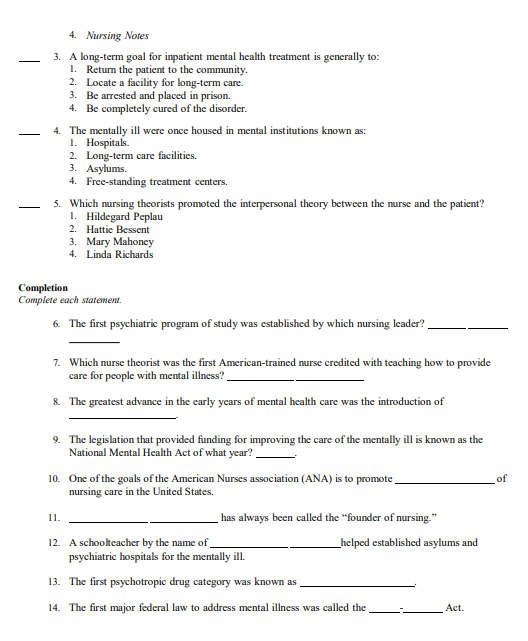
Every question in this resource follows the 6th edition chapter structure. The coverage is thorough and carefully organized across the full breadth of the textbook. Questions address the theoretical and historical foundations of mental health nursing, the therapeutic nurse-patient relationship and its boundaries, therapeutic communication techniques and their application across a range of clinical situations, the legal and ethical dimensions of psychiatric practice including voluntary and involuntary admission, informed consent, confidentiality and its limits, and the duty to warn. Psychobiological foundations of mental illness are covered in depth, including the neurobiological basis of psychiatric disorders and the mechanisms of psychotropic medications. Psychopharmacology content addresses antipsychotics both first and second generation, mood stabilizers, antidepressants including SSRIs, SNRIs, tricyclics, and MAOIs, anxiolytics, hypnotics, stimulants, and medications used in the management of substance use disorders. Mental health disorders addressed include schizophrenia spectrum and other psychotic disorders, depressive disorders, bipolar and related disorders, anxiety disorders, obsessive-compulsive and related disorders, trauma and stressor-related disorders including posttraumatic stress disorder and acute stress disorder, dissociative disorders, somatic symptom and related disorders, eating and feeding disorders, sleep-wake disorders, substance use and addictive disorders, neurocognitive disorders including delirium and the dementias, personality disorders across all three clusters, and psychiatric conditions across the lifespan including child and adolescent mental health and late-life psychiatric conditions. Suicide risk assessment and prevention, crisis intervention, anger management and de-escalation of aggressive behavior, inpatient psychiatric nursing, community mental health and recovery-oriented care, and the care of special populations including veterans, survivors of trauma, and individuals experiencing homelessness are all represented. No major content area of the 6th edition has been omitted.
What makes this test bank distinctly valuable is the quality and clinical depth of its answer explanations. Every question presents a realistic mental health nursing scenario, clearly identifies the correct answer, and follows it with a thorough, well-reasoned rationale. These rationales do not simply restate which option is right. They explain the therapeutic, pharmacological, legal, or ethical reasoning behind the correct choice, address why each of the remaining options is incorrect or therapeutically inappropriate, and connect the content to nursing practice principles, DSM-5-TR diagnostic criteria, therapeutic communication frameworks, and the clinical judgment model that contemporary nursing examinations demand. That depth of explanation means every question functions as both an assessment and a genuine learning experience. You are not simply selecting answers. You are building the analytical and interpersonal understanding that makes the right clinical response clear in any examination or real-world mental health nursing situation.
The file is a fully searchable PDF. When you need to focus your review on antipsychotic pharmacology and adverse effect management before a psychopharmacology examination, consolidate your understanding of suicide risk assessment frameworks before a psychiatric clinical placement, or drill questions on therapeutic versus non-therapeutic communication techniques before a skills competency assessment, use Ctrl+F to navigate directly to that content in seconds. No time lost scrolling through chapters you have already covered. No disruption to your study momentum. Direct, precise access to exactly the content you need at exactly the moment you need it.
Your download link is generated the moment your purchase is confirmed. No waiting period, no account creation, no approval process. Open the file on your laptop, tablet, or phone and begin working through it immediately. The file is yours permanently. No subscription, no renewal fee, and no expiry date.
What You Get
- Full chapter coverage matched to the 6th edition layout across all mental health nursing content areas
- Clinically grounded scenario-based multiple-choice questions reflecting real psychiatric nursing complexity
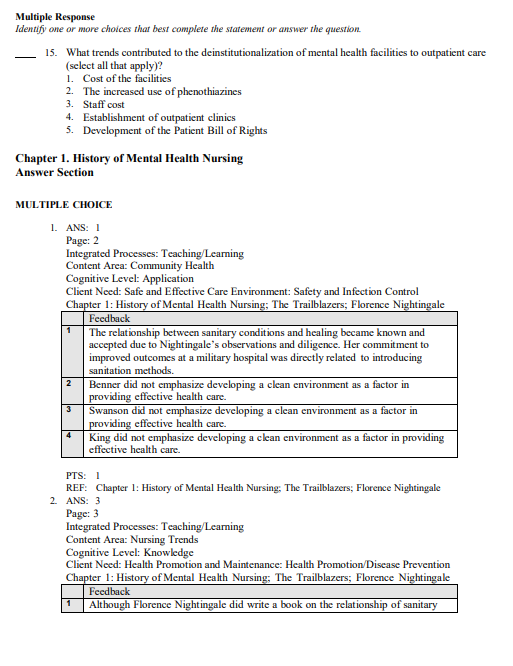
- Every question answered with the correct response clearly identified
- Detailed rationales explaining the therapeutic, pharmacological, legal, and ethical reasoning and addressing all answer options
- Searchable PDF format for fast, targeted review by disorder, communication technique, medication class, or clinical concept
- One-time purchase with permanent, unlimited file access
Who This Is For
Nursing students enrolled in mental health nursing courses will benefit most directly from this resource. It mirrors the chapter structure of the Gorman and Anwar textbook closely and is designed to support students as they work through one of the most conceptually rich and clinically demanding courses in any pre-licensure nursing program. It is also an excellent preparation tool for students approaching NCLEX, where psychosocial integrity and mental health content appears across every client needs category and where therapeutic communication, suicide risk, psychopharmacology, and psychiatric emergency management are consistently high-yield testing areas. RNs pursuing the Psychiatric-Mental Health Nursing Certification examination will find the depth and clinical focus of this resource well matched to their preparation needs. Nurses transitioning into inpatient psychiatric units, community mental health centers, crisis stabilization units, correctional mental health settings, or dual diagnosis treatment programs will also benefit from the comprehensive and clinically grounded content of this test bank as they build the specialty knowledge their new practice environment requires.
Sample Questions
Question 1
A nurse on an inpatient psychiatric unit is assigned to care for a patient with a diagnosis of schizophrenia who approaches the nursing station and says, “I cannot sleep. The people inside the walls are talking all night and keeping me awake. They tell me to do terrible things.” The patient appears distressed and is wringing their hands. Which nursing response is most therapeutic?
A) “There are no people in the walls. This unit is completely safe and no one can get in from the outside.”
B) “I can see that you are very distressed and not sleeping well. Tell me more about what this experience is like for you, and let’s talk about what we can do to help you feel safer.”
C) “Those are just the voices from your illness. You know they are not real. Try to ignore them and go back to bed.”
D) “I will check the walls right now to prove to you that there are no people there. Would that help you feel better?”
Correct Answer: B
Detailed Explanation:
This question addresses one of the most fundamental and frequently tested principles of therapeutic communication in mental health nursing: the appropriate nursing response to a patient experiencing active auditory hallucinations with command content. The patient is describing auditory hallucinations, specifically hearing voices that are issuing commands to engage in harmful behavior. This is both a symptomatic presentation requiring empathic engagement and a clinical safety concern that must be assessed carefully.
The therapeutic nursing response must achieve several simultaneous goals. It must acknowledge the patient’s emotional distress without validating the content of the hallucination as representing external reality. It must open a therapeutic dialogue that allows the nurse to gather more information about the command content and assess the patient’s risk of acting on the voices. It must communicate genuine concern and a commitment to the patient’s safety and comfort. And it must do all of this without damaging the therapeutic relationship through dismissal, confrontation, or inadvertent reinforcement of the psychotic content.
Option B accomplishes all of these goals. Acknowledging visible distress and poor sleep validates the patient’s subjective experience without confirming the delusional or hallucinatory content. Inviting the patient to describe their experience further opens the assessment conversation that the nurse needs to conduct to evaluate command hallucination risk, which is a critical safety consideration. Offering to work together on safety and comfort communicates therapeutic partnership and positions the nurse as a resource rather than an adversary.
Option A is incorrect because directly contradicting the content of a hallucination or delusion with reality orientation rarely succeeds in altering the psychotic experience and frequently damages the therapeutic relationship by making the patient feel dismissed, disbelieved, and unsafe. Option C is incorrect for similar reasons. Telling a patient that their hallucinations are not real and to ignore them invalidates a perceptual experience that feels completely real to the patient and is experienced with the same neurological intensity as any genuine sensory input. This response is dismissive and therapeutically counterproductive. Option D is incorrect because physically checking the walls in response to a somatic delusion or hallucination reinforces the possibility that the belief may be grounded in reality, which validates the psychotic content rather than maintaining a therapeutic reality orientation.
Question 2
A nurse is preparing to administer clozapine 200 mg orally to a patient with treatment-resistant schizophrenia. Before retrieving the medication from the dispensary, the nurse reviews the patient’s most recent laboratory results and notes the following complete blood count values: white blood cell count 2,800 cells/mm³, absolute neutrophil count 1,100 cells/mm³, down from 3,200 cells/mm³ and 2,400 cells/mm³ on the two previous weekly draws. The patient reports feeling well and has no current complaints of fever, sore throat, or infection. What is the most appropriate nursing action, and what serious adverse effect does this laboratory trend indicate?
A) Administer the clozapine as ordered since the patient is asymptomatic and the absolute neutrophil count has not yet fallen below the threshold requiring discontinuation
B) Hold the clozapine, notify the provider immediately, recognize this as a clinically significant downward trend in neutrophil count indicating the development of clozapine-induced neutropenia, and report the finding to the clozapine monitoring registry as required by the Risk Evaluation and Mitigation Strategy program
C) Administer the clozapine but reduce the dose by half and obtain a repeat complete blood count in 24 hours to determine if the downward trend continues
D) Hold the clozapine for today only, encourage the patient to increase fluid and protein intake to support bone marrow production, and resume the medication tomorrow if the patient remains asymptomatic
Correct Answer: B
Detailed Explanation:
Clozapine is an atypical antipsychotic with demonstrated superior efficacy for treatment-resistant schizophrenia, meaning schizophrenia that has not responded adequately to trials of at least two other antipsychotic agents. However, clozapine carries a black box warning for a potentially life-threatening hematological adverse effect known as agranulocytosis, which is a severe reduction in the absolute neutrophil count that leaves the patient profoundly vulnerable to bacterial and fungal infections that would otherwise be controlled by the immune system. Agranulocytosis from clozapine is estimated to occur in approximately one percent of patients and can be fatal if not detected and managed in time.
Because of this risk, the prescribing, dispensing, and administration of clozapine in the United States is governed by the Clozapine Risk Evaluation and Mitigation Strategy program, which mandates regular absolute neutrophil count monitoring as a condition of treatment. Patients must have their absolute neutrophil count monitored weekly for the first six months of therapy, then biweekly for months six through twelve, and monthly thereafter if the count remains stable within acceptable parameters. All results must be reported to the clozapine monitoring registry.
The clinical situation in this question presents a pattern that requires immediate action even though the absolute neutrophil count has not yet fallen below the 500 cells/mm³ threshold that defines severe neutropenia. The downward trend across three consecutive weekly draws from 3,200 to 2,400 to 1,100 cells/mm³ represents a rapid and clinically significant decline that signals the early development of clozapine-induced neutropenia. The REMS program specifies intervention thresholds based on both absolute values and trends, and a count of 1,100 cells/mm³ combined with this rate of decline requires immediate provider notification, withholding of the dose, and reporting to the registry. The absence of symptoms does not make the finding safe to ignore, as agranulocytosis can progress from mild neutropenia to complete immune compromise very rapidly.
Option A is incorrect because waiting until the absolute neutrophil count falls below 500 cells/mm³ before acting on a rapidly declining trend ignores the clinical and regulatory requirements of the REMS program and places the patient at serious risk of progression to complete agranulocytosis before intervention. Option C is incorrect because reducing the dose and continuing the medication is not an appropriate response to a declining neutrophil count. There is no evidence that dose reduction halts clozapine-induced neutropenia, and continuing any dose while the count is falling and the trend is unaddressed is clinically unsafe. Option D is incorrect because holding the medication for one day and resuming it without provider guidance, registry reporting, or hematological evaluation is both medically inappropriate and non-compliant with REMS requirements. Dietary measures do not address clozapine-induced bone marrow suppression.
Question 3
A nurse is working in a community mental health center and is conducting a structured suicide risk assessment on a 38-year-old patient with a history of major depressive disorder who was referred by their employer’s assistance program following two weeks of missed work. During the assessment, the patient discloses passive suicidal ideation, stating, “I sometimes think the world would be better without me, but I would never actually do anything.” The patient denies having a specific plan, has no prior suicide attempts, lives with a supportive partner, is employed, and has been consistent with their antidepressant medication for the past eight months. The patient reports that the current depressive episode began approximately three weeks ago following the loss of a close friend. Which risk stratification most accurately reflects this patient’s current suicide risk level, and what is the most appropriate level of intervention?
A) High imminent risk requiring emergency psychiatric hospitalization and transfer to an inpatient unit for stabilization
B) Moderate risk with identifiable protective factors; develop a safety plan collaboratively with the patient, increase the frequency of outpatient contact, notify the provider about the current episode and ideation, and engage the patient’s support network with their consent
C) Minimal risk requiring no further assessment or intervention at this time; document the assessment and schedule a routine follow-up in four to six weeks
D) Indeterminate risk; refer the patient to the emergency department for a comprehensive psychiatric evaluation before any outpatient intervention is planned
Correct Answer: B
Detailed Explanation:
Suicide risk assessment is not a binary determination of safe versus unsafe. It is a nuanced, multidimensional clinical judgment process that integrates the presence and nature of suicidal ideation, the presence or absence of a specific plan and accessible means, prior attempt history, current psychiatric symptoms, and the balance of risk factors and protective factors that shape the overall risk profile. Accurate risk stratification guides the level of intervention, ensuring that patients receive the right intensity of care for their actual level of risk rather than a one-size-fits-all response.
This patient presents with passive suicidal ideation, meaning a wish to be dead or a sense that others would be better off without them, without active intent, a specific plan, or identified means. Passive ideation is clinically significant and must never be dismissed, but it carries a different risk profile than active ideation with plan and intent. The patient has several well-established protective factors that reduce imminent risk, including the absence of a prior attempt history, which is the single strongest predictor of future attempt, the presence of a supportive partner, current employment and social connectedness, medication consistency, and the absence of a specific plan or identified means. The precipitating stressor, the loss of a close friend, is identifiable and understandable in the context of a grief response in a patient with a history of depression.
The appropriate intervention for moderate risk involves several evidence-based components delivered in the outpatient setting. Safety planning, which is collaboratively developed with the patient and involves identifying warning signs, internal coping strategies, social contacts, professional resources, and means restriction, has a strong evidence base for reducing suicidal behavior and is far more effective than a simple no-harm contract. Increasing the frequency of contact provides additional monitoring and therapeutic support during a period of heightened vulnerability. Provider notification ensures that the treatment team is aware of the current episode and can evaluate whether medication adjustment is indicated. Engaging the support network with the patient’s consent extends the safety net beyond clinical contact hours.
Option A is incorrect because the patient’s risk profile does not meet the threshold for emergency hospitalization. Passive ideation without plan, intent, or prior attempt, in the context of strong protective factors, is appropriately managed with intensive outpatient intervention rather than inpatient admission. Option C is incorrect because passive suicidal ideation combined with an active depressive episode always requires a structured response. Scheduling a routine follow-up in four to six weeks without a safety plan, increased contact, or provider notification is clinically inadequate. Option D is incorrect because the patient’s risk profile is sufficiently clear from the structured assessment already conducted to support a well-reasoned risk stratification and outpatient intervention plan. Reflexive emergency department referral for every patient with passive ideation is not consistent with evidence-based risk-stratified care and may be experienced by the patient as disproportionate and damaging to the therapeutic relationship.
Question 4
A nurse is caring for a patient on an inpatient psychiatric unit who has been prescribed lithium carbonate 300 mg three times daily for bipolar I disorder. The patient is on day eight of therapy. During the morning assessment, the patient reports nausea, vomiting, and diarrhea since yesterday evening, a coarse tremor in both hands, difficulty with coordination, and feeling confused and foggy. The nurse reviews the patient’s morning laboratory results and notes a serum lithium level of 2.1 mEq/L. The patient’s urine output has been decreased over the past 24 hours and the patient consumed significantly less fluid than usual yesterday due to nausea. Which condition does this presentation represent, what physiological mechanism has contributed to its development in this patient, and what is the priority nursing action?
A) These are expected early side effects of lithium during the therapeutic initiation period; reassure the patient, administer an antiemetic for the nausea, and encourage increased oral fluid intake before the next scheduled lithium dose
B) This represents lithium toxicity precipitated by dehydration and reduced renal clearance; hold all further lithium doses immediately, notify the provider urgently, initiate intravenous fluid resuscitation as ordered, monitor for seizures and cardiac dysrhythmias, and prepare for possible hemodialysis if the level does not respond to conservative management
C) This represents a lithium-drug interaction; review the patient’s full medication list, hold the lithium, and request a pharmacist consultation before resuming the medication at a reduced dose
D) This represents hypomania breaking through despite lithium therapy; increase the lithium dose as directed and add a short-acting benzodiazepine to manage the agitation and confusion
Correct Answer: B
Detailed Explanation:
Lithium carbonate has one of the narrowest therapeutic indices of any medication used in psychiatric practice. The therapeutic serum concentration for maintenance therapy in bipolar disorder is typically 0.6 to 1.2 mEq/L, with some clinicians targeting the higher end of this range during acute manic episodes under close monitoring. A serum lithium level of 2.1 mEq/L significantly exceeds the upper limit of the therapeutic range and falls into the range of moderate to severe toxicity, which is defined as levels above 2.0 mEq/L and is associated with serious neurological and cardiac complications.
The physiological mechanism contributing to this patient’s toxicity is critically important to understand and is a common examination topic. Lithium is excreted almost entirely unchanged by the kidneys, and its renal clearance is closely tied to sodium balance. When a patient becomes sodium depleted or volume depleted through reduced fluid intake, vomiting, diarrhea, or increased perspiration, the kidneys respond by reabsorbing sodium more aggressively in the proximal tubule. Because lithium is handled by the kidney in a manner similar to sodium, it is also reabsorbed more aggressively under these conditions, causing plasma lithium levels to rise even without any change in the prescribed dose. In this patient, the combination of reduced fluid intake from nausea, active fluid losses from vomiting and diarrhea, and reduced urine output created precisely these conditions, driving the serum lithium level into the toxic range.
The clinical presentation of lithium toxicity at levels above 2.0 mEq/L includes coarse tremor, which is more severe than the fine tremor associated with therapeutic levels, nausea, vomiting, diarrhea, ataxia, cognitive impairment and confusion, slurred speech, and muscle fasciculations. As levels approach and exceed 2.5 mEq/L, the risk of seizures, severe cardiac dysrhythmias, coma, and permanent neurological damage escalates significantly.
All further lithium doses must be held without delay. The provider must be notified urgently given the serum level and clinical presentation. Intravenous normal saline resuscitation promotes renal lithium excretion by restoring sodium balance and increasing tubular flow. Continuous cardiac monitoring is required given the cardiac risk at this serum level. If the level does not fall adequately with conservative management, or if the patient deteriorates neurologically, hemodialysis is the most effective intervention for rapidly removing lithium from the systemic circulation.
Option A is incorrect because a serum lithium level of 2.1 mEq/L combined with neurological symptoms including coarse tremor, ataxia, and confusion is not an expected or benign early side effect profile. This is a medical emergency requiring immediate intervention. Option C is incorrect because while drug interactions can contribute to lithium toxicity, the clinical picture in this patient is most directly explained by dehydration and impaired renal clearance, not a medication interaction. Consulting a pharmacist is reasonable but does not address the immediate toxicity emergency. Option D is incorrect because the symptoms described are not manifestations of hypomania. Hypomania presents with elevated or irritable mood, decreased need for sleep, increased energy, pressured speech, and grandiosity. Confusion, ataxia, coarse tremor, and gastrointestinal symptoms in the context of an elevated serum lithium level are toxicity, not mood symptoms.
Question 5
A nurse is facilitating a therapeutic group session on an inpatient psychiatric unit when one patient begins verbally threatening another patient, using escalating language, raising their voice, and clenching their fists. The patient makes a direct statement threatening to physically harm the other patient. Which de-escalation approach should the nurse use first, and what nursing actions reflect best practice in managing escalating aggression in an inpatient psychiatric setting?
A) Immediately call a staff emergency and initiate a physical takedown to prevent the patient from acting on the threat before any verbal intervention is attempted
B) Ignore the behavior initially to avoid reinforcing it with attention and continue the group session, intervening only if physical contact actually occurs
C) Calmly and clearly redirect the threatening patient by name, use a non-confrontational posture and tone, move other group members to safety, offer the patient a choice of de-escalating options such as stepping out of the group, acknowledge the patient’s feelings without endorsing the threatening behavior, set a clear and calm limit on the threatening behavior, and call for staff support while maintaining a therapeutic presence
D) Confront the patient directly and firmly in front of the group to establish authority and make clear that the threatening behavior will not be tolerated under any circumstances
Correct Answer: C
Detailed Explanation:
The management of escalating aggression in inpatient psychiatric settings is one of the most important and challenging competencies in mental health nursing practice. The evidence base for managing behavioral escalation strongly supports a tiered approach that prioritizes verbal de-escalation as the first and most preferred intervention, with physical intervention reserved as an absolute last resort when verbal strategies have failed and imminent harm is occurring. This approach is endorsed by the American Association of Emergency Psychiatry, the American Psychiatric Nurses Association, and regulatory bodies governing restraint and seclusion in psychiatric settings across North America.
Effective de-escalation in this scenario requires the nurse to maintain their own calm emotional regulation as the therapeutic instrument, because staff anxiety and confrontational positioning reliably escalate rather than de-escalate aggressive behavior. Addressing the patient by name establishes a personal connection and redirects attention. A non-confrontational body posture, standing at an angle rather than directly facing the patient, maintaining a non-threatening distance, keeping hands visible and relaxed, communicates safety rather than challenge. Moving other group members to safety removes the audience and the target simultaneously, which reduces the interpersonal dynamic driving the escalation. Offering choices gives the patient a sense of agency and control, which is frequently the underlying need driving aggressive behavior in psychiatric settings. Acknowledging the emotional state behind the behavior without endorsing the threatening expression validates the patient’s affective experience while maintaining a clear therapeutic limit. Calling for staff support ensures that additional resources are available if the situation continues to escalate, without requiring physical intervention at this stage.
Option A is incorrect because immediate physical intervention without any verbal de-escalation attempt is both clinically inappropriate and legally and ethically problematic. Physical restraint is a last resort intervention with significant risks including injury to the patient and staff, psychological trauma, and exacerbation of the underlying psychiatric disturbance. It must never be the first response to verbal threatening behavior. Option B is incorrect because ignoring escalating threatening behavior that includes a direct verbal threat of physical harm is a safety failure. Therapeutic non-reinforcement of behavior does not apply to situations involving imminent risk of harm to others. Option D is incorrect because direct, authoritative confrontation in front of an audience is one of the approaches most likely to escalate aggressive behavior in psychiatric patients. It challenges the patient’s sense of control, creates a public face-saving dilemma, and introduces a power struggle dynamic that de-escalation theory specifically identifies as contraindicated.
(Full answer key with detailed rationales included for all questions in the complete document.)
FAQ
Is this an official publisher product?
No. This is an independently written study resource structured around the topics and chapter layout of the 6th edition. It is not affiliated with or endorsed by the authors or their publisher.
Will these questions match my course exams or NCLEX questions?
This test bank is designed to build deep clinical reasoning across the full scope of mental health nursing so you are well prepared for any examination format. It does not preview specific instructor exams or licensed board examination content.
What makes this test bank different from others?
The detailed rationales go well beyond identifying the correct answer. They explain the therapeutic, pharmacological, legal, and ethical reasoning behind each correct response, connect content to real mental health nursing practice, and clarify why each incorrect option fails. That approach builds the kind of deep, transferable understanding that holds up under examination pressure and translates directly into safe and compassionate psychiatric nursing care.
What file format will I receive?
A fully searchable PDF, navigable by chapter, disorder, medication class, communication technique, or keyword using any standard PDF reader on any device.
How quickly can I access the file after purchase?
Instantly. Your download link is generated immediately after checkout with no waiting period or additional steps required.
Can I open this on my phone or tablet?
Yes. The PDF opens cleanly on any iOS or Android device using a free PDF reader app with no formatting issues.
Do I need the textbook to use this?
Having the textbook alongside is helpful since the chapter order mirrors the 6th edition closely. The questions and rationales are also written in enough detail to be used independently for focused review and examination preparation.
Is there a subscription or renewal fee?
No. This is a one-time purchase. The file is yours to keep and use as many times as you need with no recurring charges or expiry date.


Liam Mbogo –
Challenging questions helped strengthen my clinical reasoning
Even Njeri –
Excellent variety of nursing questions and topics
fred m –
Made exam preparation feel more organized
Alicia Silva –
Great tool for reviewing important nursing concepts
Helen Christie –
Straightforward and really convenient
Yunice M –
Helped me master complex mental health nursing material.