Psychiatric and mental health nursing in Canada demands a level of clinical sophistication, cultural awareness, and ethical grounding that is uniquely shaped by the Canadian healthcare context. The patients nurses encounter in psychiatric settings carry histories that are as diverse as the country itself. Indigenous Canadians navigating the intergenerational consequences of residential school trauma. Newcomers and refugees processing displacement, loss, and cultural dislocation. Urban and rural populations with vastly different levels of access to mental health services. Individuals living at the intersection of poverty, housing instability, substance use, and serious mental illness. And across all of these experiences, the persistent weight of stigma that still surrounds mental illness in Canadian society and in healthcare institutions themselves. To practice competently and compassionately within this landscape, a nurse must bring clinical knowledge, therapeutic skill, cultural humility, and a clear understanding of the legal, ethical, and policy frameworks that govern mental health care in Canada. That level of preparedness does not emerge from reading alone. It is built through deliberate, repeated engagement with content that reflects the true complexity of Canadian psychiatric nursing practice. That is exactly what this test bank is designed to provide.
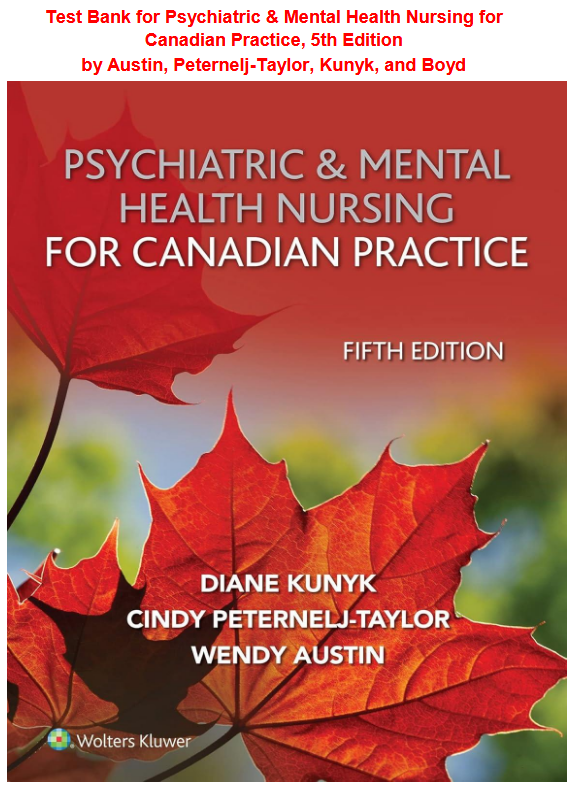
Psychiatric and Mental Health Nursing for Canadian Practice by Austin, Peternelj-Taylor, Kunyk, and Boyd has established itself as the definitive psychiatric nursing text for Canadian nursing education. The 5th edition continues that tradition with thoroughly updated content that reflects the DSM-5-TR diagnostic framework, current Canadian mental health policy and legislation, updated evidence-based practice guidelines, and an expanded emphasis on trauma-informed care, recovery-oriented practice, and the unique mental health needs of Indigenous peoples and other equity-deserving populations in Canada. It is a textbook that takes the full complexity of Canadian psychiatric nursing seriously while remaining accessible and clinically grounded, and this test bank was written to match that standard of depth and relevance at every level.
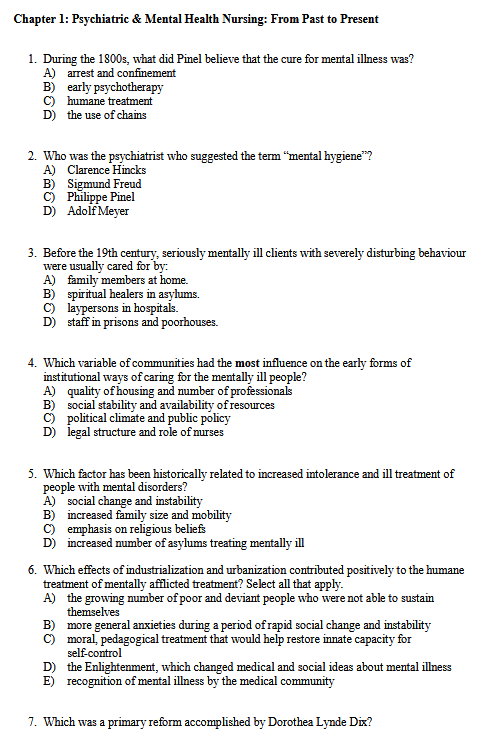
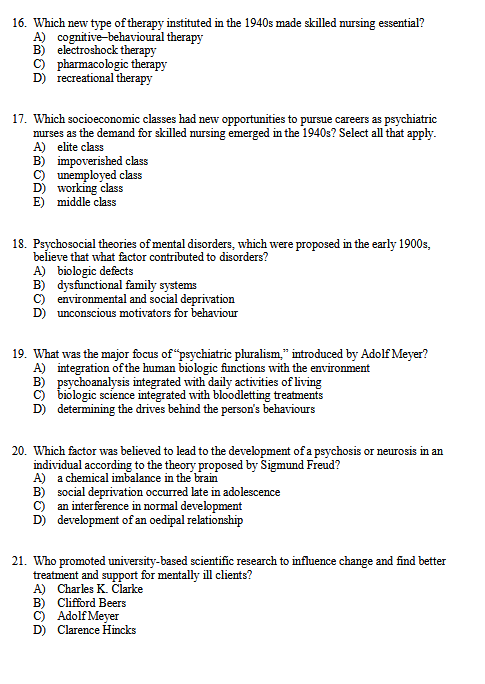
Every question in this resource follows the 5th edition chapter structure. The coverage is thorough and carefully organized across the full breadth of the textbook. Questions address the theoretical and historical foundations of psychiatric nursing in the Canadian context, the recovery model and its application in Canadian mental health systems, the Mental Health Act frameworks that vary by province and territory, therapeutic communication and the nurse-patient relationship, mental status examination and psychiatric assessment, psychopharmacology including antipsychotics, mood stabilizers, antidepressants, anxiolytics, and medications used in addiction treatment within the Canadian formulary context. Mental health disorders covered in depth include schizophrenia spectrum disorders, depressive disorders, bipolar and related disorders, anxiety and related disorders, obsessive-compulsive disorders, trauma and stressor-related disorders including PTSD, dissociative disorders, somatic symptom and related disorders, eating and feeding disorders, substance use and addictive disorders, neurocognitive disorders including delirium and dementia, personality disorders, and psychiatric conditions across the lifespan including child, adolescent, and older adult mental health. Suicide risk assessment and prevention, crisis intervention, violence risk assessment and de-escalation, forensic psychiatric nursing, community mental health, and the role of the nurse in interdisciplinary mental health teams are all represented. The particular mental health needs and culturally safe care of Indigenous peoples, racialized communities, LGBTQ2S+ individuals, and other marginalized populations in Canada are woven throughout the resource, reflecting the 5th edition’s commitment to equity and inclusion in psychiatric nursing practice.
What makes this test bank distinctly valuable is the quality and clinical depth of its answer explanations. Every question presents a realistic Canadian psychiatric nursing scenario, clearly identifies the correct answer, and follows it with a thorough, well-reasoned rationale. These rationales do not simply restate which option is right. They explain the therapeutic, pharmacological, legal, or ethical reasoning behind the correct choice, address why each of the remaining options is incorrect or less appropriate, and where relevant connect the content to Canadian mental health legislation, recovery-oriented practice principles, therapeutic communication frameworks, or the clinical judgment model that Canadian nursing examinations demand. That depth of explanation means every question functions as both an assessment and a genuine learning experience. You are not simply selecting answers. You are building the analytical and interpersonal understanding that makes the right clinical response clear in any examination or real-world psychiatric nursing situation.
The file is a fully searchable PDF. When you need to focus your review on Canadian mental health legislation before a psychiatric law examination, consolidate your understanding of suicide risk assessment before a clinical placement in a crisis unit, or drill questions on antipsychotic pharmacology before a psychopharmacology assessment, use Ctrl+F to navigate directly to that content in seconds. No time lost scrolling through chapters you have already covered. No disruption to your study momentum. Direct, precise access to exactly the content you need at exactly the moment you need it.
Your download link is generated the moment your purchase is confirmed. No waiting period, no account creation, no approval process. Open the file on your laptop, tablet, or phone and begin working through it immediately. The file is yours permanently. No subscription, no renewal fee, and no expiry date.
What You Get
- Full chapter coverage matched to the 5th edition layout across all Canadian psychiatric-mental health nursing content areas
- Clinically grounded scenario-based multiple-choice questions reflecting real Canadian psychiatric nursing practice
- Every question answered with the correct response clearly identified
- Detailed rationales explaining the therapeutic, pharmacological, legal, and ethical reasoning and addressing all answer options
- Searchable PDF format for fast, targeted review by disorder, concept, legislation, or clinical situation
- One-time purchase with permanent, unlimited file access
Who This Is For
Canadian nursing students enrolled in psychiatric-mental health nursing courses will benefit most directly from this resource. It mirrors the chapter structure of the Austin et al. textbook closely and is designed to support students as they work through one of the most conceptually rich and clinically demanding courses in any Canadian pre-licensure nursing program. It is also an excellent preparation tool for students approaching the NCLEX-RN or CPNRE licensing examinations, where psychosocial integrity and mental health content is a consistently tested domain. RNs pursuing the Canadian Certified Psychiatric-Mental Health Nurse credential will find the depth and Canadian policy focus of this resource well matched to their certification preparation needs. Nurses transitioning into inpatient psychiatric, community mental health, assertive community treatment, crisis stabilization, or forensic psychiatric settings in Canada will also benefit from the breadth and clinical depth of this test bank as they build the specialty knowledge their new practice environment requires.
Sample Questions
Question 1
A psychiatric nurse working in an inpatient unit in Ontario is caring for a patient who was admitted involuntarily under the Mental Health Act. The patient is now medically stable and tells the nurse, “I do not want to be here anymore. I want to leave today. You cannot keep me here against my will.” The patient has been assessed by the attending psychiatrist within the past 12 hours and a Form 3 Certificate of Involuntary Admission has been completed. The patient has no legal representative present. What is the most appropriate nursing response?
A) Tell the patient that they are free to leave since the nurse cannot legally prevent a competent adult from exercising their right to freedom of movement
B) Explain to the patient that under the Ontario Mental Health Act, the Form 3 allows for their continued involuntary detention for psychiatric assessment and treatment, and that they have the right to speak with a rights adviser and to apply to the Consent and Capacity Board to challenge the certificate
C) Restrain the patient physically to prevent them from leaving and notify security immediately without explaining the legal situation
D) Tell the patient that the decision to keep them is the psychiatrist’s alone and that the nurse has no information to share about their legal rights or the process for challenging their detention
Correct Answer: B
Detailed Explanation:
Involuntary psychiatric admission and detention in Canada is governed by provincial and territorial mental health legislation, which varies by jurisdiction but shares common principles rooted in the balance between individual liberty and the duty to protect persons from serious harm arising from mental disorder. In Ontario, the Mental Health Act governs involuntary admission through a series of forms completed by physicians. A Form 1 is a physician’s application for psychiatric assessment, allowing a person to be detained for up to 72 hours. A Form 3, the Certificate of Involuntary Admission, is completed by a psychiatrist following assessment and allows for involuntary detention for up to two weeks. Subsequent renewals are possible through additional certificates.
However, involuntary detention under Canadian mental health legislation does not extinguish the patient’s legal rights. On the contrary, Canadian law and nursing ethics require that patients be actively informed of those rights. Under the Ontario Mental Health Act, an involuntary patient has the right to be informed of their status and the reason for their detention, the right to consult a lawyer and to speak with a rights adviser provided by the Psychiatric Patient Advocate Office, and the right to apply to the Consent and Capacity Board, an independent tribunal, to challenge the certificate of involuntary admission. The nurse has both a legal obligation and a professional ethical duty to ensure the patient is informed of these rights clearly and in language they can understand.
Option A is incorrect because a patient detained under a valid Form 3 does not have the legal right to leave the facility. The Form 3 provides legal authority for continued detention and the nurse is obligated to ensure the patient does not leave, while doing so in the least restrictive and most dignity-preserving manner possible. Option C is incorrect because immediate physical restraint without explanation or less restrictive intervention is a disproportionate, rights-violating response. Restraint is a last resort and must be preceded by de-escalation and explanation. Option D is incorrect because telling the patient the nurse has no information to share is both factually inaccurate and an abandonment of the nurse’s professional and legal obligation to inform the patient of their rights under the Mental Health Act.
Question 2
A nurse in a Canadian community mental health centre is conducting a comprehensive suicide risk assessment on a 42-year-old male patient who was referred by his family physician following three weeks of worsening depression. During the assessment, the patient discloses that he has been thinking about ending his life, has a plan to use a firearm, and states that he owns a rifle at home. He rates his intent to act on the plan as seven out of ten. He lives alone and has been socially withdrawn for several months. He reports consuming alcohol daily for the past three weeks. Which combination of factors places this patient at the highest level of imminent suicide risk, and what is the most critical safety intervention the nurse must prioritize?
A) His social withdrawal and daily alcohol use are the primary risk factors; refer him for an addiction assessment and schedule a follow-up appointment in two weeks
B) His specific plan involving a lethal and accessible method, high stated intent, social isolation, male gender, and alcohol use represent a combination of factors indicating imminent high risk; the nurse must initiate an urgent safety response including restricting access to the firearm, involving emergency services or coordinating emergency psychiatric evaluation, and not leaving the patient without a safety plan in place
C) The patient’s score of seven out of ten on intent is the only clinically significant finding; administer a standardized depression scale and adjust his antidepressant dosage before discharging him with a safety hotline number
D) His depression and alcohol use are the primary concerns; provide psychoeducation about depression and refer him to an Alcoholics Anonymous group before addressing any safety concerns
Correct Answer: B
Detailed Explanation:
Suicide risk assessment in Canadian psychiatric nursing practice is guided by evidence-based frameworks that evaluate the presence, nature, and interaction of multiple risk and protective factors rather than relying on any single indicator. This patient presents with a convergence of some of the most clinically significant and empirically validated risk factors for imminent suicide death.
The presence of a specific, lethal, and immediately accessible suicide plan involving a firearm is one of the strongest predictors of completed suicide. Firearms are the most lethal suicide method, with a case fatality rate significantly higher than overdose, cutting, or most other methods. The patient not only has a plan but has immediate access to the means at home. His stated intent level of seven out of ten indicates a high degree of resolve. Male gender is associated with higher rates of completed suicide in Canada, in part because males are more likely to choose highly lethal methods. Social isolation removes a critical protective buffer. Daily alcohol use significantly disinhibits impulse control and dramatically increases the likelihood of acting on suicidal intent, particularly in the short term.
The most critical immediate safety intervention is lethal means restriction. Research consistently demonstrates that restricting access to the means of suicide, particularly firearms, is one of the most effective interventions for preventing suicide death. The nurse must work urgently and collaboratively with the patient and, where possible, a trusted person in the patient’s life to ensure the rifle is removed from the patient’s home or secured by another person. Emergency psychiatric evaluation must be arranged immediately given the level of risk. The patient must not be left to leave the community mental health centre without a concrete safety response in place.
Option A is incorrect because while social withdrawal and alcohol use are significant risk factors, treating them as the primary concern and scheduling a follow-up in two weeks while a patient has immediate access to a lethal weapon and high intent is a dangerously inadequate response to imminent risk. Option C is incorrect because a standardized depression scale and medication adjustment are not appropriate responses to imminent suicidal risk with a specific lethal plan and high intent. Providing only a safety hotline number is insufficient and potentially negligent in this clinical context. Option D is incorrect because deferring the safety response to address addiction referral and psychoeducation completely inverts the clinical priority. Immediate safety must be established before any other intervention.
Question 3
A nurse is caring for a 28-year-old patient with a diagnosis of bipolar I disorder who was admitted in a manic episode three days ago. The patient is currently prescribed lithium carbonate 900 mg twice daily, initiated at admission. This morning the patient reports nausea, vomiting, coarse hand tremors, and difficulty walking in a straight line. The nurse assesses the patient and notes slurred speech, confusion, and muscle twitching. The morning lithium level drawn two hours ago is reported as 2.4 mEq/L. What is the most likely explanation for these findings, and what is the priority nursing action?
A) These are expected side effects of lithium during the initial titration period; reassure the patient and administer an antiemetic for nausea
B) The patient is experiencing lithium toxicity; hold the lithium immediately, notify the provider urgently, prepare for IV fluid administration and supportive care, and monitor for seizures and cardiac dysrhythmias
C) The patient is experiencing a breakthrough manic episode despite lithium therapy; notify the provider to increase the lithium dose and add an antipsychotic
D) The patient’s symptoms are caused by the manic episode itself rather than the medication; continue the lithium as prescribed and reassess symptoms after the mania resolves
Correct Answer: B
Detailed Explanation:
Lithium has one of the narrowest therapeutic indices of any medication used in psychiatric practice, meaning the difference between a therapeutic blood level and a toxic blood level is small and clinically significant. The therapeutic range for lithium in the treatment of acute mania is generally 0.8 to 1.2 mEq/L, with some Canadian guidelines accepting levels up to 1.5 mEq/L during acute episodes under close monitoring. A lithium level of 2.4 mEq/L is well above the toxic threshold and represents severe lithium toxicity, a medical emergency.
Lithium toxicity produces a characteristic and progressive clinical syndrome. Early toxicity, typically at levels above 1.5 mEq/L, produces fine tremor, nausea, vomiting, diarrhea, and mild cognitive dulling. As levels rise above 2.0 mEq/L, the neurological signs escalate to coarse tremor, ataxia, confusion, slurred speech, and muscle fasciculations, exactly the findings documented in this patient. At levels above 2.5 mEq/L, severe toxicity can progress to seizures, coma, cardiac dysrhythmias, and permanent neurological damage or death if not treated urgently.
The lithium must be held immediately. No further doses should be administered under any circumstances until the toxicity is evaluated and managed. The provider must be notified urgently given the severity of the clinical picture and the serum level. Lithium has no reversal agent. Management is supportive, centered on IV hydration with normal saline to promote renal lithium excretion, cardiac monitoring, and seizure precautions. In severe cases, hemodialysis may be required to rapidly reduce serum lithium levels.
Option A is incorrect because a serum level of 2.4 mEq/L with neurological symptoms including ataxia, slurred speech, confusion, and muscle twitching is not a normal titration side effect. This is a life-threatening toxicity emergency and must be treated as such. Option C is incorrect because breakthrough mania does not produce the neurological toxidrome described, and increasing the lithium dose in a patient with a level of 2.4 mEq/L would be immediately life-threatening. Option D is incorrect because the clinical findings described are neurological symptoms consistent with lithium toxicity, not manifestations of mania. Continuing the lithium and waiting for symptoms to resolve would result in progressive toxicity and risk of permanent harm or death.
Question 4
A nurse working in a Canadian urban community mental health setting is meeting with a 55-year-old Indigenous woman who was referred following a hospitalization for a suicide attempt. During the session, the patient shares that she has been experiencing intense grief since the death of her mother two years ago, and that her mother was a residential school survivor whose experiences profoundly shaped their family across generations. The patient says, “My mother carried so much pain that was never hers alone. I carry it too, and my children carry it. I do not know how to put it down.” Which framework best guides the nurse’s therapeutic approach with this patient, and which nursing response is most culturally safe and clinically appropriate?
A) Apply a standard cognitive behavioral therapy protocol to challenge the patient’s negative thought patterns about carrying generational pain, and encourage her to reframe these beliefs as cognitive distortions
B) Recognize the clinical presentation within a framework of intergenerational trauma rooted in the historical and ongoing impacts of colonization and residential schools, validate the patient’s experience as real and meaningful, express cultural humility, ask what healing means to her in the context of her own cultural values, and explore whether connection to cultural practices, Elders, or Indigenous healing resources would be meaningful to her recovery
C) Diagnose the patient with complicated grief disorder and initiate a standardized grief processing protocol without exploring the cultural or historical dimensions of her experience
D) Refer the patient immediately to an Indigenous-specific mental health program and close her file at the community mental health centre, as non-Indigenous nurses are not able to provide appropriate care to Indigenous patients
Correct Answer: B
Detailed Explanation:
This question addresses one of the most important and clinically significant areas in contemporary Canadian psychiatric nursing practice: the provision of culturally safe, trauma-informed care to Indigenous patients in the context of intergenerational trauma arising from colonial policies, most notably the Indian Residential School system. This system, which forcibly removed Indigenous children from their families and communities across Canada for over a century, has produced well-documented and profound intergenerational impacts on the mental health, cultural continuity, family structures, and community wellbeing of Indigenous peoples across the country. The Truth and Reconciliation Commission of Canada has explicitly identified the mental health consequences of residential schools as an ongoing public health crisis requiring urgent and culturally grounded responses from the healthcare system.
The patient in this question is not describing a psychiatric symptom that needs to be corrected. She is describing an experience of intergenerational transmission of trauma that is real, historically rooted, and shared by countless Indigenous families across Canada. A framework of intergenerational trauma recognizes that the psychological wounds inflicted by colonial violence do not remain within the individual who experienced them directly. They are transmitted through disrupted parenting, altered family and community dynamics, epigenetic mechanisms, and the lived experience of ongoing structural racism and cultural loss.
Culturally safe nursing practice, as defined by the Canadian Nurses Association and reinforced in the 5th edition of this textbook, requires the nurse to reflect on their own cultural assumptions, approach the patient with genuine humility and curiosity rather than with predetermined clinical frameworks, and centre the patient’s own understanding of their experience and their own conception of healing. Asking what healing means to this patient, and whether connection to cultural practices, Elders, traditional ceremonies, or land-based healing might be meaningful, opens space for a recovery process that is self-determined and culturally grounded rather than one imposed by a Western biomedical model.
Option A is incorrect because applying a standard cognitive behavioral therapy protocol to reframe intergenerational trauma as a cognitive distortion is culturally unsafe, clinically inappropriate, and potentially retraumatizing. It pathologizes a historically grounded and culturally meaningful understanding of experience. Option C is incorrect because applying a standardized grief protocol without acknowledging the cultural and historical dimensions of this patient’s experience reduces a complex intergenerational trauma response to a biomedical category, which is both clinically incomplete and culturally disrespectful. Option D is incorrect because while Indigenous-specific mental health resources and services should absolutely be explored and offered as part of a comprehensive care plan, closing the patient’s file and refusing care on the basis that the nurse is non-Indigenous is an abandonment of care. Non-Indigenous nurses can and must provide culturally safe care to Indigenous patients. Cultural safety is a practice orientation, not an identity requirement.
Question 5
A nurse is working on a psychiatric inpatient unit and is approached by a patient with a diagnosis of schizophrenia who says, “I need to tell you something important. I know for certain that my roommate on this unit is planning to escape and harm my neighbor at home. I have been sent a message through the television.” The nurse recognizes that the patient has a documented history of persecutory delusions and ideas of reference. However, the patient’s roommate has not displayed any agitated or threatening behavior during this admission. What is the most appropriate nursing response, and which ethical and legal principle is most relevant to this situation?
A) Immediately contact the patient’s neighbor to warn them of the threat since any disclosure of potential harm to an identifiable third party must be acted upon regardless of whether the source is a patient with an active delusion
B) Dismiss the concern entirely and document it as delusional content without any further assessment, since the patient has a known history of delusions
C) Take the disclosure seriously by assessing the patient further, observing the roommate’s behavior, discussing the concern with the treatment team, and applying clinical judgment to evaluate the credibility and specificity of the potential threat, recognizing the tension between the duty to warn and the assessment of delusional content
D) Tell the patient that their concern will be kept completely confidential and that no action will be taken to ensure the patient continues to share information openly with the nursing staff
Correct Answer: C
Detailed Explanation:
This question presents one of the most ethically and legally complex situations in Canadian psychiatric nursing practice: navigating the tension between patient confidentiality, the assessment of delusional content, and the legal and ethical duty to warn identifiable third parties of credible threats of harm. This duty, established in Canadian case law following principles similar to the landmark Tarasoff case in the United States, requires mental health professionals to take reasonable steps to protect an identifiable third party when a patient poses a serious and credible threat to that person’s safety.
The critical clinical challenge in this scenario is that the threat is being reported by a patient with a documented history of persecutory delusions and ideas of reference, and the purported source of the information is a television message, which is itself a delusional symptom. Ideas of reference involve the false belief that unrelated external events, such as television programs, contain specific personal messages directed at the patient. This context makes the threat report clinically complex rather than straightforward. The nurse cannot simply act on the report as though it were a credible external observation, but neither can the nurse simply dismiss it without further assessment on the grounds that the patient has a history of delusions.
The appropriate clinical and ethical response involves a structured assessment process. The nurse must gather more information from the patient, observe the roommate’s actual behavior carefully for any signs of agitation, threatening statements, or escape planning, and bring the concern to the treatment team for collective clinical evaluation. The team, including the psychiatrist, is best positioned to evaluate whether the threat rises to the level of credibility and specificity that triggers the duty to warn. This response honors both the seriousness of the potential risk and the clinical reality that delusional content must be carefully assessed rather than automatically acted upon.
Option A is incorrect because immediately contacting the neighbor based solely on a report arising from a known delusion and a television message, without any team assessment or clinical evaluation of credibility, bypasses the clinical judgment process that the duty to warn requires. The duty to warn is triggered by a serious and credible threat, not by any disclosure made by any patient regardless of clinical context. Option B is incorrect because dismissing a disclosure of potential harm to a third party entirely on the basis of the patient’s diagnostic history is clinically negligent. Even patients with psychotic disorders can have real concerns embedded within delusional frameworks, and every potential threat to an identifiable third party requires at minimum a clinical evaluation of its credibility. Option D is incorrect because telling the patient that the disclosure will be kept completely confidential and no action will be taken is both ethically and legally inaccurate. Mental health professionals in Canada do not have unlimited confidentiality when there is a potential risk of serious harm to an identifiable third party. Making this promise to the patient would be a misrepresentation of the nurse’s legal and ethical obligations.
FAQ
Is this an official publisher product?
No. This is an independently written study resource structured around the topics and chapter layout of the 5th edition. It is not affiliated with or endorsed by the authors or their publisher.
Will these questions match my course exams or Canadian nursing licensing examination questions?
This test bank is designed to build deep clinical reasoning across the full scope of Canadian psychiatric-mental health nursing so you are well prepared for any examination format. It does not preview specific instructor exams or licensed board examination content.
What makes this test bank different from others?
The detailed rationales go well beyond identifying the correct answer. They explain the therapeutic, pharmacological, legal, and ethical reasoning behind each correct response, situate content within the Canadian mental health legislative and policy context, address why each incorrect option fails, and connect the content to real Canadian psychiatric nursing practice. That approach builds the kind of deep, transferable understanding that holds up under examination pressure and translates directly into safe, culturally responsive, and compassionate psychiatric nursing care.
What file format will I receive?
A fully searchable PDF, navigable by chapter, disorder, clinical concept, legislation, or keyword using any standard PDF reader on any device.
How quickly can I access the file after purchase?
Instantly. Your download link is generated immediately after checkout with no waiting period or additional steps required.
Can I open this on my phone or tablet?
Yes. The PDF opens cleanly on any iOS or Android device using a free PDF reader app with no formatting issues.
Do I need the textbook to use this?
Having the textbook alongside is helpful since the chapter order mirrors the 5th edition closely. The questions and rationales are also written in enough detail to be used independently for focused review and examination preparation.
Is there a subscription or renewal fee?
No. This is a one-time purchase. The file is yours to keep and use as many times as you need with no recurring charges or expiry date.
Kamara Reid –
Explanations made challenging concepts easier
Cayte N. –
Perfect for quick study sessions
Warren Brent –
Helpful questions with relevant rationales
Norah Helen –
Solid study aid to accompany the textbook.
Melania Angel –
Helpful study material for nursing students preparing for tests.