Prescribing is a different skill than administering. Advanced practice pharmacology asks you to choose the right drug, at the right dose, for the right patient, and to justify that choice against alternatives. That’s a much bigger leap than knowing a drug’s classification and side effects. This textbook, and this test bank, are built specifically for that leap.
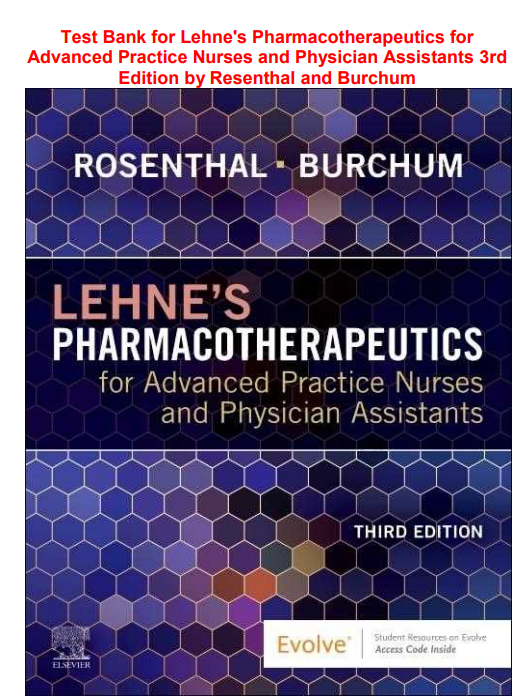
This test bank follows the 3rd edition of Lehne’s Pharmacotherapeutics for Advanced Practice Nurses and Physician Assistants by Laura Rosenthal and Jacqueline Burchum, chapter by chapter. So your review sessions actually track with what your program is teaching.
Whether you’re an NP student, a PA student, or a DNP student building prescriptive competency, this resource sharpens the clinical decision-making this level of practice demands.
What This Test Bank Covers
This textbook is written specifically for prescribers, and this test bank reflects that scope. You’ll find questions on:
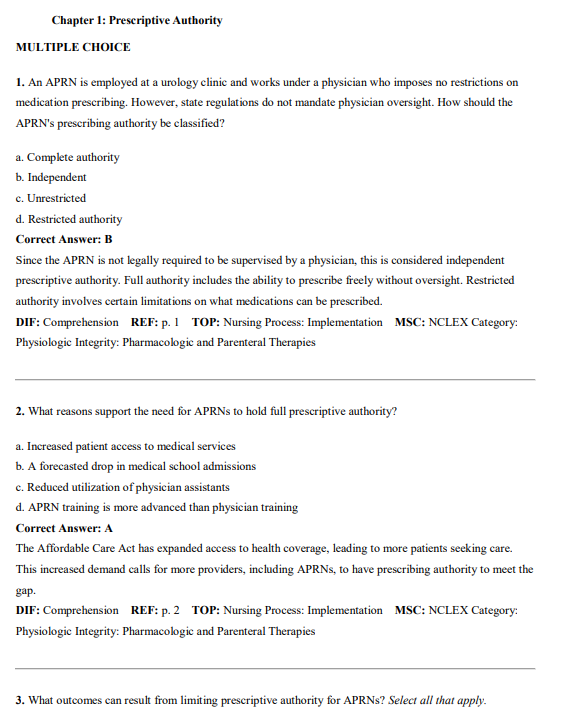
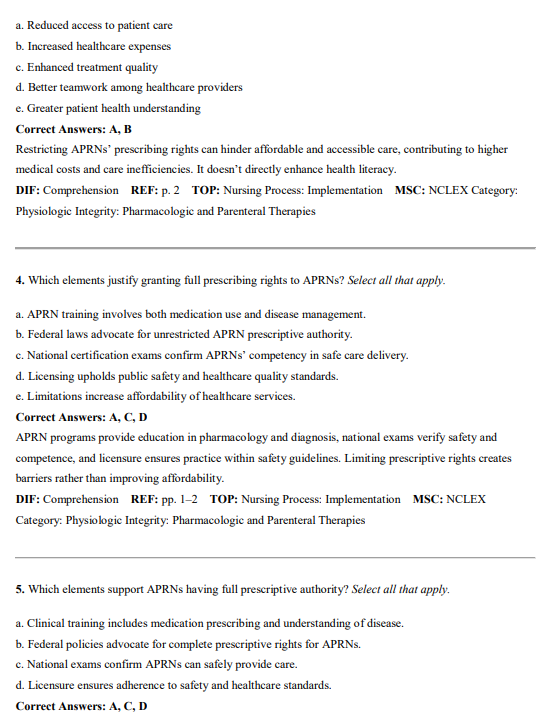
- Principles of prescriptive authority and the prescribing process
- Pharmacokinetics and pharmacodynamics applied to clinical decision-making
- Drug selection and treatment algorithms for common conditions
- Cardiovascular, respiratory, and endocrine pharmacotherapy
- Psychiatric and neurologic drug therapy
- Pain management and controlled substance prescribing
- Antimicrobial selection and stewardship
- Pharmacotherapy across the life span, including pediatric and geriatric prescribing
- Special population considerations, including pregnancy and renal or hepatic impairment
- Patient education and medication adherence strategies
- Legal, ethical, and safety considerations in prescribing
If it’s a focus area of the textbook, there’s a strong chance it’s represented in this test bank.
Why This Test Bank Stands Out
1. It Follows the Textbook’s Structure
Every question aligns with a specific chapter in the 3rd edition, so review stays organized instead of scattered across unrelated drug topics.
2. It’s Written for Prescriber-Level Reasoning
This isn’t a basic pharmacology test bank. Questions push toward drug selection, treatment planning, and justifying a prescribing decision, matching the level expected of an NP or PA in clinical practice.
3. Every Question Comes With a Rationale
A correct guess doesn’t build prescribing judgment. Each question explains why the correct choice is the best option and why the alternatives fall short for that specific patient scenario.
4. Clear, Focused Language
Prescriptive pharmacology brings a lot of nuance, from comorbidities to drug interactions to cost considerations. This test bank keeps the wording direct so the clinical reasoning stays the focus.
5. Built for Ongoing, Case-Based Review
Prescribing skill develops through repeated exposure to realistic patient scenarios, not a single study session. This test bank is designed to support that kind of extended, case-based practice.
Who This Test Bank Is For
- Nurse practitioner students across specialty tracks
- Physician assistant students in pharmacotherapeutics coursework
- DNP students building prescriptive authority competencies
- Advanced practice providers preparing for certification exams
- Nursing and PA program faculty building quizzes or exam question pools
Sample Practice Questions
Here are five sample questions written in the same style and difficulty level as the full test bank.
Question 1: Drug Selection
A patient with newly diagnosed hypertension and no other comorbidities is being started on pharmacotherapy. Which class is generally considered a first-line option according to current guidelines?
A) Alpha-1 blockers
B) Thiazide diuretics
C) Central-acting alpha-2 agonists
D) Loop diuretics
Correct Answer: B) Thiazide diuretics
Rationale: Thiazide diuretics are commonly recommended as a first-line option for uncomplicated hypertension, along with ACE inhibitors, ARBs, and calcium channel blockers. Alpha-1 blockers and central-acting alpha-2 agonists are typically reserved for specific situations or as add-on therapy rather than first-line treatment. Loop diuretics are generally used for volume overload or heart failure rather than routine hypertension management.
Question 2: Renal Impairment
A patient with a creatinine clearance of 25 mL/min is prescribed a medication that is primarily renally cleared. What is the most appropriate prescribing consideration?
A) Prescribe the standard adult dose without adjustment
B) Adjust the dose or dosing interval based on renal function
C) Avoid renal function entirely when selecting a dose
D) Increase the dose to compensate for reduced absorption
Correct Answer: B) Adjust the dose or dosing interval based on renal function
Rationale: Reduced renal clearance slows the elimination of renally cleared medications, increasing the risk of drug accumulation and toxicity. Adjusting the dose or extending the dosing interval helps maintain safe drug levels. Prescribing a standard dose without adjustment risks toxicity. Renal function is a critical factor to consider, not one to disregard, and increasing the dose would worsen accumulation rather than address an absorption issue that isn’t present in this scenario.
Question 3: Antimicrobial Stewardship
A patient presents with symptoms consistent with a viral upper respiratory infection. Which prescribing decision best reflects appropriate antimicrobial stewardship?
A) Prescribe a broad-spectrum antibiotic to prevent secondary infection
B) Withhold antibiotics and focus on symptomatic treatment
C) Prescribe a narrow-spectrum antibiotic as a precaution
D) Prescribe an antiviral medication regardless of symptom duration
Correct Answer: B) Withhold antibiotics and focus on symptomatic treatment
Rationale: Antibiotics aren’t effective against viral infections, and prescribing them unnecessarily contributes to antibiotic resistance, a core concern in antimicrobial stewardship. Symptomatic treatment is the appropriate approach for a viral upper respiratory infection. Prescribing any antibiotic, broad or narrow spectrum, as a preventive measure isn’t supported by current stewardship guidelines, and antivirals aren’t automatically indicated without more specific findings pointing to a treatable viral illness.
Question 4: Pain Management and Controlled Substances
A provider is considering opioid therapy for a patient with chronic non-cancer pain. Which action reflects appropriate prescribing practice?
A) Prescribing the highest effective dose immediately to ensure adequate pain control
B) Reviewing the patient’s prescription drug monitoring program history before prescribing
C) Avoiding any discussion of risks to prevent patient anxiety
D) Prescribing an unlimited quantity to reduce the need for follow-up visits
Correct Answer: B) Reviewing the patient’s prescription drug monitoring program history before prescribing
Rationale: Checking the prescription drug monitoring program helps identify other controlled substance prescriptions and potential misuse patterns before starting opioid therapy, which is a recommended safety step in responsible prescribing. Starting at the highest effective dose skips the principle of starting low and titrating carefully. Avoiding risk discussion undermines informed consent. Prescribing an unlimited quantity increases the risk of misuse and removes an important opportunity for follow-up monitoring.
Question 5: Pregnancy Considerations
A pregnant patient requires treatment for a urinary tract infection. Which factor is most important when selecting an antibiotic for this patient?
A) The antibiotic’s cost compared to other options
B) The antibiotic’s established safety profile during pregnancy
C) The patient’s personal preference for a specific brand name
D) Whether the antibiotic is available in tablet form
Correct Answer: B) The antibiotic’s established safety profile during pregnancy
Rationale: Pregnancy significantly narrows safe medication options, since many drugs cross the placenta and can affect fetal development. Selecting an antibiotic with a well-established safety profile during pregnancy is the priority. Cost, brand preference, and formulation matter in general prescribing decisions, but they’re secondary considerations when a medication’s safety in pregnancy is the primary concern shaping the choice.
These five questions only scratch the surface. The full test bank includes hundreds of similar questions spanning every chapter of the 3rd edition.
How to Study With This Test Bank
- Match your review to your course sequence. Study drug categories and prescribing principles in the order your program covers them.
- Practice justifying the choice, not just picking the answer. Advanced practice exams often reward the reasoning behind a prescribing decision as much as the decision itself.
- Pay close attention to special population questions. Renal impairment, hepatic impairment, and pregnancy scenarios show up often and require careful consideration.
- Revisit missed questions after a few days. Spaced repetition helps complex prescribing scenarios stick for the long term.
- Pair this with your assigned textbook chapters. The test bank reinforces the material; it isn’t meant to replace it.
Why This Beats Generic Pharmacology Quizzes
Generic online quizzes are often written for entry-level nursing audiences and stop short of prescriber-level reasoning. This test bank was built specifically around Rosenthal and Burchum’s 3rd edition, so the depth, terminology, and clinical decision-making level match what advanced practice programs actually expect.
Format and Delivery
This test bank is delivered as a digital file. You get instant access after purchase. No shipping. No delays. Study from your laptop, tablet, or phone whenever it’s convenient.
Frequently Asked Questions
Is this test bank the same as the textbook?
No. This is a companion study resource. You’ll still need Lehne’s Pharmacotherapeutics for Advanced Practice Nurses and Physician Assistants, 3rd Edition, for full chapter content and detailed treatment guidance.
Is this the same as the test bank for Lehne’s Pharmacology for Nursing Care?
No. This test bank is built around the advanced practice, prescriber-focused edition, which emphasizes drug selection and treatment decision-making rather than general nursing pharmacology.
Is this appropriate for entry-level nursing students?
Not really. This test bank is written at a prescriber level, so it’s best suited for NP, PA, or DNP students rather than pre-licensure nursing students.
Does this cover controlled substance prescribing?
Yes. Pain management and safe opioid prescribing practices are covered throughout the question set.
Can faculty use this to build course exams?
Yes. Many faculty members use test banks like this as a foundation for quizzes, midterms, or final exams in advanced practice or PA programs.
What question formats are included?
You’ll find multiple choice, true or false, matching, and short answer questions throughout the set.
Are rationales included for every answer?
Yes. Each question includes an explanation of why the correct prescribing choice fits best and why the other options fall short.
Is this useful for certification exam prep?
Yes. Pharmacotherapeutic decision-making concepts show up frequently on NP and PA certification exams, so this practice reinforces that foundation.
How is this different from the textbook’s built-in review questions?
Built-in review questions are usually limited in number. This test bank offers a much larger, more comprehensive question set with detailed rationales for deeper practice.
Final Thoughts
Prescribing asks you to go beyond knowing what a drug does. It asks you to weigh guidelines, patient factors, and risk against benefit, then commit to a decision. This test bank for the 3rd edition of Lehne’s Pharmacotherapeutics for Advanced Practice Nurses and Physician Assistants gives you a direct way to practice that exact skill before your exam. Realistic scenarios. Honest explanations. A study tool built around the clinical reasoning your program is training you to use.
Grab your copy today and study with real confidence.
Leo Fernandez –
Boosted my understanding of difficult advanced nursing pharmacology topics.
Mary Lincoln –
Organized content makes reviewing simple and effective.
Rosemary R –
Highly recommend for nursing school success
Rachael M. –
Helped me feel more confident before exams
Helena Peters –
Excellent variety of challenging nursing questions
Moureen Mbaye –
Good explanations helped clarify confusing concepts.
Helen Christie –
Useful for identifying knowledge gaps during studying.
Peris Hart –
Great addition to my exam preparation routine.
Terry Anne –
Practice was straightforward and genuinely helpful.
Sally K. –
Helpful resource that made studying feel more manageable.
Doris King –
Very useful questions for reinforcing nursing pharmacology concepts.
Leah Kiptum –
Great practice resource before pharmacology exams.