
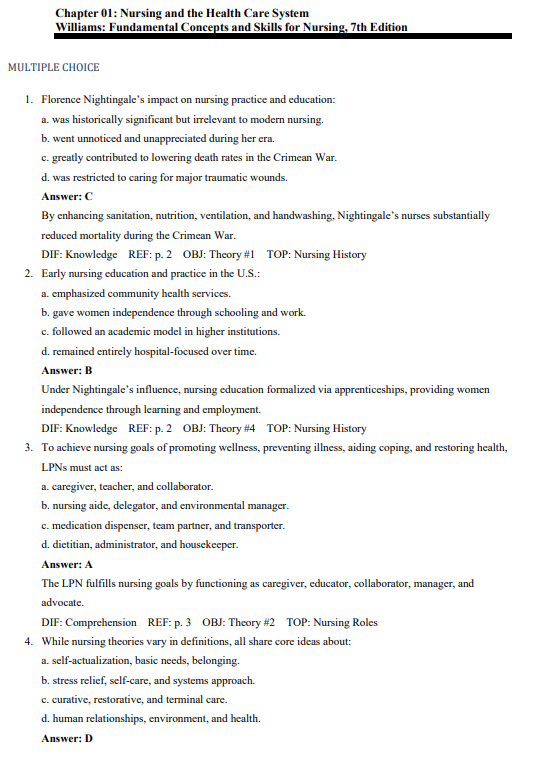
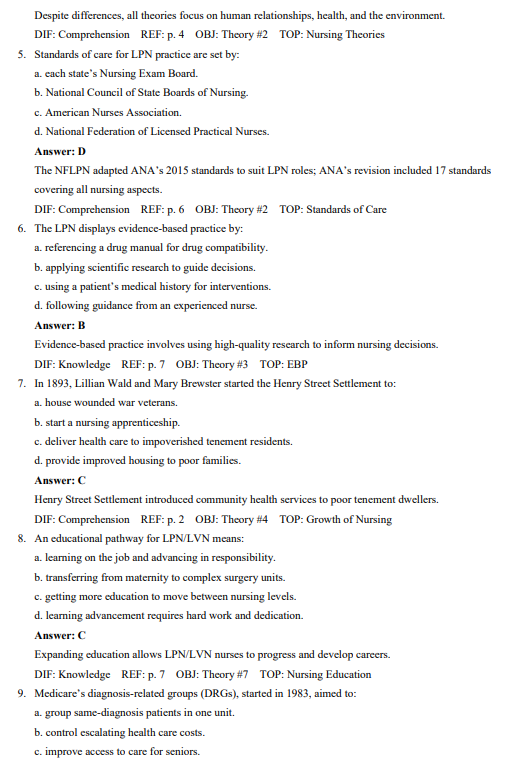
Every nurse begins in the same place. Before the specialty certifications, before the advanced practice degrees, before the years of clinical experience, there is the foundation. The concepts, principles, and skills that underpin everything else a nurse will ever do. How to assess a patient systematically. How to communicate therapeutically. How to prevent infection. How to administer medications safely. How to document accurately. How to think critically under pressure. These are not entry-level concerns that get left behind as practice advances. They are the bedrock on which every clinical decision rests for the entire span of a nursing career. Getting them right from the beginning matters enormously.
Fundamental Concepts and Skills for Nursing by Williams has earned its reputation as one of the most accessible and comprehensive introductory nursing texts available. The 7th edition continues that tradition, presenting core nursing concepts with clarity and connecting them to real clinical application at every step. It is the kind of textbook that does not just describe nursing. It begins to shape how a student thinks like a nurse. This test bank was built to extend and deepen that process.
Every question in this resource follows the 7th edition chapter structure. The coverage is thorough and carefully sequenced, beginning with the role of the nurse and the healthcare system, moving through legal and ethical dimensions of practice, communication and documentation, infection control and safety, vital signs and physical assessment, hygiene and comfort care, nutrition and elimination, mobility and skin integrity, medication administration, perioperative nursing, and the care of patients across the lifespan with a range of health conditions. No foundational content area has been left out.
What makes this test bank stand apart from generic question collections is the depth of its answer explanations. Every question includes the correct answer and a detailed rationale. These explanations go beyond confirming what is right. They walk through the clinical or conceptual reasoning behind the correct choice, address why each of the other options is incorrect, and connect the content to nursing practice in a way that makes the understanding stick. For students encountering nursing content for the first time, that level of explanation is not a bonus. It is essential. It is the difference between recognizing the right answer on a practice question and actually understanding why it is right, which is the only kind of preparation that translates into safe clinical performance.
The file is a fully searchable PDF. Reviewing infection control principles before a skills lab? Working through medication administration safety before your first clinical rotation? Studying vital signs interpretation before a unit exam? Use Ctrl+F to land exactly where you need to be in the document within seconds. No scrolling through content you have already covered. No wasted time hunting for the right chapter. Clean, precise, efficient navigation from the moment you open the file.
Your download link is available immediately after your purchase is confirmed. No waiting period, no account creation, no approval process. Open the file on your laptop, tablet, or phone and start working through it right away. The file is yours permanently. No subscription, no renewal fee, and no expiry date standing between you and your study material.
What You Get
- Full chapter coverage matched to the 7th edition layout
- Scenario-based multiple-choice questions grounded in fundamental nursing practice
- Every question answered with the correct response clearly identified
- Detailed rationales explaining the clinical reasoning and addressing all answer options
- Searchable PDF format for fast, targeted review by topic, skill, or concept
- One-time purchase with permanent, unlimited file access
Who This Is For
Nursing students in their first semester of a pre-licensure program will benefit most directly from this resource. It mirrors the content arc of the Williams textbook closely and is designed to support students as they encounter foundational nursing concepts for the first time. It is also a strong review tool for students preparing for NCLEX who want to revisit and solidify their understanding of fundamental content before sitting for the examination. Practical nursing and LPN students whose programs center on this textbook will find it equally useful. Finally, nurses returning to practice after a career break who want a structured way to refresh their foundational knowledge will find this test bank a clear and efficient resource.
Sample Questions
Question 1
A nurse is caring for a postoperative patient who has not voided in seven hours since returning from surgery. The patient reports mild lower abdominal discomfort. On assessment, the nurse palpates a firm, rounded mass above the symphysis pubis. What is the most likely explanation for these findings, and what should the nurse do first?
A) The patient is developing a surgical site infection; notify the provider and prepare to administer antibiotics
B) The patient has a distended bladder due to urinary retention; assist the patient to void using privacy and positioning, and notify the provider if unsuccessful
C) The patient is experiencing paralytic ileus; withhold oral intake and insert a nasogastric tube
D) The patient has internal postoperative bleeding; place them in Trendelenburg position and call for emergency assistance
Correct Answer: B
Detailed Explanation:
A firm, rounded, palpable mass above the symphysis pubis in a patient who has not voided for several hours is a classic presentation of urinary retention with bladder distension. Postoperative urinary retention is extremely common and results from several contributing factors including the effects of general or regional anesthesia on bladder tone, the inhibitory effects of opioid analgesics on the detrusor muscle, pain, anxiety, and the supine positioning that many patients remain in during recovery. The bladder can hold up to 300 to 500 mL of urine comfortably, but in retention it can distend to hold significantly more, producing the palpable mass the nurse is feeling.
The first nursing actions are non-invasive and privacy centered. Assisting the patient to a normal voiding position, running water nearby, applying warmth to the perineum, and ensuring privacy can often stimulate spontaneous voiding. If these measures fail, the provider should be notified and urinary catheterization may be required to relieve the retention and prevent damage to the bladder wall and upper urinary tract.
Option A is incorrect because surgical site infection does not produce a palpable bladder mass, and the timeframe of seven postoperative hours is too early for a wound infection to manifest in this way. Option C is incorrect because paralytic ileus involves the bowel, not the bladder, and presents with absent bowel sounds, abdominal distension, and lack of flatus rather than a firm suprapubic mass. Option D is incorrect because internal bleeding presents with hypotension, tachycardia, pallor, and abdominal rigidity, not a discrete firm mass above the symphysis pubis.
Question 2
A nurse is preparing to administer a subcutaneous injection of insulin to a patient. The nurse draws up the correct dose, selects an appropriate injection site on the abdomen, and is ready to proceed. Which action reflects correct technique for a subcutaneous injection in an average-sized adult patient?
A) Insert the needle at a 90-degree angle, aspirate for blood return, and inject slowly if no blood is present
B) Insert the needle at a 45 to 90-degree angle depending on tissue depth, do not aspirate, and inject the medication steadily
C) Insert the needle at a 15-degree angle bevel up, aspirate for two minutes, and inject rapidly
D) Insert the needle at a 90-degree angle, massage the site vigorously after injection to speed absorption
Correct Answer: B
Detailed Explanation:
Subcutaneous injections are administered into the adipose tissue layer just beneath the skin. The correct angle of insertion depends on the amount of subcutaneous tissue at the chosen site. In average-sized adults with adequate subcutaneous tissue, a 90-degree angle is appropriate. In thinner patients or at sites with less tissue depth, a 45-degree angle reduces the risk of inadvertently injecting into muscle tissue. Current evidence-based practice guidelines no longer recommend aspiration before subcutaneous injections because subcutaneous sites are not highly vascular and aspiration has been shown to be unnecessary and potentially harmful, particularly for insulin injections. The medication should be injected steadily and at a controlled pace.
Option A is incorrect because aspiration is not recommended for subcutaneous injections according to current clinical guidelines. This practice is outdated and is no longer supported by evidence. Option C is incorrect because a 15-degree angle bevel up describes intradermal injection technique, which is used for allergy testing and tuberculin skin tests, not for subcutaneous medications. Injecting at this angle would deposit the medication within the dermis rather than the subcutaneous layer. Option D is incorrect because massaging the injection site after insulin administration is contraindicated. Massage can cause the insulin to be absorbed too rapidly, potentially leading to hypoglycemia, and can also cause local tissue irritation over time.
Question 3
A nurse is performing hand hygiene using an alcohol-based hand rub between patient care activities in a medical-surgical unit. In which situation should the nurse use soap and water instead of the alcohol-based product?
A) After removing gloves following a routine assessment
B) Before administering oral medications to a patient
C) After caring for a patient with confirmed Clostridioides difficile infection
D) Before performing a sterile dressing change on a surgical wound
Correct Answer: C
Detailed Explanation:
Alcohol-based hand rubs are effective against the majority of bacteria and viruses encountered in healthcare settings and are the preferred method of hand hygiene in most clinical situations because they are fast, effective, and less damaging to skin integrity than repeated soap and water washing. However, they have one critical limitation. They are not effective against Clostridioides difficile spores. C. difficile produces hardy spores that are resistant to the denaturing effects of alcohol. These spores are effectively removed from the hands only through the mechanical action of soap and water washing, which physically dislodges and removes them from the skin surface. Any nurse caring for a patient with confirmed C. difficile infection must use soap and water for hand hygiene to prevent transmission of this highly contagious and potentially life-threatening organism to other patients.
Option A is incorrect because alcohol-based hand rub is entirely appropriate after removing gloves following a routine assessment with no contact precautions in place. Option B is incorrect because alcohol-based hand rub is the appropriate and recommended choice before medication administration in a standard clinical setting. Option D is incorrect because alcohol-based hand rub is appropriate and effective before a sterile dressing change. The technique and the sterile field setup are what protect against contamination in that scenario, not the specific type of hand hygiene used.
Question 4
A nurse is assessing a patient’s pain using a numeric rating scale and the patient rates their pain as 8 out of 10. The patient is lying quietly in bed with eyes closed and does not appear to be in distress. A nursing student accompanying the nurse comments that the patient does not look like they are in that much pain. How should the nurse respond to the student?
A) Agree with the student and reassess the pain score because the patient’s behavior does not support an 8 out of 10 rating
B) Explain that pain is a subjective experience and the patient’s self-report is the most reliable indicator of pain intensity, regardless of outward appearance
C) Suggest that the patient may be exaggerating their pain to receive stronger pain medication and document a pain score of 4 instead
D) Tell the student that visible distress always correlates with pain intensity and that further assessment is needed before accepting the patient’s report
Correct Answer: B
Detailed Explanation:
Pain is defined as whatever the experiencing person says it is, existing whenever they say it does. This patient-centered definition, foundational to nursing practice and supported by major professional organizations including the American Pain Society, establishes self-report as the gold standard for pain assessment. Pain expression is highly variable and influenced by cultural background, individual coping style, prior pain experiences, fatigue, and many other factors. A patient who has been in pain for an extended period may have developed a quiet, still behavioral adaptation to their discomfort. The absence of grimacing, guarding, or vocalization does not mean the pain is less severe than reported. Discounting a patient’s self-report based on appearance is both clinically inappropriate and ethically problematic.
Option A is incorrect because the nurse should not override a patient’s self-reported pain score based on behavioral observation alone. The appropriate response is to accept the report and act on it. Option C is incorrect because assuming a patient is fabricating or exaggerating pain is a form of bias that undermines trust, compromises care, and is not supported by any assessment evidence presented in this scenario. Altering a documented pain score without clinical justification is also a documentation ethics violation. Option D is incorrect because visible distress does not always correlate with pain intensity. Many patients with severe pain present calmly, and many patients with mild pain present dramatically. Behavior alone is an unreliable proxy for pain severity.
Question 5
A nurse is caring for a patient on contact precautions due to a methicillin-resistant Staphylococcus aureus wound infection. The nurse needs to enter the room to perform a dressing change and take vital signs. In which order should the nurse don personal protective equipment?
A) Mask, gown, gloves
B) Gown, mask, gloves
C) Gloves, gown, mask
D) Mask, gloves, gown
Correct Answer: B
Detailed Explanation:
The correct sequence for donning personal protective equipment follows a specific order established by infection control guidelines to ensure maximum protection for the healthcare worker and prevent contamination. The recommended sequence is gown first, then mask or respirator, then goggles or face shield if required, and finally gloves. The gown is applied first because it protects the largest surface area of the body and its ties and fasteners are at the back, where they would be difficult to secure after gloves are on. The mask is applied next to protect the mucous membranes of the nose and mouth. Gloves are applied last because they cover the cuffs of the gown, creating a continuous protective barrier at the wrist and reducing the risk of skin exposure.
The doffing sequence, which is equally important, follows the reverse principle. Gloves are removed first because they are the most heavily contaminated item, followed by the gown, then the mask. Hand hygiene is performed at multiple points during doffing to prevent self-contamination.
Option A is incorrect because applying the mask before the gown means the gown fasteners must be manipulated after the mask is in place, increasing the risk of contamination and making the process more difficult. Option C is incorrect because applying gloves first means that the contaminated outer surface of the gloves would come into contact with the clean interior surfaces of the gown and mask during the donning process. Option D is incorrect for the same reason. Applying the mask and then the gloves before the gown means the gown cannot be properly fastened without contaminating or dislodging the already-applied PPE.
(Full answer key with detailed rationales included for all questions in the complete document.)
FAQ
Is this an official publisher product?
No. This is an independently written study resource structured around the topics and chapter layout of the 7th edition. It is not affiliated with or endorsed by the author or their publisher.
Will these questions match my nursing school exams or NCLEX questions?
This test bank is designed to build your foundational nursing knowledge and clinical reasoning so you are prepared for any exam format. It does not preview any specific instructor’s questions or licensed board examination content.
What makes this test bank different from others?
The detailed rationales go beyond identifying the correct answer. They explain the underlying nursing principle, address the clinical reasoning involved, and clarify why each incorrect option falls short. That approach builds genuine understanding rather than answer pattern recognition, which is what you need to succeed both on exams and in clinical practice.
What file format will I receive?
A fully searchable PDF, navigable by chapter, nursing concept, skill, or keyword using any standard PDF reader on any device.
How quickly can I access the file after purchase?
Instantly. Your download link is generated immediately after checkout with no waiting period or additional steps required.
Can I open this on my phone or tablet?
Yes. The PDF opens cleanly on any iOS or Android device using a free PDF reader app with no formatting issues.
Do I need the textbook to use this?
Having the textbook alongside is helpful since the chapter order mirrors the 7th edition closely. The questions and rationales are also written in enough detail to be used independently for focused review and exam preparation.
Is there a subscription or renewal fee?
No. This is a one-time purchase. The file is yours to keep and use as many times as you need with no recurring charges or expiry date.

Rosemary R –
I like it a lot
Norah Helen –
Very detailed rationales
Mary Lincoln –
Well-structured questions make focused review much easier.
Lucille Maria –
Practice sessions helped reinforce concepts I had previously studied.
Morgan Fraiser –
Perfect for exam review sessions