Basic pathophysiology teaches you how disease works. This course asks something harder: what do you actually do with that knowledge at the bedside or in clinic? Advanced practice pathophysiology takes disease mechanisms and pushes them toward diagnosis, treatment decisions, and patient management. That shift trips up a lot of NP and DNP students, since it demands a different level of clinical reasoning than undergraduate coursework.
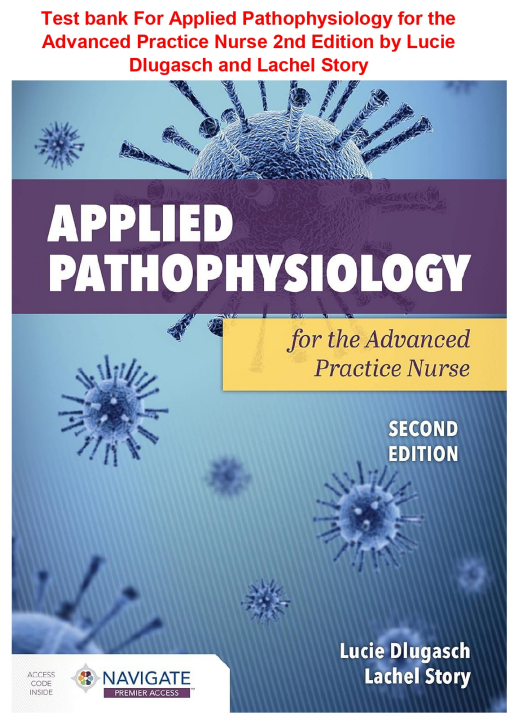
This test bank is built around the 2nd edition of Applied Pathophysiology for the Advanced Practice Nurse by Lucie Dlugasch and Lachel Story. It follows the textbook chapter by chapter, so your review sessions actually match your course structure.
Whether you’re working through an NP program, a DNP curriculum, or reviewing before certification, this resource helps you connect disease mechanisms to real clinical decisions.
What This Test Bank Covers
This textbook is built specifically for the advanced practice role, applying pathophysiology directly to diagnosis and management. This test bank reflects that same focus. You’ll find questions on:
- Cellular and genetic mechanisms of disease
- Immune function, inflammation, and infection
- Cardiovascular pathophysiology and clinical application
- Respiratory disorders and diagnostic reasoning
- Renal and fluid-electrolyte disorders
- Gastrointestinal and hepatobiliary conditions
- Endocrine and metabolic disorders
- Neurologic and musculoskeletal pathophysiology
- Hematologic disorders and coagulation issues
- Reproductive and genitourinary conditions
- Pathophysiology across the lifespan, including pediatric and geriatric considerations
If it’s a focus area of the textbook, there’s a strong chance it’s represented in this test bank.
Why This Test Bank Stands Out
1. It Follows the Textbook’s Structure
Every question aligns with a specific chapter in the 2nd edition, so review stays organized and efficient instead of scattered across unrelated topics.
2. It’s Written for Advanced Practice Reasoning
This isn’t a basic pathophysiology test bank. Questions push toward diagnostic reasoning and clinical application, matching the level expected of a nurse practitioner or advanced practice provider.
3. Every Question Includes a Rationale
A correct guess doesn’t build real understanding. Each question explains why the correct answer is right and why the other choices don’t hold up clinically.
4. Direct, Uncluttered Language
Applied pathophysiology already demands close attention to mechanisms and terminology. This test bank keeps sentence structure simple so the clinical concept stays the focus.
5. Designed for Ongoing Review
Disease mechanisms and their clinical implications benefit from repeated exposure over a semester, not a single cram session. This test bank supports that kind of extended practice.
Who This Test Bank Is For
- Nurse practitioner students across specialty tracks
- DNP students reviewing pathophysiology as a core competency
- Advanced practice nurses preparing for certification exams
- Nursing faculty building quizzes or exam question pools
- PA students and other advanced practice learners needing applied pathophysiology review
Sample Practice Questions
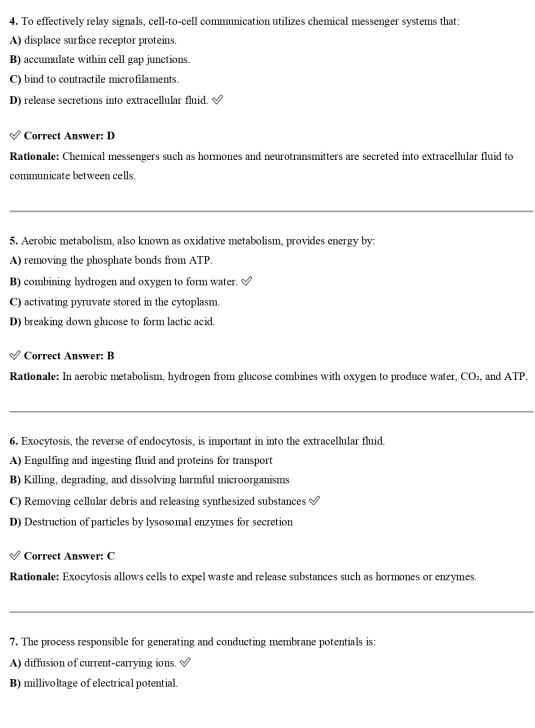
Here are five sample questions written in the same style and difficulty level as the full test bank.
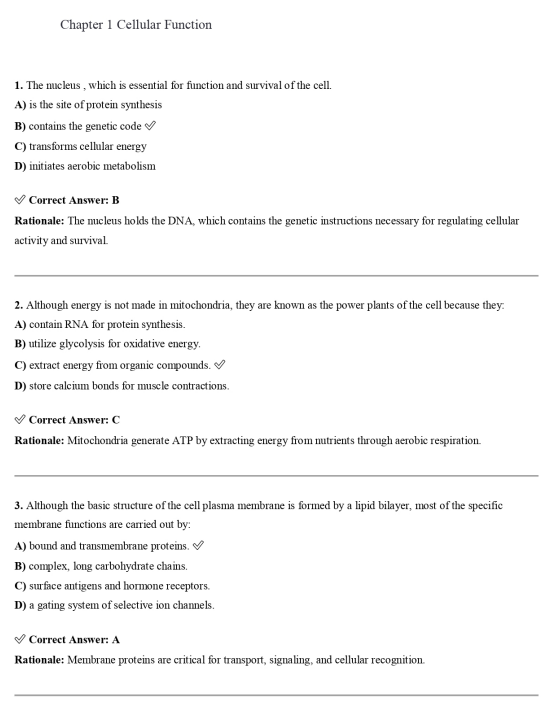
Question 1: Immune Function
A patient presents with a rapid, widespread allergic reaction after receiving an IV antibiotic, including hypotension and difficulty breathing. Which type of hypersensitivity reaction does this represent?
A) Type I hypersensitivity
B) Type II hypersensitivity
C) Type III hypersensitivity
D) Type IV hypersensitivity
Correct Answer: A) Type I hypersensitivity
Rationale: Type I hypersensitivity reactions are immediate, IgE-mediated responses that can cause anaphylaxis, including symptoms like hypotension and airway compromise, as seen in this scenario. Type II involves antibody-mediated cell destruction. Type III involves immune complex deposition. Type IV is a delayed, cell-mediated response that develops over one to three days, not within minutes.
Question 2: Cardiovascular Pathophysiology
A patient with long-standing untreated hypertension develops left ventricular hypertrophy. Which compensatory mechanism best explains this change?
A) The heart muscle atrophies to reduce oxygen demand
B) The heart muscle thickens to manage increased afterload
C) The heart chambers dilate to increase stroke volume
D) The heart rate decreases to conserve energy
Correct Answer: B) The heart muscle thickens to manage increased afterload
Rationale: Chronic hypertension increases the resistance the left ventricle must pump against, known as afterload. Over time, the ventricular wall thickens as a compensatory response to generate enough force to overcome that resistance. Atrophy would weaken the heart’s ability to compensate, not strengthen it. Chamber dilation is more characteristic of volume overload conditions. A decreased heart rate wouldn’t address the underlying pressure demand at all.
Question 3: Renal and Fluid-Electrolyte Disorders
A patient with chronic kidney disease develops secondary hyperparathyroidism. Which mechanism best explains this development?
A) Decreased phosphate excretion leading to hypocalcemia and increased parathyroid hormone release
B) Increased vitamin D activation leading to hypercalcemia
C) Decreased parathyroid hormone production due to kidney damage
D) Increased calcium absorption in the damaged kidneys
Correct Answer: A) Decreased phosphate excretion leading to hypocalcemia and increased parathyroid hormone release
Rationale: Failing kidneys can’t excrete phosphate effectively, and they also lose the ability to activate vitamin D properly. Both factors contribute to lower serum calcium, which triggers the parathyroid glands to release more parathyroid hormone in an attempt to correct it. Vitamin D activation actually decreases in chronic kidney disease, not increases. Parathyroid hormone production rises rather than falls, and damaged kidneys reduce calcium regulation rather than improving absorption.
Question 4: Endocrine and Metabolic Disorders
Which mechanism best explains the insulin resistance seen in type 2 diabetes?
A) Complete destruction of pancreatic beta cells
B) Reduced cellular response to insulin despite adequate or elevated insulin levels
C) Absence of insulin production from birth
D) Autoimmune destruction of insulin receptors
Correct Answer: B) Reduced cellular response to insulin despite adequate or elevated insulin levels
Rationale: Type 2 diabetes is primarily driven by insulin resistance, where cells respond poorly to insulin even though the pancreas often produces normal or elevated amounts early in the disease process. Complete beta cell destruction is more characteristic of type 1 diabetes. Type 2 diabetes isn’t present from birth in the way type 1 can develop, and it isn’t caused by autoimmune destruction of receptors, which isn’t a recognized mechanism in this condition.
Question 5: Neurologic Pathophysiology
A patient develops increased intracranial pressure following a traumatic brain injury. Which early clinical sign should the advanced practice nurse monitor for closely?
A) Widening pulse pressure with bradycardia
B) Hypotension with tachycardia
C) Improved level of consciousness
D) Decreased respiratory effort only
Correct Answer: A) Widening pulse pressure with bradycardia
Rationale: Widening pulse pressure combined with bradycardia is part of Cushing’s triad, a late but critical sign of rising intracranial pressure, alongside irregular respirations. Hypotension with tachycardia is the opposite of what’s expected, since the body typically raises blood pressure to maintain cerebral perfusion against the rising pressure. A patient with worsening intracranial pressure would show a declining level of consciousness, not improvement, and respiratory changes involve irregular patterns rather than simply decreased effort alone.
These five questions only scratch the surface. The full test bank includes hundreds of similar questions spanning every chapter of the 2nd edition.
How to Study With This Test Bank
- Match your review to your course sequence. Study body systems in the order your program covers them.
- Focus on the “why” behind each mechanism. Advanced practice exams reward understanding disease processes deeply enough to apply them, not just recognize terms.
- Connect pathophysiology to clinical presentation. Practice linking a mechanism, like decreased phosphate excretion, to the symptoms and lab findings it produces.
- Revisit missed questions after a few days. Spaced repetition strengthens long-term retention, especially for complex multi-step mechanisms.
- Pair this with your assigned textbook chapters. The test bank reinforces the material; it isn’t a substitute for it.
Why This Beats Generic Pathophysiology Quizzes
Generic online quizzes are often written for undergraduate audiences and stop short of clinical application. This test bank was built specifically around Dlugasch and Story’s 2nd edition, so the depth, terminology, and reasoning level match what advanced practice programs actually expect.
Format and Delivery
This test bank is delivered as a digital file. You get instant access after purchase. No shipping. No delays. Study from your laptop, tablet, or phone whenever it’s convenient.
Frequently Asked Questions
Is this test bank the same as the textbook?
No. This is a companion study resource. You’ll still need Applied Pathophysiology for the Advanced Practice Nurse, 2nd Edition, for full chapter content and detailed explanations.
Is this appropriate for entry-level nursing students?
Not really. This test bank is written at an advanced practice level, so it’s best suited for NP, DNP, or similar graduate-level learners rather than pre-licensure students.
Does this cover diagnostic reasoning, or just disease mechanisms?
Both. Questions are written to connect underlying pathophysiology to the clinical presentations and reasoning advanced practice providers need.
Can faculty use this to build course exams?
Yes. Many faculty members use test banks like this as a foundation for quizzes, midterms, or final exams in graduate nursing programs.
What question formats are included?
You’ll find multiple choice, true or false, matching, and short answer questions throughout the set.
Are rationales included for every answer?
Yes. Each question includes an explanation of why the correct answer is right and why the other choices don’t fit.
Is this useful for certification exam prep?
Yes. Applied pathophysiology concepts show up frequently on advanced practice certification exams, so this practice reinforces that foundation.
How is this different from the textbook’s built-in review questions?
Built-in review questions are usually limited in number. This test bank offers a much larger, more comprehensive question set with detailed rationales for deeper practice.
Final Thoughts
Advanced practice pathophysiology asks you to go beyond knowing how disease works. It asks you to use that knowledge to guide real diagnostic and treatment decisions. This test bank for the 2nd edition of Applied Pathophysiology for the Advanced Practice Nurse gives you a direct way to practice that exact skill before your exam. Realistic questions. Clear explanations. A study tool built around the clinical reasoning your program is training you to use.
Grab your copy today and study with real confidence.
Betty N. –
Helped me identify topics needing more review.
Warren Brent –
Convenient resource for studying anywhere, anytime
Alicia Silva –
Questions closely resemble challenging nursing exam material
Thomas K. –
Great value for nursing students preparing for exams
Craig Bellamy –
Explanations helped clarify confusing concepts quickly
Lucille Maria –
Good resource for focused exam preparation.
Winnie M. –
Extremely helpful for advanced psychophysiology exams
Sarah Willock –
Great variety kept my study sessions interesting.
Harry Peters –
Explanations were especially helpful after missed questions.
Kamara Reid –
Useful practice for strengthening clinical knowledge.
Perpetual Gates –
Made reviewing important concepts more engaging.
Terry Anne –
Convenient resource for repeated practice sessions.
Sally K. –
Helpful resource for strengthening understanding through practice.
Bruno Molino –
Useful questions for refreshing knowledge before assessments.
Carol Kay –
Practice materials make independent revision more manageable
Jaqueline M. –
Useful practice for improving confidence before exams.
Alexander Savic –
Good resource for reviewing difficult subjects.
Morgan Fraiser –
Helpful tool for making study time productive.